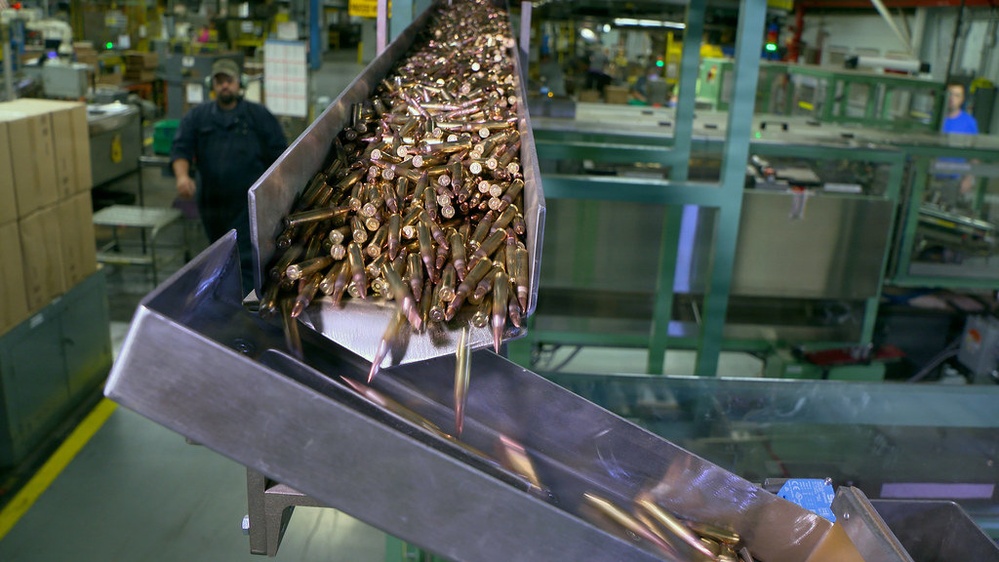
The post-2022 security environment has transformed European ammunition production from a capacity management exercise into a strategic priority. Production lines that ran at peacetime rates to sustain training inventories are now being asked to rebuild depleted war stocks, sustain ongoing materiel support commitments, and create meaningful surge capacity: simultaneously. This guide maps the industrial landscape, the supply chain constraints, and the procurement mechanisms being used to accelerate European production output.
The Scale of the Challenge
Before 2022, European 155mm artillery shell production ran at approximately 300,000 rounds per year across all manufacturers. Demand projections for Alliance stockpile targets, assessed against 30-day high-intensity combat planning assumptions, require annual production rates multiple times that figure, sustained over several years, simply to reach minimum acceptable inventory levels. The gap between pre-2022 production rates and the volume required to meet Alliance stockpile commitments is the defining challenge for European ammunition industrial policy in the mid-2020s.
This is not a single-product problem. The 155mm round is the most-discussed munition because it has seen the highest consumption rates and is the reference calibre for NATO ground forces, but the production surge challenge applies across the full ammunition spectrum: 120mm mortar, 40mm grenade, 5.56mm and 7.62mm small arms, precision-guided munitions (PGMs), and the energetic sub-components that underpin all of these. The bottleneck shifts as one looks down the supply chain from finished rounds to component parts to energetic fills to precursor chemicals.
The Industrial Base
Tier 1 — Final Assembly Producers
The largest European ammunition producers by revenue and production volume are Rheinmetall, BAE Systems, Nexter (part of KNDS following the Nexter-KMW merger), and Nammo. Each operates across multiple countries and product lines.
Rheinmetall has emerged as the most aggressively expanding European defence manufacturer since 2022. Its Unterlüss facility in Germany, Raufoss facility in Norway (operated through Nammo partnership), and planned new facilities in Lithuania and potentially Ukraine represent the most significant capacity additions in the European ammunition sector. Rheinmetall has publicly targeted 155mm production capacity exceeding 700,000 rounds per year; a figure that would represent the single largest European contribution to Alliance artillery ammunition supply if achieved on schedule.
BAE Systems produces 155mm rounds at its Washington facility in the UK and at BOFORS in Sweden (now part of BAE Systems). BAE is also the lead contractor for the 155mm M795 shell for US forces and supplies a range of NATO-standard calibres to UK, Swedish, and other Allied customers. Its propellant production at Eurenco in France and Sweden is a key upstream dependency.
Nammo, the Norwegian-Finnish joint venture, produces 155mm, 120mm mortar, and a comprehensive range of small-calibre ammunition. Nammo’s Raufoss facility in Norway is one of the most vertically integrated ammunition production sites in Europe, producing from energetic ingredients through to complete rounds. Nammo’s participation in NSPA pooled procurement contracts has positioned it as a key Alliance supplier for multiple calibres.
Tier 2 — Component and Sub-System Producers
A second tier of European manufacturers produces critical components without necessarily assembling complete rounds. PGZ (Polska Grupa Zbrojeniowa) in Poland produces 155mm shell bodies and mortar rounds. Mecar in Belgium specialises in anti-tank and mortar ammunition. General Dynamics Ordnance and Tactical Systems operates production facilities in the Czech Republic and Spain. Eurenco, jointly owned by the French and Swedish states, is Europe’s largest explosives and propellant manufacturer, supplying energetic ingredients to all major round assemblers.
Tier 3 — Energetic Precursor Producers
The deepest supply chain layer, and the most constrained, is energetic precursor production. Three materials are structurally bottlenecking European ammunition output:
- Nitrocellulose (NC): The base propellant for virtually all conventional artillery, mortar, and small arms ammunition. European NC production is concentrated at a small number of facilities, with Eurenco, Nitrochemie (Germany/Switzerland), and Chemring Energetics (UK) as the principal producers. NC production requires cotton linters or wood pulp feedstock, nitration acid plants, and extensive purification and stabilisation infrastructure. Lead times for new NC capacity run to three to five years even with committed investment.
- RDX: The primary high-explosive fill for 155mm shells, mortar rounds, and many PGM warheads. Western RDX production capacity is concentrated principally at Holston Army Ammunition Plant (HAAP) in the US, with European production at a much smaller scale. The concentration of Allied RDX supply at a single US facility is a recognised single-point-of-failure risk that has been flagged in procurement intelligence assessments. ISC has covered this in detail through its Defence Industrial Base analysis.
- TNT: Used as a melt-cast medium in Composition B and many legacy warhead fills. TNT production has been declining globally as manufacturers transition to insensitive munitions (IM) formulations. European TNT capacity is limited.
EU and NATO Procurement Mechanisms
NSPA Pooled Procurement
The NATO Support and Procurement Agency (NSPA) has been the primary multi-nation procurement vehicle for Alliance ammunition since 2022. By aggregating national requirements into single contracts, NSPA generates demand at a scale that justifies production investment decisions manufacturers would not take on the basis of individual national orders. NSPA procurement opportunities are published on the NSPA 5G eProcurement portal and constitute some of the most significant open-source signals in European ammunition procurement. ISC monitors this portal as part of its standard intelligence collection cycle.
EU ASAP and EDIRPA
The EU Act in Support of Ammunition Production (ASAP) provided EUR 500 million in 2023 specifically to fund production ramp-up activities, including facility upgrades, equipment procurement, and workforce training. EDIRPA (European Defence Industry Reinforcement through Common Procurement Act) incentivises joint EU member state procurement, creating the demand certainty that manufacturers need to justify capital investment. These instruments represent a significant structural shift in European defence industrial policy, moving from individual national procurement toward pooled, demand-aggregated approaches that more closely resemble the NSPA model.
Implications for Procurement Intelligence
For analysts and procurement professionals tracking European ammunition industrial capacity, four intelligence indicators are most reliable as leading signals of actual production status:
- NSPA contract awards, published on the NSPA 5G portal, these reveal which manufacturers are winning Alliance supply contracts and at what volume. Contract award notices are more informative than procurement opportunities because they confirm actual supply agreements.
- Manufacturer facility investment announcements: capital investment in new production lines, new facilities, or workforce expansion is the earliest signal of capacity growth. These typically appear 18–36 months before production output increases.
- Energetic precursor supply signals: NC, RDX, and TNT supply tightening appears first in procurement notices from downstream manufacturers seeking long-term supply agreements. These signals can be tracked through NSPA and EU procurement portals.
- Parliamentary and Hansard records: national legislatures periodically surface ammunition production rates, stockpile levels, and procurement commitments through written questions and committee inquiries that would not otherwise be publicly available.
ISC tracks all four signal categories through our Defence Industrial Base intelligence feed and provides procurement advisory services for organisations navigating the European ammunition supply chain. Our NATO Procurement Guide covers the institutional architecture within which these procurement decisions are made.