The Type 45 Accountability Trail: Named Decisions, Named Failures, Named Costs
The July 2000 Ministry of Defence investment decision on Integrated Full Electric Propulsion, Secretary of State Geoff Hoon’s sign-off of the WR-21 over the LM2500, the specification gap on sustained hot-climate operations, and the testing truncation after the recuperator redesign are each on the open-source record. Together they are a tighter accountability trail than most defence programme post-mortems ever produce. The £160 million fleet-wide Power Improvement Project (~£27 million per hull average) is the architectural correction. The lesson is not abstract.
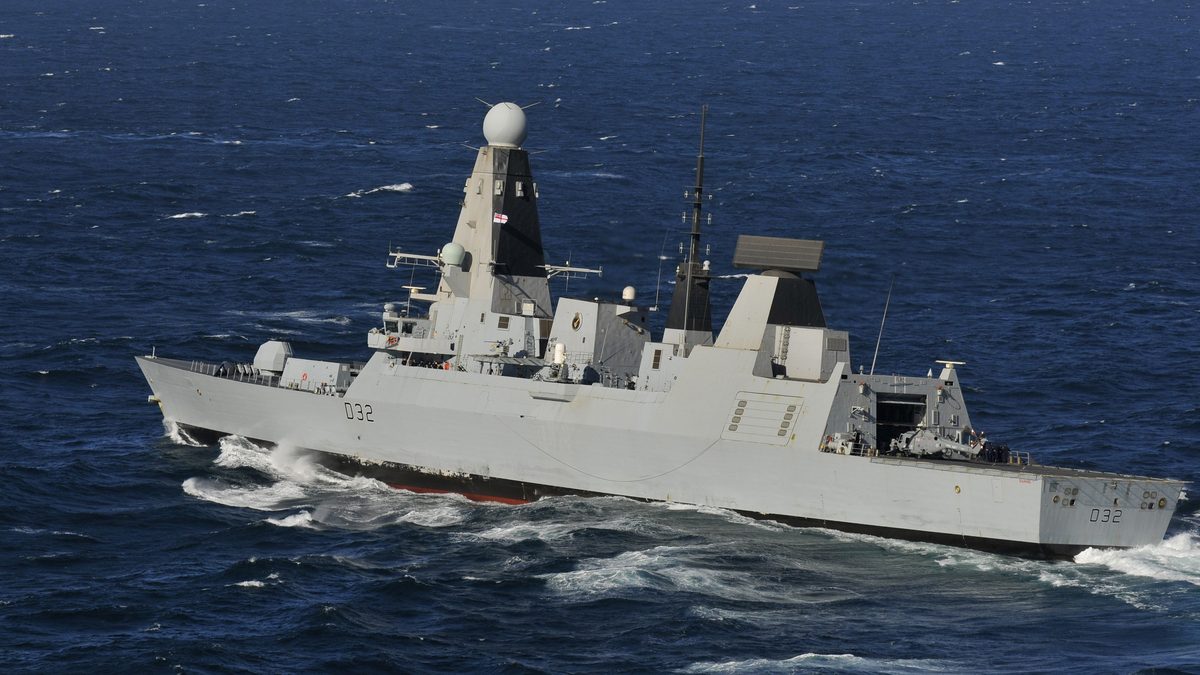
HMS Daring (D32) in the Arabian Gulf, 6 March 2012. The operating environment at the centre of the 2016 House of Commons Defence Committee finding that the Type 45 specification did not require the ships to operate at full capacity for sustained periods in hot regions such as the Gulf. HMS Daring completed the Power Improvement Project (PIP) retrofit in December 2025. Image: MC Seaman George M. Bell, US Navy (120306-N-ZI635-608), public domain via Wikimedia Commons.
.jpg)
Executive framing
Most defence programme failures never reach a named accountability trail. The post-mortem usually concludes with a list of contributing factors, a “no single root cause” finding, and a remediation plan. Type 45 is the exception. Between the House of Commons Defence Committee’s 2016 inquiry, the MoD’s own parliamentary written answer of 30 June 2020, and the technical analyses compiled by Navy Lookout drawing on former Royal Navy engineer commentary, there is now a primary-source chain that identifies the investment decision, the minister who signed it, the specification that was missing, the testing that was truncated, and the drivers that made each of those choices the decision at the time.
The point of assembling this trail is not blame. It is pattern recognition. The Rolls-Royce / Northrop Grumman WR-21 Intercooled Recuperated Gas Turbine (IRGT) was not a bad engine in the abstract, at part-load thermal efficiency it delivered approximately 25 to 30 per cent better fuel economy than a conventional simple-cycle marine gas turbine. It was propulsion optimised against the wrong mission profile, locked in before the baseline was tested at battle tempo, because ministerial-level industrial and schedule pressure overrode the technical screening. A distinct class of design-before-steel failure. It is worth making explicit because the pressures that produced it have not gone away (HoC Defence Committee, 2016; UK Parliament, 2020).
The headline decision: July 2000
The main Type 45 investment decision was taken by the Ministry of Defence in July 2000. The engine selection, WR-21 over General Electric’s LM2500, was signed off by the Secretary of State for Defence, Geoff Hoon. That is the MoD’s own position on the record. In a parliamentary written answer on 30 June 2020 (UIN 66798) the department identified the July 2000 decision to proceed with a Type 45 design based on Integrated Full Electric Propulsion (IEP) and the subsequent selection of the WR-21 as the origin of the problems the Power Improvement Project (PIP) retrofit now has to correct, and accepted that the liability for funding the fix “rests with the MOD” because of those original decisions (UK Parliament, 2020).
Hoon himself conceded at the time of contract signature that the WR-21 carried “a greater degree of risk to the programme” than the LM2500 and credited “a range of other factors” as favouring Rolls-Royce. That admission matters. The higher-risk option was chosen with the risk acknowledged in writing on the day.
In Commons Defence Committee evidence in 2016, Peter Roberts of the Royal United Services Institute (RUSI) described the choice as “a flawed decision”. The WR-21 “did not address either the high-power densities or the differences in load that the warships required.” He contrasted it with the LM2500, which was “cheaper” and had “lower technical risk and more proven background” (HoC Defence Committee, 2016). The competitive alternative existed, was less risky, and was not chosen.
The decision chain beneath the minister
BAE Systems ran the competition and, per multiple accounts reflected in the Defence Committee evidence, recommended both engines as capable of meeting the power and range requirements, effectively passing the risk decision to MoD rather than picking one. That made the selection explicitly political. Three drivers converged.
Driver 1: UK industrial-base preservation
Rolls-Royce was signalling it would exit the marine propulsion business if it did not win Type 45. The Labour government treated keeping Rolls-Royce in marine gas turbines as a strategic-industrial imperative. Defence Committee evidence captured it bluntly as “buying British jobs.” This is not, in itself, an illegitimate consideration. The UK marine gas turbine design base is strategically valuable. The point on the record is that in this case the industrial-base argument overrode the technical-risk argument rather than being weighed against it (HoC Defence Committee, 2016).
Driver 2: peacetime fuel-efficiency economics
Oil prices were high in 2000 and projected to rise. A 25–30 per cent reduction in cruise-profile fuel burn across six hulls and a 25-year service life looked like material life-cycle savings on paper. The cruise-profile assumption was itself a Cold War residual: long transits, low operational tempo, efficiency-driven life-cycle cost arguments. What the decision did not anticipate was the pivot back to high-tempo, high-electrical-load combat operations and persistent Gulf deployment.
Driver 3: Horizon-collapse schedule compression
The UK withdrew late from the trilateral Horizon frigate programme with France and Italy and was moving Type 45 through at speed. The MoD accepted a design that had not been proven at battle-tempo because the schedule did not allow for it. Schedule compression imposed from outside the yard is the single most predictable source of industrial cost growth in naval programmes, as the Queen Elizabeth-class 2008 slowdown later confirmed on a different axis, and as the Astute programme’s forecast has demonstrated across two decades (NAO, 2011; IPA, 2024).
The engine: lineage and what it was meant to do
The WR-21 was a joint Rolls-Royce / Northrop Grumman development. Rolls-Royce led the gas turbine core, derived from the RB211 / Trent aero-engine lineage. Northrop Grumman (originally Westinghouse, before the 1996 acquisition) was responsible for the intercooler and recuperator heat-exchanger technology that gave the engine its distinctive thermal-efficiency profile. DCN provided significant marine engineering and test-facility input. Northrop Grumman was prime contractor for the WR-21. The original design and development was carried out by Westinghouse Electric Corporation (later Northrop Grumman Marine Systems) under a US Navy contract placed in December 1991.
The same manufacturer lineage now sits behind the Rolls-Royce MT30, the simple-cycle marine gas turbine currently powering the Type 26, the Hunter-class, the Japan Maritime Self-Defense Force Mogami-class, and the 24 April 2026 Royal Australian Navy Mogami selection. The lessons Rolls-Royce absorbed on WR-21 are part of why the MT30 is the architectural opposite of what went into Type 45. That continuity matters: it is possible, and common, for a company to learn specific engineering lessons without the national procurement system learning the equivalent process lessons.
Why the engine failed in service
The WR-21 was optimised for part-load thermal efficiency across a cruise-heavy operating profile. The intercooler and recuperator were specifically designed to recover waste heat and flatten the specific fuel consumption curve at the lower power settings a warship spends most of its life at — transit, patrol, station-keeping. On that metric it delivered. It offered approximately 25 to 30 per cent better fuel economy at cruise than a conventional simple-cycle marine gas turbine.
The problem is that a destroyer’s design case is not the cruise profile. It is the tactical envelope: sustained high power for speed, plus the simultaneous electrical demand of the Sampson multi-function radar, the S1850M long-range radar, Sea Viper fire control, and the combat management system, under action conditions. The WR-21’s recuperator became a thermodynamic liability in exactly that regime: high intake air temperatures in the Gulf, high humidity, and sustained high-power demand. These conditions caused the recuperator to lose effectiveness and the engine to trip offline. When both WR-21s tripped and the two Wartsila 12V200 diesel generators could not carry hotel plus propulsion load, the ship went dark. That is the mechanism behind the recurrent total electrical failures (Navy Lookout, 2024).
The deeper architectural problem, per the Navy Lookout technical analysis drawing on former Royal Navy engineers, is that the IEP concept was driven by the premise “diesel generators bad, high maintenance manpower requirement; gas turbines good, can be unmanned” (which led to the question “how do we get a gas turbine that can work fuel-efficiently at part load?”) which led to the intercooler/recuperator and single-prime-mover operation. The peacetime-efficiency assumption is therefore made visible in the architecture choice itself. It was not imposed on the design from outside. It was built into the architecture from the start (Navy Lookout, 2024).
The specification failure
The House of Commons Defence Committee, in its 2016 inquiry Restoring the Fleet: Naval Procurement and the National Shipbuilding Strategy, captured the specification failure directly:
“It is astonishing that the specification for the Type 45 did not include the requirement for the ships to operate at full capacity, and for sustained periods, in hot regions such as the Gulf.”
Admiral Sir Philip Jones, First Sea Lord, told the Committee that the WR-21 was designed to “gracefully degrade” in extreme heat, but in service it was “degrading catastrophically.” BAE’s John Hudson confirmed that industry had flagged an upper environmental temperature limit to MoD during design (HoC Defence Committee, 2016). The specification gap was therefore not a surprise discovered in service. It was a known limit that did not travel from industry into the requirement.
The testing failure
The MoD cut land-based testing hours. The scale of the cut, and the timing, are on the record.
Rolls-Royce’s own evidence, via Tomas Leahy, was that the WR-21 had undergone over 8,000 hours of testing during the development cycle. A recuperator redesign occurred at approximately 5,000 hours. Only around 1,900 to 3,000 further hours of testing were run on the updated design, with the MoD-funded post-modification portion cited at approximately 1,900 hours. In-service failures on Type 45 manifested between 4,000 and 5,000 hours of use — squarely inside the untested window. Rolls-Royce’s position was that MoD “decreed that the remaining testing hours would be sufficient” given prior running. A named decision, made inside the MoD, to accept an under-tested engine against schedule and cost pressure (HoC Defence Committee, 2016).
Peter Roberts of RUSI additionally noted in evidence that the land-based testing was not funded “to run sufficient hours to understand that there were significant design flaws” and “was not run sufficiently long enough to demonstrate that the engine was reliable” (HoC Defence Committee, 2016). Funding and schedule were the constraints. The engineering knowledge to detect the failure mechanism existed; the test programme that would have surfaced it was truncated.
The 2011 independent study and why 2016 and 2020 cut through it
The 2011 MoD-commissioned independent study muddied the accountability picture in a specific way. It concluded:
- “No single root cause underlying the low reliability”
- “A large group of unconnected individual causes”
- Integrated Full Electric Propulsion “remained a sound choice” for the Type 45 class
That framing distributed blame across many small failures rather than naming the specification-level error. It is the standard shape of a department-commissioned review of its own decision: no single cause, many contributors, the architectural choice retrospectively endorsed. The 2016 Defence Committee work, and the MoD’s 2020 parliamentary admission, cut through that. The origin sits at the July 2000 MoD investment decision and the WR-21 selection. Both of those later documents are on the parliamentary record, not the department’s internal record, which is why they are the primary-source evidence worth building the accountability trail around (HoC Defence Committee, 2016; UK Parliament, 2020).
Project Napier / PIP as architectural correction
Project Napier and the Power Improvement Project (PIP) are not a retrofit to fix a broken engine. They are an architectural correction, adding diesel generator margin so the ship can actually fight at the power draw modern sensors and weapons require, independent of whether the gas turbines are willing to stay online. The remediation specification reads as an admission of what the original specification should have been.
- Two legacy Wartsila W200 (2 MW) diesel generators removed per hull.
- Three MTU (3 MW) V-20 Series 4000 diesel generators installed. Two were swapped directly for the Wartsilas; the third was placed in the forward machinery room, an operation that involved cutting open the hull.
- A new high-voltage switchboard room to manage roughly 5 MW of additional power.
- The Platform Management System (PMS) reconfigured.
- Two (21 MW) WR-21 gas turbines refurbished.
- The troublesome intercooler-recuperators replaced with a more reliable design.
Cost: a single £160 million design-and-manufacture contract with BAE Systems for the entire six-ship class (~£27 million per hull average), delivered with BMT Defence Services and Cammell Laird. The contract was awarded in March 2018; early modifications under the existing Type 45 support arrangements were absorbed at no additional cost to the public purse (UK Parliament, 2020; Navy Lookout, 2024). As at the date of publication:
- HMS Dauntless, HMS Daring and HMS Dragon completed PIP by December 2025.
- HMS Defender and HMS Diamond are in refit.
- HMS Duncan is scheduled to enter PIP at her next docking.
- MoD commitment: full-fleet completion by 2028 (Navy Lookout, 2024; UKDJ, 2025).
The architectural point is that a fleet of six air-defence destroyers was designed, built and delivered over more than a decade around a propulsion architecture that had to be corrected, on the hard, by cutting open the hulls and installing the diesel generator capacity the ship should have had from the start. An expensive way to discover a specification gap.
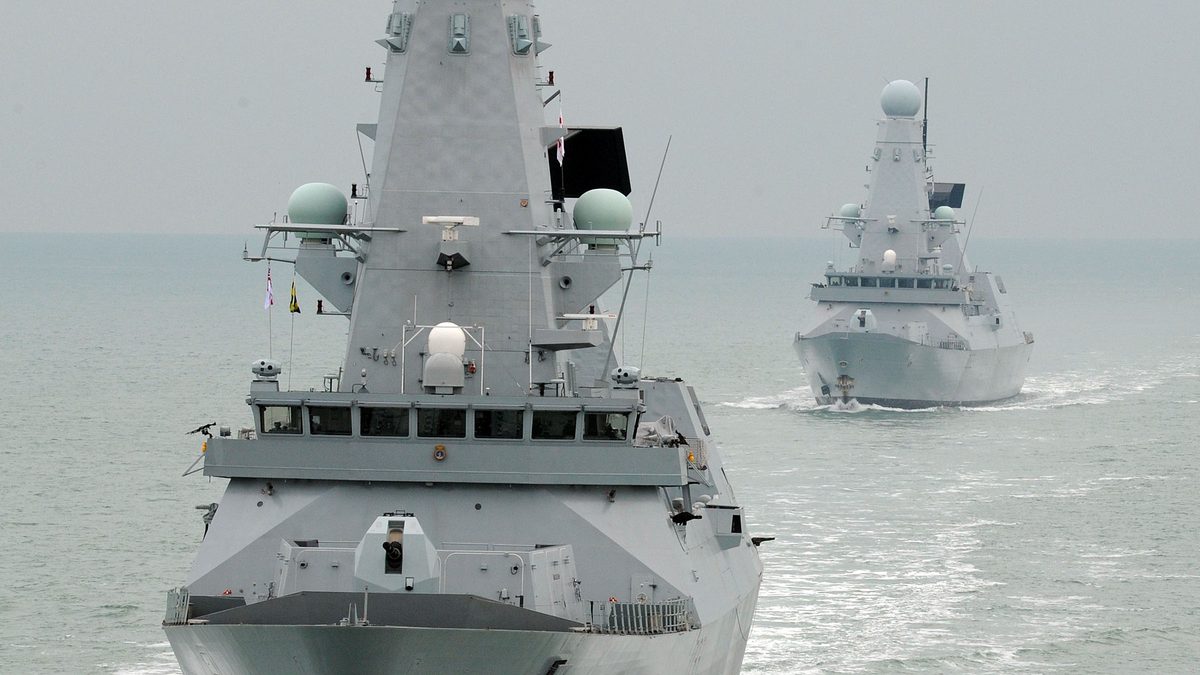
The trail in one place
The five named elements, in the sequence they occurred, are the audit trail.
Type 45 Accountability Trail
- Named individual decision
- Geoff Hoon, Secretary of State for Defence, July 2000. Signed off the WR-21 over the LM2500 against acknowledged higher technical risk.
- Named institutional decision
- MoD investment decision on Integrated Full Electric Propulsion architecture, July 2000. Department identified as origin of PIP-requiring problems in parliamentary written answer UIN 66798 (30 June 2020).
- Named specification failure
- No requirement for full-capacity sustained operations in hot regions such as the Gulf. Industry (BAE Systems) flagged the environmental temperature limit; the limit did not travel into the requirement. (HoC Defence Committee 2016.)
- Named testing failure
- MoD “decreed” that reduced land-based testing hours after the recuperator redesign (approximately 1,900–3,000 hrs; MoD-funded portion ~1,900 hrs) would be sufficient. In-service failures subsequently manifested within the uncovered window (4,000–5,000 hrs of use). (Rolls-Royce evidence, HoC Defence Committee 2016.)
- Named drivers
- UK industrial-base preservation (Rolls-Royce marine exit threat) + peacetime fuel-efficiency economics under Horizon-collapse schedule compression.
How the trail maps onto the design-before-steel screening framework
The companion analyses set out a three-criterion screening framework for naval programmes: change-management discipline, credible design-maturity trajectory, and integration validation before production accelerates. The Type 45 trail maps directly onto it.
| Criterion | What it tests | Type 45 verdict | Evidence |
|---|---|---|---|
| 1. Change-management discipline | Is there a defined process for integrating evolving requirements, with Engineering Change Control Board (ECCB) cadence, published backlog and contractual flow-down? | OVERRIDDEN at ministerial level | July 2000 investment decision; higher-risk option accepted with risk acknowledged; industrial preservation driver outweighed technical risk weighting |
| 2. Design-maturity trajectory | Is the design converging rather than still expanding? Weight, power, interface-control-document cadence, operator interfaces frozen? | FAIL | Single-prime-mover IEP unvalidated at tactical load; specification did not require full-capacity hot-climate operation; recuperator degradation mechanism not surfaced before production |
| 3. Integration validation | Land-based engineering, prototyping or modular test environments proving the architecture before production accelerates? | FAIL | 8,000 hrs testing with recuperator redesign at 5,000 hrs; approximately 1,900–3,000 further hrs on updated design; in-service failures at 4,000–5,000 hrs |
The triple-failure pattern (Criterion 1 overridden, Criteria 2 and 3 not passed) is what produces a six-hull class built around an architecture that has to be corrected with a fleet-wide £160 million retrofit. The order of causality matters. The technical failures (Criteria 2 and 3) happened because the political-industrial override (Criterion 1) closed the gate on them. A design-before-steel failure with ministerial fingerprints on it.
Post-2016 reforms and the remaining gap
The post-2016 UK reform programme has done useful work on the structural pressures that produced the July 2000 decision. The 2017 National Shipbuilding Strategy (NSbS) and the 2022 Refresh introduced drumbeat pipeline visibility, Client Board / Sponsor Group / Master Plan governance, and explicit decision-discipline rules to reduce ad-hoc industrial-base pressure on individual programme decisions. The Levene Defence Reforms from 2011 onward devolved approximately 80 per cent of the equipment budget to Front-Line Commands, raising end-user accountability. The National Armaments Director (NAD) role created in 2025 recentralises oversight on the £30 billion-plus invest budget and pushes the planning horizon from annual cycles toward a ten-year envelope. Each reform addresses part of the failure pattern Type 45 exemplifies (HM Government, 2017; HM Government, 2022; Levene, 2011).
The structural gap the post-2016 programme has not yet reached is the contemporaneous declarative instrument at the point of ministerial override. NSbS governance smooths the structural pressure on individual programmes but does not document the override when one is exercised. The NAD centralises departmental visibility on the equipment plan but does not put a publication-duty body outside the department. The Levene reforms move budget authority closer to the user without generating a citable record of ministerial overrides for the post-mortem twenty years later. Persistent Equipment Plan funding shortfalls (the reported £16.9 billion gap is one indicator) and recent programme deferrals show the structural pressure has not disappeared. The companion ISC piece on procurement accountability reform (29 April 2026) sets out a six-instrument framework specifically targeted at that residual gap (ISC, 2026; Calibre Defence, 2026).
What the trail reframes
The original industrial-pattern framing of Type 45 was “novel technology without amortisation volume”; the Zumwalt / Littoral Combat Ship analogue in the Anglo-American comparison. The accountability trail makes it more specific. Type 45 is propulsion optimised against the wrong mission profile, locked in before the baseline was tested at battle tempo, because ministerial-level industrial and schedule pressure overrode the technical screening. That is itself a design-before-steel failure, and it is one of the cleaner primary-source examples available.
Three implications for how executives, programme offices and industry should read similar decisions today.
- Industrial-base arguments are legitimate inputs, not dominant ones. Keeping Rolls-Royce in marine gas turbines was a defensible strategic-industrial objective. Using that objective to override a technical risk weighting was the error. The distinction is live in current procurement (AUKUS industrial-base arguments, European defence industrial autonomy, UK National Shipbuilding Strategy drumbeat commitments) and the lesson is that the two classes of argument need to be kept on separate axes in the decision record.
- Specification gaps are detectable before signature. The environmental temperature limit was flagged by industry during design. It did not travel into the requirement. Programme offices routinely have this information; the question is whether the ECCB and requirement-management process surfaces it into the contractual baseline. When it does not, the gap shows up in service.
- Testing truncation is a procurement cost that reappears later as a remediation cost, with a multiplier. The Type 45 saving on post-redesign test hours is dwarfed by the £160 million PIP contract value across six hulls. The savings were short-run, the costs are long-run and are still being settled. That is the generalisable pattern. Where a department “decrees” that truncated testing is sufficient, the cost is being transferred from the development phase to in-service remediation, and the transfer almost always comes at a multiple.
Reading the trail forwards
The structural question is what happens next time an industrial-preservation argument meets a technical-risk argument at ministerial level. The UK National Shipbuilding Strategy Refresh of 2022 was the attempt to solve this at strategy level by committing to a drumbeat pipeline that reduces the ad-hoc industrial-base pressure on any given programme decision. The reported £16.9 billion MoD equipment-plan gap and the expiry of the Terms of Business Agreement in July 2024 have put that strategy back under pressure (HM Government, 2022; Calibre Defence, 2026). Where drumbeat volume is weak, individual programme decisions again absorb the industrial-preservation weighting the NSbS was supposed to carry. That is the precondition the July 2000 Type 45 decision was taken under. It is not stable.
The 24 April 2026 Royal Australian Navy Mogami selection is an informative counter-case. The engine is MT30: the architectural opposite of the WR-21, simple-cycle, power-dense, availability-first, and propulsion-common with the Hunter-class. Hulls one to three build at Mitsubishi Heavy Industries in the yard that already builds Mogamis. The question at that programme is whether the same discipline will hold through the Australianisation transition from hull four onwards, where the political-industrial pressure that distorted the Type 45 decision re-enters the system. The Type 45 trail is the case study that shows what happens when that pressure is not held at bay.
References
- Calibre Defence. “Delay, Defer, Repeat: UK shipbuilding plans at risk as MoD scrambles to close £16.9 billion funding gap.” 2026. calibredefence.co.uk
- HM Government. National Shipbuilding Strategy. September 2017. gov.uk
- HM Government. Refresh to the National Shipbuilding Strategy. CP 605. March 2022. gov.uk
- House of Commons Defence Committee. Restoring the Fleet: Naval Procurement and the National Shipbuilding Strategy. HC 221. November 2016. publications.parliament.uk
- Infrastructure and Projects Authority. Annual Report on Major Projects 2023–24. March 2024. gov.uk
- ISC Defence Intelligence. “Marinette to Govan: US Warship Manufacturing Lessons and the Twenty-Year UK Record.” 24 April 2026. integratedsynergyconsulting.com
- ISC Defence Intelligence. “Mogami, MT30 and the Australian Test of Design-Before-Steel.” 24 April 2026. integratedsynergyconsulting.com
- ISC Defence Intelligence. “Making the Override Visible: A Framework for Ministerial Procurement Accountability Reform.” 29 April 2026. integratedsynergyconsulting.com
- Lord Levene of Portsoken. Defence Reform: An Independent Report into the Structure and Management of the Ministry of Defence. June 2011. gov.uk
- MoD-commissioned independent technical study of Type 45 propulsion system reliability. 2011. (Lead reported variously; cited in UK Parliament Written Answer UIN 66798, 2020.)
- National Audit Office. Ministry of Defence: The Major Projects Report 2011. November 2011. nao.org.uk
- Navy Lookout. In focus: The Power Improvement Project for the Royal Navy’s Type 45 destroyers. 2024. navylookout.com
- Navy Lookout. Putting the Type 45 propulsion problems in perspective. navylookout.com
- UK Defence Journal. “Half of Britain’s destroyer fleet now have power issue fixed.” 2025. ukdefencejournal.org.uk
- UK Defence Journal. Commentary on Type 45 engine selection and Geoff Hoon’s role. ukdefencejournal.org.uk
- UK Parliament. Written Question 66798: Type 45 Destroyers — Repairs and Maintenance. Answered 30 June 2020. questions-statements.parliament.uk
ISC Commentary
The value of the Type 45 accountability trail is that it is verifiable. Every element (the minister, the date, the acknowledged risk, the specification gap, the testing truncation, the drivers) sits in open-source, unclassified parliamentary and committee records. That is rare. Most defence programme failures get processed into “lessons-learned” documents that distribute responsibility across so many actors that no one is named and no specific decision is challenged. The 2011 independent study on Type 45 followed that template. The 2016 Defence Committee inquiry and the 2020 parliamentary written answer did not.
The structural lesson for programme offices is not that ministers should never override technical advice — sometimes the industrial-preservation argument will and should win. The structural lesson is that when the override happens, the decision, the driver, and the acknowledged risk should be on the record at the time. Type 45 shows that when they are, the accountability trail survives into the post-mortem twenty years later. When they are not, the programme quietly absorbs the cost until it has to be recovered on the hard, at the Power Improvement Project scale.
For defence executives and investors, the operational takeaway is that industrial-preservation arguments in current naval procurement decisions (AUKUS sovereignty, UK shipbuilding drumbeat, European defence autonomy) carry the same structural risk the July 2000 decision did: they can override technical screening, and they often do. Positions anchored to programmes where that override has occurred, without a visible change-management mechanism to catch the downstream design gap, should carry a premium that reflects the Type 45 precedent. The mechanism for doing this is change-management discipline priced into the bid, not denied in it. The companion piece “Making the Override Visible” (29 April 2026) sets out the six-instrument framework that would make that pricing structural rather than discretionary.