Making the Override Visible: A Framework for Ministerial Procurement Accountability Reform
The Type 45 accountability trail names the decision, the minister, the specification gap, the testing truncation, and the drivers. What it does not provide is a mechanism to prevent the next equivalent. Six instruments (Industrial Policy Override Declaration, twenty-year accountability hold, industrial policy premium, architectural validation gate, Standing Procurement Review Board, and automatic post-mortem trigger) designed to preserve ministerial override authority while making the override visible, priced, and durable across political cycles.
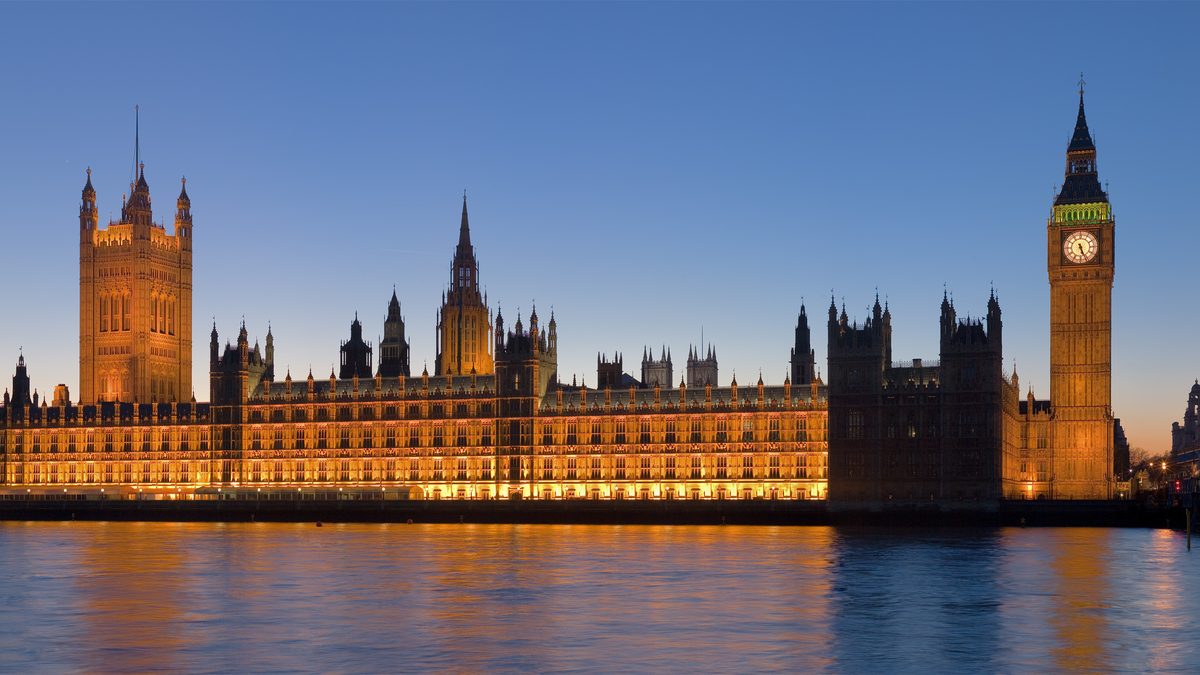
Palace of Westminster at dusk. The Public Accounts Committee, the House of Commons Defence Committee, and the National Audit Office sit at the parliamentary end of UK procurement scrutiny. The framework set out below relies on those institutions, plus two new instruments — an Industrial Policy Override Declaration register and a Standing Procurement Review Board — to close the structural gap the Type 45 accountability trail makes legible. Image: David Iliff (Diliff), CC BY-SA 3.0 via Wikimedia Commons.
Executive framing
The companion ISC piece on Type 45 sets out a five-element primary-source audit of the July 2000 investment decision: named minister (Geoff Hoon, Secretary of State for Defence), named institutional decision (Ministry of Defence (MoD) main investment decision on Integrated Full Electric Propulsion (IEP)), named specification gap (no requirement for full-capacity sustained operations in hot regions such as the Gulf), named testing truncation (Rolls-Royce / Northrop Grumman WR-21 Intercooled Recuperated Gas Turbine post-redesign hours cut after the recuperator change), and named drivers (UK industrial-base preservation under Horizon-collapse schedule compression). The trail is unusual in modern UK procurement because it survives twenty years of political rotation as a citable record. The point of assembling it was pattern recognition rather than blame attribution. This piece carries the recognition into prescription.
The structural problem the Type 45 trail makes legible is not that ministers occasionally exercise override authority on industrial-base, employment, or sovereignty grounds. The problem is that they do so without a contemporaneous declarative instrument, leave the department before the technical cost matures, and are replaced by successors who inherit the remediation cost without inheriting the decision record. Hoon left Defence in May 2006. The Power Improvement Project (PIP) contract was signed in March 2018. Full PIP fleet completion is targeted for 2028. The accountability lag between decision and full cost realisation in this case runs to twenty-eight years.
A reform proposition addressing that lag has to do three things at once. It has to preserve the ministerial authority to override technical advice on legitimate grounds, including industrial-base preservation, employment, and sovereign supply. It has to make the override visible at the point of decision, in a form that survives political rotation. It has to create market and institutional pressure on the technical and industrial actors whose silence at the override moment contributes to the long-tail cost. The framework set out below (six instruments, four legislative-grade and two procedural) is designed against those three constraints.
Three structural failures inside the July 2000 decision
Three distinct failures sit inside the Type 45 main investment decision, and each has a different reform implication.
Failure 1: the override was unweighted
Hoon was presented with a binary engine choice (Rolls-Royce WR-21 or General Electric LM2500) and an industrial-base argument (Rolls-Royce signalling a marine gas turbine exit if the WR-21 lost). What he was not presented with, on the open record, was a quantified technical risk premium attached to the WR-21 path: a probability distribution over expected cost growth if the recuperator architecture failed at battle tempo, and a sterling-range estimate of that cost. The contemporaneous “greater degree of risk to the programme” acknowledgment is rhetorical. It is not a number, not a probability, not a triggered-conditions list. The override was therefore made against an unspecified hazard. This is a procedural failure rather than a judgement failure. A minister cannot calibrate a trade if the technical side has not been required to publish the calibration.
Failure 2: the absence of a contemporaneous accountability instrument
The Investment Approvals Committee (IAC) process produces an internal record that flows into the MoD’s Major Projects Report inputs and the National Audit Office (NAO) review cycle. It does not produce a public declarative document signed by the minister. Nothing in the 2000 Type 45 record states, in substance: I am overriding the lower-risk technical option on industrial-base grounds; the technical risk premium I am accepting is £X with probability Y; the conditions under which I would reverse this decision are Z. Without that instrument, the decision becomes uncontestable by the time it matures. The 30 June 2020 written answer (Parliamentary Question UIN 66798) accepted departmental liability twenty years after the fact, which is the right outcome on the contracts that existed but the wrong outcome for accountability. The department absorbed the cost because the minister had no document to be held to.
Failure 3: risk-diffusion as the institutional default
The 2011 MoD-commissioned independent study distributed the failure across “a large group of unconnected individual causes” and pronounced IEP “remained a sound choice.” This is the standard equilibrium output of a system where the commissioning department also writes the terms of reference. The 2016 House of Commons (HoC) Defence Committee inquiry Restoring the Fleet and the 2020 written answer cut through the diffusion because they sit outside the department’s commissioning authority. The architecture of UK procurement currently relies on parliamentary inquiry as the corrective mechanism, which means corrections only happen when Parliament chooses to look. A thin layer of defence against twenty-year-tail decisions.
Why retrospective accountability is the wrong reform target
The reform target has to be prospective. Two retrospective alternatives look attractive but do not work.
Personal ministerial liability for procurement decisions decades after the fact would invert the constitutional position on collective Cabinet responsibility, deter capable individuals from taking ministerial roles, and would fail evidentially. Hoon’s decision was framed as a calculated trade-off based on the information presented to him at the time, and that framing is largely accurate. The problem is not that he made a bad choice; the problem is that the choice architecture did not require him to declare what he was buying and at what price. A liability regime targeting the choice rather than the architecture would punish the wrong target.
Stripping ministers of the override authority itself fails in a different direction. Override authority on industrial-base, employment, and sovereignty grounds is a legitimate function of elected government; it is the mechanism by which procurement decisions can be weighed against considerations narrower technical optimisation cannot capture. Removing it would shift those considerations into less visible channels (off-record political pressure on department officials, post-decision lifecycle support contracting) rather than eliminate them. The override is real and should be preserved. It just should not be invisible.
The framework: six instruments
Six instruments, structured around the principle of preserving authority while making the exercise of authority declarative, priced, and durable.
01Industrial Policy Override Declaration (IPOD)
When a Secretary of State signs off a main-gate investment decision against the technical recommendation of the Investment Approvals Committee on industrial-base, employment, or sovereignty grounds, the override must be accompanied by a published declaration. Four required elements: the technical recommendation overridden; the industrial-policy benefit purchased, with metrics (jobs retained, capability preserved, sovereign supply secured); the technical risk premium accepted, expressed as expected cost-growth probability and a sterling-range estimate; and the conditions under which the override would be reversed. Published within thirty days of the decision. Held on a public NAO-administered register.
Modelled procedurally on existing Cabinet Office Ministerial Direction protocols, where ministers overriding accounting-officer advice issue a written direction that is published and laid before Parliament. The IPOD extends that principle from spending controls to procurement architecture choices. It does not constrain the override; it requires the override to be expressed in a form a successor minister, the NAO, or a future Defence Committee can interrogate.
02Twenty-year accountability hold
Each IPOD is indexed to the named minister and held on the public register indefinitely. When remediation costs materialise on the programme, NAO reporting cross-references the original declaration automatically. A reputational instrument, not a legal one. Ministers retain full decision authority. What changes is that the override survives the political cycle as a cited document rather than as a buried internal minute.
Hoon would still have signed the WR-21 decision in July 2000. The PIP cost would now sit on his published procurement record, automatically linked from any NAO or HoC Defence Committee inquiry referencing the decision. The deterrent effect is mild, by design. The point is to make the record stick, not to convert procurement decisions into career-ending events.
03Industrial Policy Premium at bid stage
Where an IPOD is anticipated (a single national supplier being protected against a lower-risk foreign alternative) bidders are required to price an explicit change-management premium into the bid, backed by a contractual fix-on-failure clause covering specification gaps that a competent prime contractor should have surfaced during design. This shifts a portion of the long-tail liability off the public purse and onto industry, and rewards bidders who invest in maturity testing.
Rolls-Royce’s MT30 success on Type 26, the Australian Hunter-class, the Japan Maritime Self-Defense Force Mogami-class, and the 24 April 2026 Royal Australian Navy Mogami selection is in part because the company itself absorbed the engineering lesson from the WR-21 cycle. The procurement system should reward that absorption explicitly. The 2020 written answer’s acceptance that liability “rests with the MOD” was correct under the contracts that existed in 2000. The point now is to write better contracts.
04Architectural Validation Gate
For first-of-class platforms, no main-gate investment decision can be signed off until the prime mover and primary energy architecture has been validated, on a land-based test rig, against a published mission-profile envelope including thermal extremes, sustained tactical electrical load, and battle-damage degradation. Land-based testing written into the gate criteria as a contractual minimum rather than a contractual aspiration.
The Type 45 testing truncation (approximately 1,900 to 3,000 hours after the recuperator redesign, with in-service failures emerging at 4,000 to 5,000 hours of use) is precisely the failure mode this gate would prevent. The cost is real but small relative to the £160 million PIP programme. The gate also has a second-order benefit: it tells industry early that maturity testing is the contractual minimum, so bid pricing reflects it rather than absorbing it as deferred risk.
05Standing Procurement Review Board (SPRB)
A statutorily-protected body modelled in part on the Office for Budget Responsibility (OBR), with a duty (not just an option) to publish a real-time scoring of each major procurement against the three design-before-steel criteria: change-management discipline, design-maturity trajectory, integration validation. Not advisory in the conventional sense. Publication is automatic; ministerial response is required within a defined window.
The SPRB is the institutional voice the 2011 internal review structurally could not be, because the 2011 review was commissioned by the department whose decision was under examination. The National Armaments Director (NAD) role created in 2025 is a partial answer to the same gap. The SPRB is the part the NAD cannot fill, because the NAD sits inside the department and reports to the Secretary of State. Independence requires statutory protection from departmental absorption.
06Automatic post-mortem trigger
When remediation costs on a programme exceed a defined threshold (10 per cent of original procurement value or £100 million absolute, whichever is lower) an automatic HoC Defence Committee inquiry is triggered, with a duty to produce named-individual accountability findings. Not a discretionary inquiry; a triggered one. The trigger converts parliamentary scrutiny from a chosen mechanism into a guaranteed one.
The Type 45 PIP contract value of £160 million against an original Type 45 programme value of approximately £6.46 billion across six hulls would not have crossed the 10 per cent threshold on programme value. The architectural scope of the remediation (cutting hulls open to install additional diesel generator capacity, reconfiguring the platform management system, replacing the intercooler-recuperators) is exactly the qualitative pattern a £100 million absolute threshold catches. Both metrics are needed.
Mapping the framework against existing reforms
Each instrument addresses a specific failure mode the post-2016 reform programme has not yet fully reached. The mapping is in the table below.
| Failure mode (Type 45) | Existing reform addressing it | Gap remaining | Proposed instrument |
|---|---|---|---|
| Override unweighted; no quantified risk premium published | None | Full | IPOD (Instrument 1) |
| No contemporaneous accountability instrument surviving political rotation | None | Full | IPOD + 20-year hold (Instruments 1, 2) |
| Industry silent on specification limits at decision moment | NSbS Sponsor Group (partial) | Significant | Industrial Policy Premium (Instrument 3) |
| Testing truncation accepted under schedule pressure | JSP 655 acquisition framework (partial) | Moderate | Architectural Validation Gate (Instrument 4) |
| Risk-diffusion in department-commissioned reviews | None inside department; partial via NAO and Defence Committee (discretionary) | Full on a standing basis | SPRB (Instrument 5) |
| Twenty-year lag between decision and parliamentary scrutiny | NAO Major Projects Report (annual; reactive) | Significant | Automatic post-mortem trigger (Instrument 6) |
The post-2016 reform programme (National Shipbuilding Strategy (NSbS) 2017 with the 2022 Refresh, the Levene Defence Reform 2011, the NAD role created in 2025, the Equipment Plan ten-year horizon) has done useful work on the structural pressure point that produced the Horizon-collapse schedule compression in 2000. The drumbeat pipeline visibility the NSbS introduced reduces, though does not eliminate, the ad-hoc industrial-base pressure on individual programme decisions. The NAD recentralises departmental visibility on the £30 billion-plus invest budget. None of these reforms reaches the contemporaneous declarative instrument at the point of override. That is the gap the framework above closes.
Why not the obvious alternatives
Three alternatives recur in commentary on procurement reform, and each falls short of the framework.
Ban industrial-policy considerations from procurement. This compresses legitimate sovereign-industrial decisions into purely technical ones and forces the considerations into less visible channels (informal lobbying, post-decision lifecycle support contracting). It also would not have prevented the Type 45 outcome: even with industrial considerations excluded, a department under Horizon-collapse schedule pressure can still truncate testing and accept an under-validated architecture. The override is not the only failure mode in the trail.
Always select the lower-risk option. This collapses procurement decision-making into a single criterion (minimum technical risk) and forfeits the legitimate policy weight of sovereignty, employment, and industrial capability. The MT30 architecture that powers Type 26, Hunter-class, and Mogami exists in part because Rolls-Royce stayed in marine gas turbines through the WR-21 period. A 2000-era decision on pure technical-risk grounds would have selected the LM2500, ended UK marine gas turbine capability, and the 2020s programmes would now be sourcing prime movers from a foreign supplier. A real cost the technical-risk-only criterion does not capture.
More inquiries, faster. More frequent NAO reviews, more Public Accounts Committee sessions, more departmental “lessons-learned” reports. This addresses the symptom rather than the architecture. Reviews proliferate already. The Type 45 outcome was not produced by under-reviewing; it was produced by a decision instrument that did not require declarative weighting at the time, plus a review cycle (the 2011 internal study) that produced exactly the diffuse-causation finding the design of the cycle was always going to produce. Adding another review of the same architecture replicates the existing failure rather than correcting it.
Implementation pathway
Of the six instruments, four require legislation and two can be implemented administratively.
The Industrial Policy Override Declaration (Instrument 1), the twenty-year accountability hold (Instrument 2), and the Standing Procurement Review Board (Instrument 5) require primary legislation if they are to be statutorily protected. The IPOD register is implementable by Cabinet Office direction in its first iteration, but converting it to a statutory register with NAO administration needs legislation. The SPRB is statutory by design, anything less would leave it exposed to departmental capture during periods of fiscal pressure, which is precisely when the SPRB’s scrutiny matters most.
The Industrial Policy Premium (Instrument 3) is contractual and can be embedded in the next major procurement framework refresh, plausibly via the Defence and Security Public Contracts Regulations or revised standard MoD terms and conditions. The Architectural Validation Gate (Instrument 4) is implementable through revisions to the JSP 655 acquisition operating framework and the gate criteria published by the Investment Approvals Committee. Both can be done administratively without primary legislation, though both would benefit from being placed on a statutory footing once the legislative window opens.
The automatic post-mortem trigger (Instrument 6) is a HoC Defence Committee standing-order matter and requires the Committee itself to adopt the trigger. The Committee already has the procedural authority. What is missing is the standing commitment to use it. The 2016 Restoring the Fleet inquiry was a discretionary act by that Committee in that Parliament. A standing commitment converts the discretionary act into a guaranteed mechanism, which is the precise structural change the framework needs.
The political feasibility test sits on Instruments 1, 2, and 5. Each constrains future ministerial flexibility, and ministers have a structural disincentive to create instruments that constrain their own override authority. The implementation pathway is therefore probably to anchor the framework to a specific anticipated decision where the override pressure is visible and contested in advance: the Type 83 destroyer architecture choice, the Australia / United Kingdom / United States (AUKUS) Pillar II capability decisions, or whichever next major naval programme triggers the same industrial-base-versus-technical-risk tension. Anchoring to a forthcoming decision rather than presenting reform in the abstract is the way the political coalition (Defence Committee, NAO, Public Accounts Committee, parts of industry that want predictable decision rules) gets assembled.
The framework in one place
Six-Instrument Framework
- Industrial Policy Override Declaration (IPOD). Public ministerial declaration at the point of override, with quantified risk premium and reversal conditions. NAO-administered register. Legislation preferred; Cabinet Office direction in first iteration.
- Twenty-year accountability hold. IPOD indexed to named minister and cross-referenced automatically when remediation costs materialise. Procedural. Cabinet Office direction.
- Industrial Policy Premium. Bidders required to price change-management discipline into the bid, with contractual fix-on-failure clause. Contractual. Procurement framework refresh.
- Architectural Validation Gate. Land-based prime-mover validation against published mission-profile envelope before main-gate sign-off. JSP 655 revision and IAC gate criteria.
- Standing Procurement Review Board (SPRB). Statutorily-protected body publishing real-time three-criterion scoring of major procurements. Primary legislation.
- Automatic post-mortem trigger. HoC Defence Committee inquiry triggered on remediation cost crossing 10 per cent of programme value or £100 million absolute, with named-individual findings duty. Defence Committee standing order.
References
- ISC Defence Intelligence. “The Type 45 Accountability Trail: Named Decisions, Named Failures, Named Costs.” 24 April 2026. integratedsynergyconsulting.com
- ISC Defence Intelligence. “Marinette to Govan: US Warship Manufacturing Lessons and the Twenty-Year UK Record.” 24 April 2026. integratedsynergyconsulting.com
- ISC Defence Intelligence. “Mogami, MT30 and the Australian Test of Design-Before-Steel.” 24 April 2026. integratedsynergyconsulting.com
- UK Parliament. Written Question 66798: Type 45 Destroyers — Repairs and Maintenance. Answered 30 June 2020. questions-statements.parliament.uk
- House of Commons Defence Committee. Restoring the Fleet: Naval Procurement and the National Shipbuilding Strategy. HC 221. November 2016. publications.parliament.uk
- HM Government. National Shipbuilding Strategy. September 2017. gov.uk
- HM Government. Refresh to the National Shipbuilding Strategy. CP 605. March 2022. gov.uk
- Lord Levene of Portsoken. Defence Reform: An Independent Report into the Structure and Management of the Ministry of Defence. June 2011. gov.uk
- Cabinet Office. Ministerial Code. 2024 edition. gov.uk
- Cabinet Office and HM Treasury. Managing Public Money. 2023. gov.uk
- Office for Budget Responsibility Act 2011. (As comparator institutional model for the SPRB.) legislation.gov.uk
- National Audit Office. Major Projects Report 2011. November 2011. nao.org.uk
- Infrastructure and Projects Authority. Annual Report on Major Projects 2023–24. March 2024. gov.uk
- HM Government. Announcement of the National Armaments Director appointment. 2025.
- UK Parliament. Defence Select Committee and Public Accounts Committee — Standing Orders and Terms of Reference. committees.parliament.uk
ISC Commentary
The hardest sentence to write in any reform proposition on UK defence procurement is the one that admits the existing reforms have already done useful work. The 2017 National Shipbuilding Strategy and the 2022 Refresh introduced drumbeat pipeline visibility and Client Board / Sponsor Group / Master Plan governance that materially reduces ad-hoc industrial-base pressure on individual programmes. The Levene reforms devolved equipment budget authority to Front-Line Commands. The NAD role created in 2025 recentralises oversight on the £30 billion-plus invest budget. None of these is cosmetic. Each addresses part of the failure pattern Type 45 exemplifies.
The framework above adds the part the post-2016 reforms have not yet reached: the contemporaneous, declarative, public instrument at the point of ministerial override, plus the standing independent body to put external pressure on the moment the override is exercised. NSbS governance smooths the structural pressure on individual programmes. The NAD centralises departmental visibility on the equipment plan. The Levene reforms move budget authority closer to the user. None of those mechanisms generates a citable record of ministerial override for the post-mortem twenty years later, and none of them puts a publication-duty body outside the department.
For defence executives and investors, the operational implication is that programmes carrying anticipated industrial-policy override pressure (AUKUS sovereignty, the UK shipbuilding drumbeat, European defence autonomy, Type 83 architecture choice) are still being decided under the same instrument architecture that produced the July 2000 Type 45 decision. The reforms above would change that. Until they are in place, positions anchored to programmes where the override is anticipated should price the Type 45 precedent as an active risk rather than a settled lesson. The mechanism for doing so is to read the next decision against the six-instrument framework prospectively: which instrument is missing, which counterparty is silent, which gate has not been published.