Steel Cases at 80,000 psi: What Federal's Peak Alloy Agreement Means for US Army Small-Arms Ammunition
Technical Summary
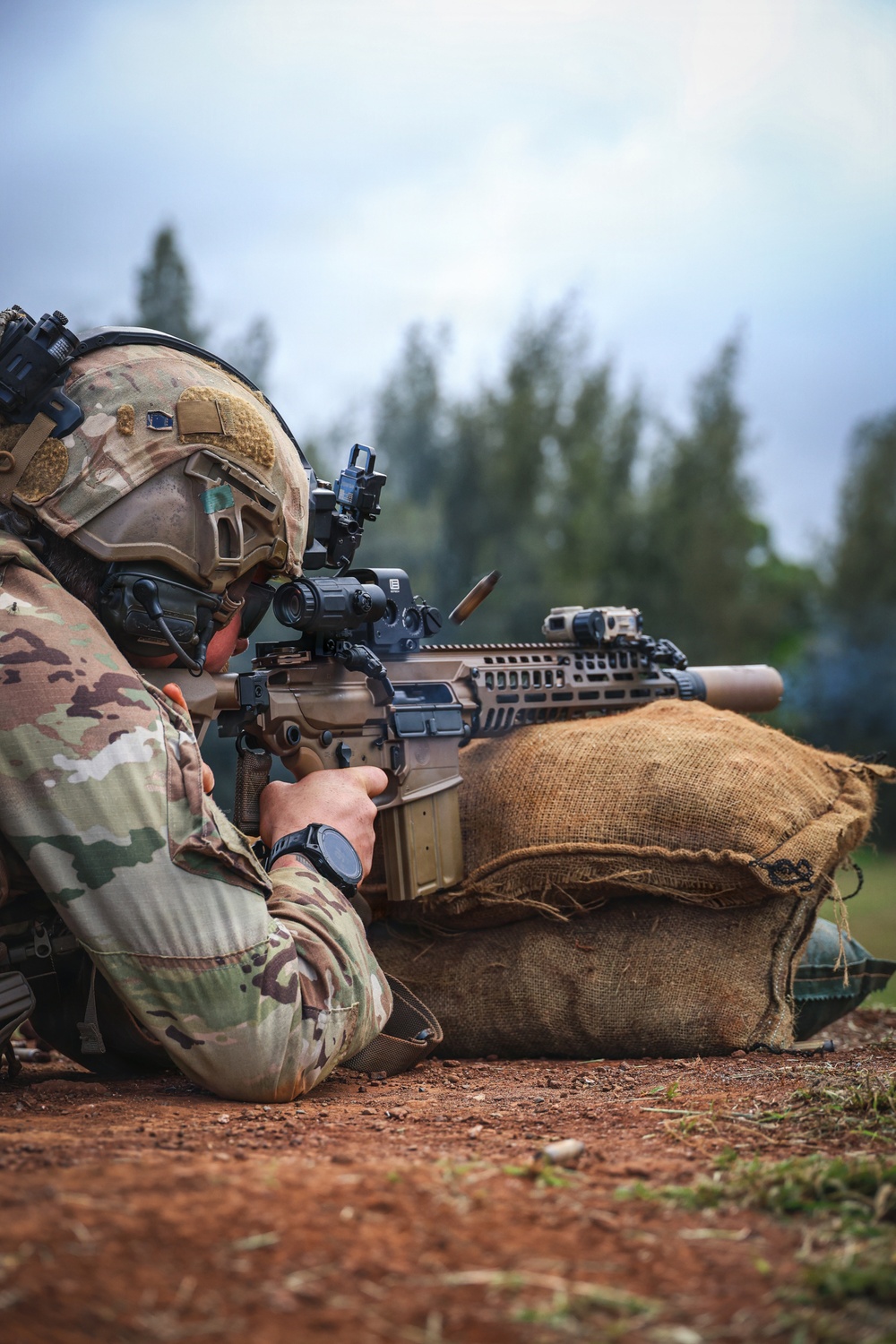
On 27 May 2026, Federal Ammunition announced an agreement giving the United States Army access to its trademarked Peak Alloy cartridge case technology. Peak Alloy replaces conventional brass with a proprietary high-strength steel alloy. The point of the swap is pressure. A stronger case can be loaded to chamber pressures well beyond what brass tolerates, and higher pressure buys more velocity from the same cartridge size. Federal rates Peak Alloy cases above 80,000 pounds per square inch (psi), roughly 552 megapascals (MPa). Common magnum rifle rounds such as the .300 Winchester Magnum and the .338 Lapua Magnum run at about 64,000 to 65,000 psi, so this is a step into territory most brass-cased cartridges never reach.
The deal is unusual in shape. It does not read like a conventional ammunition buy. It sets conditions Federal must meet before the Army receives Government Purpose Rights (GPR) in the technology, and the headline condition is industrial: Federal must first deliver 40 million Peak Alloy cases to the US Government. The agreement spans multiple chamberings, up to and including .50 calibre (12.7 x 99 mm). Several allied European countries are reported to be evaluating the same case technology. No price and no schedule have been made public. One translation note before going further, because the original German-language reporting was widely rendered into English as "handgun ammunition": the agreement covers small-arms ammunition across the calibre range, and a .50 calibre round is a heavy machine gun and anti-materiel cartridge, not a pistol round.
It was announced this week that @FederalPremium has entered into an agreement that allows the @USArmy to utilize its patented Peak Alloy ammunition case technology for use in multiple cartridges and weapon systems
— American Rifleman (@NRA_Rifleman) May 28, 2026
At higher pressures, Peak Alloy cases hang on in the chamber and absorb some of that rearward force, thereby limiting the amount transferred to the firearm to a level it was built to manage. Jake Burns, Federal Rifle Ammunition Managing Engineer, via American Rifleman (2025)
What Peak Alloy Actually Is
Federal has said almost nothing about the metallurgy. The company describes a proprietary steel alloy that "contains additional unique elements," and notes the same alloy is used in safes, nuclear reactors and other high-strength applications. It says the material was developed in response to US forces tenders. That is the full public disclosure. What matters technically is the function. Brass is the traditional case material because it is soft, formable and elastic. It expands under pressure to seal the chamber, a process called obturation, then springs back enough to extract cleanly. A high-strength steel case behaves differently. It is stiffer, it deforms less, and at the pressures Federal is quoting it has to manage sealing and extraction without the forgiving spring-back of brass. Federal's managing engineer frames the trick as the case "hanging on" in the chamber and soaking up part of the rearward thrust, so the weapon sees a load closer to the one it was designed for. Whether that behaviour holds across temperature extremes, barrel wear and sustained automatic fire is the open engineering question.
Two construction details from the commercial round carry across to the military case. Federal's Peak Alloy cases are nickel-plated, which helps with lubricity and corrosion resistance, and the company states they are reloadable when its lab-tested load data is followed. The 7 mm Backcountry also keeps a standard .473 inch case head, the same head diameter as the .30-06 Springfield, so it feeds from a standard bolt face rather than a magnum one. That choice matters for a service round. It preserves magazine capacity, and it keeps the cartridge compatible with the bolt geometry of existing weapon families.
While conventional brass and new Peak Alloy both work off the proven metallic cartridge concept, the two behave completely differently. We break down the crucial advantages of Peak Alloy over brass. #FederalPremium
— Federal Premium (@FederalPremium) November 18, 2025
The Pressure Argument: 7 mm Backcountry as Proof Point
Peak Alloy is not a laboratory promise. It is already on the commercial market. Federal launched it in 2025 in the 7 mm Backcountry hunting cartridge, and the Sporting Arms and Ammunition Manufacturers' Institute (SAAMI) standardised that round early in the year at a maximum average pressure of 80,000 psi. That figure is the tell. It is the same pressure ceiling SAAMI set for the .277 SIG Fury, the commercial twin of the Army's 6.8 x 51 mm round. The high-pressure club used to be exotic. It is becoming a category. SAAMI's drawing for the round states the design consequence in plain terms: pressures above 65,000 psi "require cartridge case and/or firearm designs that depart from traditional practices."
The ballistic case is easy to state. Federal quotes the 7 mm Backcountry driving a 10 gram bullet, about 154 grains, to roughly 960 metres per second from a case holding about 4.7 cubic centimetres. A 7 mm Remington Magnum, a physically larger case at about 5.3 cubic centimetres, manages about 950 metres per second with the same bullet weight. Smaller case, shorter barrel, more velocity. For a hunter that means a lighter rifle. For a soldier it points somewhere else: more retained energy and a flatter trajectory at distance, or the same effect from a more compact weapon.
Nine days after the Army announcement, Federal widened the beachhead. On 5 June 2026 the company launched the 6.5 Creedmoor +Peak, a Peak Alloy loading of one of the most widely chambered precision cartridges in the West. The external dimensions are identical to the brass-cased original and the round chambers in the same rifles, but the steel case runs at 80,000 psi against the 62,000 psi SAAMI maximum for standard 6.5 Creedmoor. Federal quotes a gain of roughly 90 metres per second, about 300 feet per second, over brass-cased loads, and a margin of about 30 metres per second over the larger 6.5 PRC, with similar felt recoil. Launch loads are a 130 grain Terminal Ascent and a 155 grain Fusion Tipped, with match and hunting loads to follow and dealer stock expected from August 2026. Mike Holm, Federal's director of centerfire rifle ammunition, put it plainly: "There's no going back." For an Army reading across to its own legacy calibres, the demonstration could hardly be better timed.
From Hunting Round to Government Purpose Rights
Government Purpose Rights are a specific instrument in US defence contracting. They let the Government use, modify and share the technical data for government purposes, including passing it to other contractors working on the Government's behalf, while the commercial rights stay with the company. Peak Alloy would not become Army property outright. The Army would gain the right to use it for state purposes, to have it second-sourced, and very likely to adapt and develop it inside the defence base. Federal keeps selling 7 mm Backcountry at the gun shop.
The 40-million-case condition is the most revealing line in the announcement. It turns the agreement into an industrialisation test before it is a rights transfer. Making one excellent steel case is metallurgy. Making 40 million of them, to military lot-acceptance tolerances, is manufacturing, and the two are not the same discipline. The Army is buying proof that the line scales before it commits to the technology.
There is an ownership wrinkle worth stating plainly. Federal is part of The Kinetic Group, the former Vista Outdoor ammunition business that the Czech industrial holding Czechoslovak Group (CSG) bought for about 2.23 billion US dollars in a deal completed in March 2025, after clearing review by the Committee on Foreign Investment in the United States (CFIUS). The case technology the US Army is now moving to secure sits under European ownership. That is not a problem in itself, the regulators signed it off, but it belongs in any honest reading of the deal, and it says something about how integrated the allied ammunition base has become.
The NGSW Backdrop
None of this happened in a vacuum. The Army already crossed into the 80,000 psi world with the Next Generation Squad Weapon (NGSW) programme. The M7 rifle, formerly the XM7, and the M250 automatic rifle, formerly the XM250, both chambered in 6.8 x 51 mm Common Cartridge, reached the field from March 2024. To survive 80,000 psi, SIG Sauer's 6.8 x 51 mm uses a hybrid three-piece case: a stainless steel head, a brass body, and an aluminium locking washer joining the two. It works. It is also intricate. Peak Alloy offers a different answer to the same pressure problem, a one-piece case in a single high-strength alloy. If a monolithic steel case can do at scale what the hybrid case does, it is simpler, and simpler usually wins on cost and reliability across a production run measured in hundreds of millions.
HICAR: The SOCOM Thread
A second high-pressure programme is moving at the same time, and it is not the Army's. On 18 May 2026, US Special Operations Command (USSOCOM), working through Naval Surface Warfare Center (NSWC) Crane, posted solicitation N0016426SCA004 for a Hypervelocity Improved Capability Assault Rifle (HICAR). The goal is blunt. Double the effective range of the 5.56 x 45 mm carbine from about 300 metres to 600 metres, add penetration, and do it with a new "M855A1+" cartridge loaded to roughly 82,000 psi against the 62,000 psi of today's M855A1. The new upper has to bolt onto an unmodified M4A1 lower receiver, sit on an 11 to 12 inch barrel, and run government-furnished 82,000 psi ammunition. Industry white papers are due on 8 June 2026, with live-fire pitch days at Fort Moore in September.
No public document links the Federal and Army agreement to HICAR, and the customers are not the same: the Army on one side, USSOCOM on the other. The timing is hard to ignore. Two US programmes, three weeks apart, both built on one piece of physics, a cartridge case strong enough to hold roughly 20,000 psi more than the legacy round it replaces. Peak Alloy is on the short list of technologies that could plausibly meet a HICAR-class pressure requirement. Whether it is offered, and whether it would win, is unknown today.
The Wider Field: Alternative Case Materials
Federal is not alone in chasing the brass case off its perch. SIG's hybrid design is the most widely fielded non-brass example. Shell Shock Technologies sells a two-piece nickel-alloy stainless steel case, marketed as NAS3, and loaded ammunition built on it. Ultra Defense Corporation has shown lightweight high-pressure pistol cases made by metal injection moulding (MIM). The logic running through all of them is the same: stronger walls allow higher pressure, thinner walls free internal volume for propellant, and the right alloy can take weight off the round. Brass has owned the cartridge case for more than a century and a half. For the first time in a long while it has serious competition, and that competition is being pulled along by a service appetite for more performance from the same or a smaller package.
Analysis of Effects
Higher chamber pressure is not a free lunch, and the engineering trade space is where a service introduction will live or die. Raise pressure and you tend to raise recoil impulse, muzzle blast and muzzle flash. That matters for signature, for the firer, and for whether existing suppressors and flash hiders still operate inside their design limits. Federal's claim that the case absorbs part of the recoil is interesting precisely because it pushes against that expectation, but it is a manufacturer claim and not yet independently characterised at military duty cycles.
Then there is the weapon. A case that holds 80,000 psi only helps if the barrel, chamber, bolt and locking lugs can take it too. A hard steel case may also shift wear patterns: chamber finish, extractor loading and throat erosion could all move away from the brass baseline. For every legacy weapon the Army might want to uprate, the question repeats. How much of the gun has to change, what does that cost across a fleet, and what is the through-life penalty in barrels and parts.
One piece of physics works in the Army's favour. Bolt thrust is governed by pressure acting on the area of the case head, not by pressure on its own. Federal's figures put the thrust from a standard .473 inch head at 80,000 psi on a par with a .532 inch magnum head at 64,000 psi. A weapon built around magnum bolt thrust is already close to the right load envelope, which is part of why uprating an existing design is even on the table. The pressure rise is real, but it does not land on the breech as an entirely new structural demand.
Personnel and Safety Considerations
The sharpest safety issue is cross-loading. A round built for 80,000 psi, chambered and fired in a weapon proofed for about 62,000 psi, is a catastrophic over-pressure event, not a minor one. The standard case head sharpens that concern rather than easing it. A high-pressure round that shares a .473 inch head and a standard bolt face with a legacy cartridge will physically fit the chamber it needs to be kept out of, so a safeguard cannot rely on the round simply failing to seat. Any service that fields high-pressure ammunition alongside legacy ammunition in similar calibres has to engineer that hazard out. The usual controls are distinct headstamping, clear packaging and handling discipline, and where the geometry allows, chamber or magazine features that resist the wrong round entering the wrong weapon. Proof and safety certification, governed by the As Low As Reasonably Practicable (ALARP) principle and the relevant national and NATO ordnance safety standards, would sit ahead of any operational use. None of this argues against the technology. It is the homework that comes with it.
The 6.5 Creedmoor +Peak launch makes the hazard concrete rather than theoretical. Federal does not clear the round for every 6.5 Creedmoor rifle. It tells shooters to check with their rifle's maker, requires clean and dry chambers, and publishes compatibility guidance naming confirmed rifles from Christensen Arms, Weatherby, Seekins Precision, Geissele and Nemo Arms, with CVA and Bergara compatible apart from the CVA Scout. An advisory list can work for an informed civilian buyer who owns the whole decision. A military supply chain cannot run on one. That is why any service adoption of high-pressure ammunition in a legacy calibre would lean on headstamping, packaging, issue discipline and engineered controls rather than a published list of approved weapons.
Data Gaps
Several questions cannot be answered from the open record and should travel with this story:
- Quantified performance. How much velocity or terminal effect does the higher pressure deliver in service calibres, rather than in the commercial 7 mm Backcountry.
- Signature and suppressor compatibility at the higher pressures, including blast and flash.
- Manufacturing scalability of a hard steel alloy case to military volumes and lot-acceptance tolerances.
- Unit cost per case, and whether the performance gain justifies it against recyclable brass.
- Weapon wear, and the extent of any modification required to legacy weapons to accept the higher pressure.
- The alloy itself, which Federal has chosen not to disclose beyond a few descriptive phrases.
The first 40 million Peak Alloy cases will probably be spent answering several of these questions.
References
Source-evaluated under NATO STANAG 2022 (Reliability A–F / Accuracy 1–6). Tier 1 = government primary source; Tier 2 = quality news / specialist defence media; Tier 3 = authoritative aggregator / trade reference.
- T1SAM.gov, US Government – Hypervelocity Improved Capability Assault Rifle (HICAR), solicitation N0016426SCA004, 18 May 2026. (Reliability A / Accuracy 1)
- T1SAAMI – Public introduction: 7 mm Backcountry cartridge and chamber drawing, MAP 80,000 psi, 27 January 2025. (Reliability A / Accuracy 1)
- T2American Rifleman, Guy J. Sagi – Federal Signs Agreement With U.S. Army to Improve Ammo Performance, 28 May 2026. (Reliability B / Accuracy 2)
- T2American Rifleman – Federal's New 6.5 Creedmoor +Peak: The Peak Alloy Case Goes Mainstream, 5 June 2026. (Reliability B / Accuracy 2)
- T2Soldier Systems Daily – Federal Signs Landmark Agreement with U.S. Army to Accelerate High-Performance Ammunition, 31 May 2026. (Reliability B / Accuracy 2)
- T2Military Times – SOCOM wants to revive legacy M4 carbine with 'hypervelocity' cartridge, 3 June 2026. (Reliability B / Accuracy 2)
- T2hartpunkt.de, Thomas Lauge Nielsen – Originating German-language reporting on the Peak Alloy agreement and the HICAR programme, June 2026. (Reliability B / Accuracy 2)
- T3SHOT Business – CSG Completes Acquisition of The Kinetic Group, March 2025. (Reliability C / Accuracy 3)
- T3Wikipedia – 7 mm Backcountry: standard .473 inch case head, bolt-thrust equivalence, nickel plating and reloadability, accessed June 2026. (Reliability C / Accuracy 3)
Corrections & updates welcome. If you hold open-source data that refines or corrects any parameter in this article, please contact [email protected] citing the specific claim and your source. Verified corrections will be incorporated and credited in the revision history. AI-assisted technical assessment based on open-source material. Not a formal intelligence product.