U.S. Navy Awards $585M Sole-Source Contract for F-35 Helmet Displays Covering 296 Aircraft
The F-35’s single-source dependency on one joint venture for its most critical pilot interface has never been tested by a production surge, and the Lots 18–19 contract reveals why the Pentagon is not yet trying to change that. The $585 million IDIQ award to Collins Elbit Vision Systems for both LCD and OLED helmet configurations signals the programme’s quiet pivot toward organic light-emitting diode technology while simultaneously locking in a three-year sole-source production commitment through July 2029.
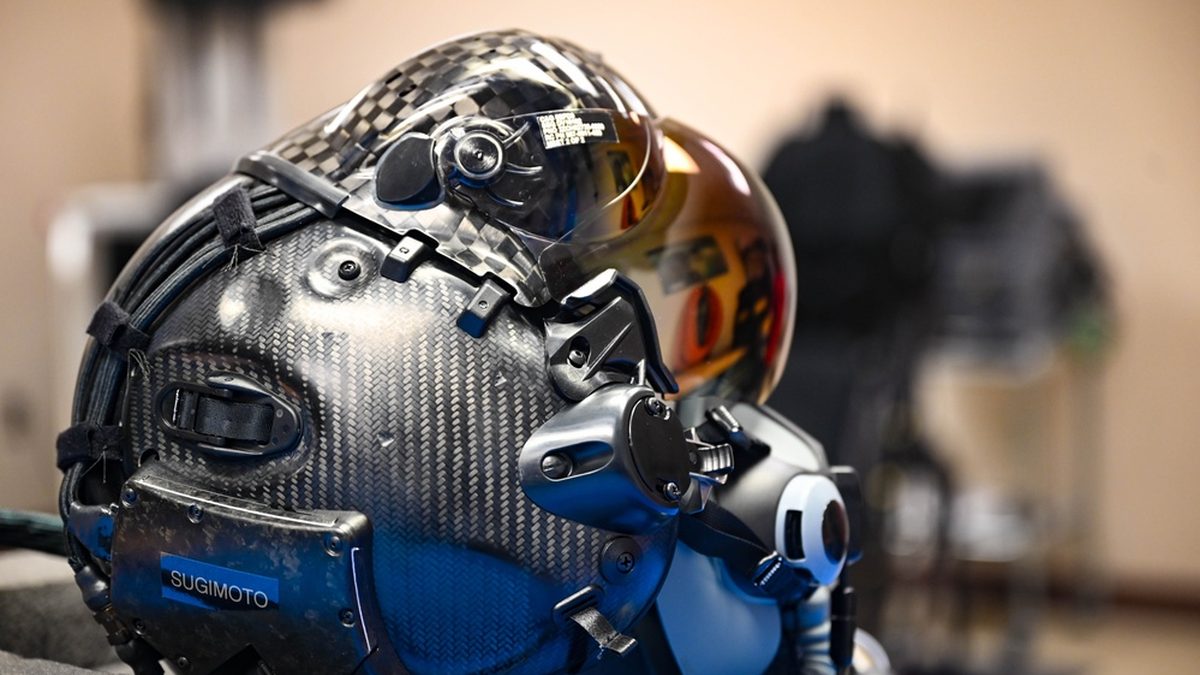
U.S. Air Force photo by 1st Lt. Jymil Licorish, 33rd Fighter Wing, Eglin AFB / Public Domain (DVIDS)
Contract Architecture and Scope
The U.S. Navy awarded contract N0001926D0004 on 31 March 2026 to Collins Elbit Vision Systems LLC (Cedar Rapids, Iowa) for $585,007,226 FFP IDIQ. The award covers helmet-mounted display systems, assembly units, and related components for Lots 18 and 19 of the F-35 acquisition programme, extending through July 2029. This is a direct award, unlike Lots 15–16, which channelled through Lockheed Martin as the airframe prime contractor.
Work will be performed at two locations: Wilsonville, Oregon (80% of total effort) and Fort Worth, Texas (20%). The Wilsonville facility remains the sole production site for F-35 generation III helmet-mounted display systems (HMDS). The contract contains $0 initial obligation, which is standard for IDIQ ceilings, but obligated funding will flow through individual task orders as aircraft production schedules firm up. The award carries no minimum or maximum purchase guarantees, typical of IDIQ structures, but the 2029 completion date locks in production availability through the full Lots 18–19 delivery window.
Collins Elbit Vision Systems is a 50/50 joint venture between Collins Aerospace (RTX) and Elbit Systems of America. CEVS has delivered over 20,000 helmet systems across 40 platforms and logged more than 1 million cumulative flight hours. The company holds the exclusive contract for F-35 generation III HMDS; no competitor qualifies as an alternative supplier under current DOD specifications. The scope includes helmet display units for the United States Air Force, United States Navy, United States Marine Corps, Cooperative Program Partners (Canada, United Kingdom, Netherlands, Norway, Italy, Denmark, Australia, Japan), and Foreign Military Sales customers.
OLED Technology Insertion and Industrial Base Implications
The inclusion of both active-matrix LCD and OLED display variants within a single production contract represents a deliberate acceleration of organic light-emitting diode insertion into the F-35 fleet. The OLED variant, developed under Office of Naval Research sponsorship, offers superior visual clarity, lower latency, and reduced system weight compared to LCD predecessors. By embedding the OLED transition within regular production rather than funding it as a separate technology demonstration programme, the Navy reduces integration risk and accelerates fielding across the fighter fleet.
The industrial base concentration is absolute. Wilsonville, Oregon handles 80 percent of all work; Fort Worth provides 20 percent as a secondary node. This geography means any facility-level disruption at Wilsonville (supply chain breakage, workforce loss, geopolitical vulnerability, or natural disaster) directly threatens the production schedule for 296 aircraft and their pilot interface systems. The sole-source nature of this award acknowledges that reality. The Pentagon has made a calculated decision to accept industrial base concentration in exchange for production continuity, proven quality, and speed of OLED integration. No competitor exists with comparable technical maturity or qualification status.
CEVS simultaneously operates the Zero-G HMDS+ development programme for the Navy’s Integrated Joint Helmet-Mounted Cueing System, which completed Critical Design Review in December 2025 and covers F/A-18E/F and EA-18G platforms. The shared engineering base supporting both helmet programmes through 2029 creates both synergies and capacity pressure. Technology advances developed for Zero-G may accelerate future F-35 HMDS enhancements, but the same technical teams managing both contracts must balance competing timelines and production demands simultaneously.
Strategic Assessment and Industrial Policy Implications
What makes this award strategically significant is not the dollar figure but the technology bet it embeds. By folding OLED production into a regular lot contract rather than ring-fencing it as a separate technology maturation effort, the Navy has effectively declared OLED ready for operational service. That confidence rests on OLED’s demonstrated performance at the temperature extremes and vibration profiles a tactical fighter helmet must survive — a threshold LCD predecessors took years to clear.
The $0 initial obligation is standard IDIQ procedure, but the actual funding cadence will reveal whether the programme maintains momentum. Task orders must release against the $585M ceiling over the next three years, and congressional appropriation rhythm will determine whether production stays continuous or faces gaps. More pressing is the 2029 cliff: the Pentagon must have a successor contract for Lots 20 and beyond in place before this award expires, or risk a production discontinuity at the sole qualified facility.
RTX (parent company of Collins Aerospace) will recognize the contract value across its fiscal 2026 and subsequent annual periods as work orders issue. Elbit Systems of America will report its share through the joint venture. Both firms have indicated capacity to sustain the production rate; however, verification of facility readiness and supply chain resilience remains essential before task orders execute. The Wilsonville facility operates near design capacity; any unexpected demand (such as accelerated international FMS orders or allied attrition replacement) could trigger scheduling pressure.
Authoritative References
Header image: F-35 Gen III Helmet Mounted Display System at the pilot fit facility, Eglin Air Force Base. 1st Lt. Jymil Licorish / 33rd Fighter Wing / DVIDS / Public Domain.