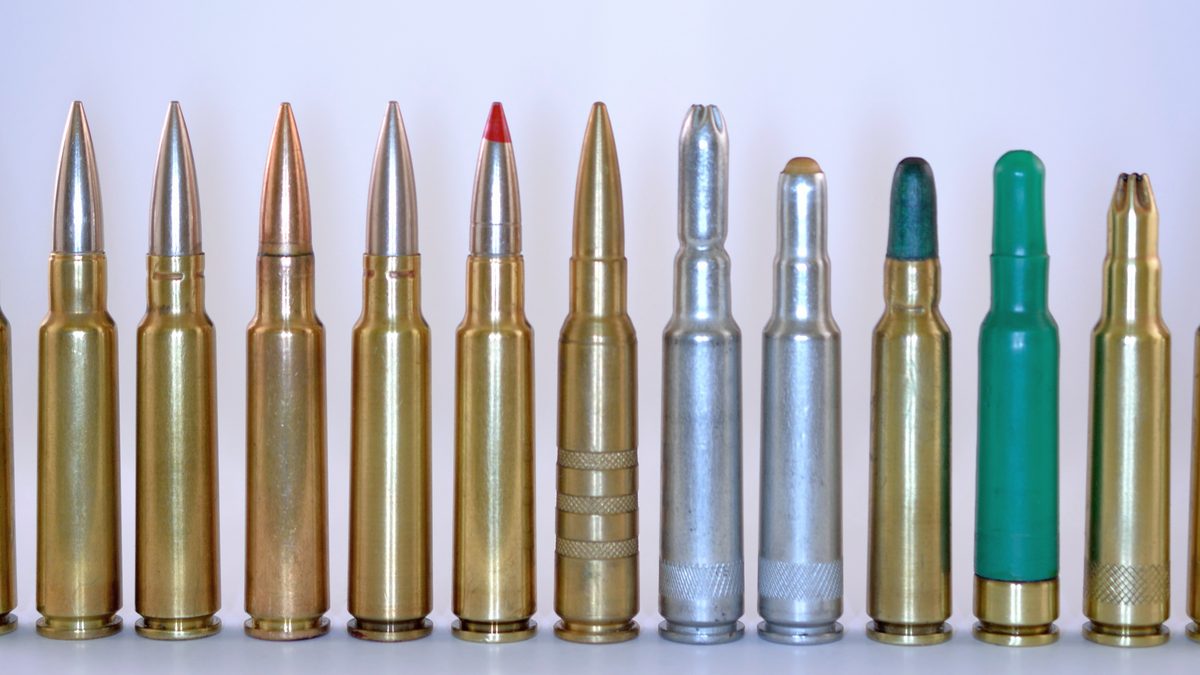
Swiss GP 11 (7.5x55mm) service cartridges, the standard Swiss rifle round historically produced at the federal ammunition works at Thun whose lineage runs to SwissP Defence. Photo: Bouterolle, via Wikimedia Commons, licensed under CC BY-SA 3.0.
Switzerland Joins NSPO's Ammunition Support Partnership, Opening the NATO Framework to SwissP Defence
Switzerland joined the NATO Support and Procurement Organisation's Ammunition Support Partnership on 2 July 2026, announced by the NSPA on 16 July and confirmed by the Swiss authorities on 17 July. The Swiss government says Swiss industry may now take part in NSPA tenders tied to partnerships Switzerland has joined. In practice that makes Swiss-incorporated firms eligible to seek NSPA Source File registration and compete for partnership requirements, subject to qualification and each competition's terms. It is access, not automatic approval of every factory for every tender.
Technical Summary
The NATO Support and Procurement Agency (NSPA) is the executive body of the NATO Support and Procurement Organisation (NSPO). Its Ammunition Support Partnership (ASP), established in 1993, is the largest of the NSPO support partnerships by membership. The partnership pools demand across a catalogue of more than 2,000 ammunition natures spanning the land, air and naval domains, and wraps that procurement in life-cycle services: stockpile monitoring, transport, disposal, spare-parts management, maintenance, technical support, configuration control and training. Switzerland has worked with the NSPA since 1996 on discrete programmes, among them air-to-air missiles, the Stinger man-portable air-defence missile and the Patriot surface-to-air system. Joining the ASP moves that cooperation from project-by-project participation to standing membership of a framework.
For a member state the mechanism is straightforward. Nations cover part of their ammunition requirement through joint procurements run by the NSPA, and the aggregated volume delivers lower unit prices and shorter delivery times than a single national buy of the same nature. Alongside the buyer-side benefit sits a supplier-side one that matters more for Switzerland's industrial base. Firms incorporated in a participating nation become eligible to seek registration in the NSPA Source File and to bid for Requests for Proposals tied to that partnership's requirements. That eligibility is a gate to competition, not a guarantee of registration or of award, and the Swiss statement is careful to say only that Swiss industry may participate in tenders connected with partnerships Switzerland has joined. Bern frames the move as compatible with Swiss neutrality on the ground that the ASP is a procurement and logistics arrangement rather than a military alliance, and it retains the right to withdraw from an activity if a participating state later becomes party to an international armed conflict.
The DGM/1911 award shows the pattern in miniature: a £42.3 million direct contract for small-arms ammunition, primers and grenades placed with SwissP Defence as the sole original manufacturer. Framework eligibility now extends that single national relationship across the ASP. ISC Defence Intelligence assessment
SwissP Defence and the UK DGM/1911 Link
The immediate industrial read on this story runs through one company. SwissP Defence AG, based in Thun, is the legal successor to the Eidgenossische Munitionsfabrik Thun and to RUAG Ammotec, and has been owned by the Italian Beretta Holding since 2022. It specialises in small-calibre and precision ammunition, including sniper natures such as the .375 SwissP. It is not a new entrant to NATO-nation supply chains. On 6 February 2026 the United Kingdom's Defence Equipment and Support (DE&S) organisation placed contract reference DGM/1911 with SwissP Defence, a two-year extension for the supply of small-arms ammunition, primers and grenades to front-line commands, valued at £42,303,333.30 excluding value-added tax and running from 1 April 2026 to 31 March 2028.
That award was a direct contract on technical grounds under the Procurement Act 2023, justified by SwissP's position as the original manufacturer of natures already held in the UK stockpile. It is a national contract, placed by one buyer under national rules. ASP membership does not replace such contracts, but it adds a second channel: the same manufacturer can now be reached through the NSPA multinational framework by any of the partnership's members, not only through a bilateral national route. For a mid-sized Swiss producer competing against far larger primes, framework access is a material change in addressable market.
UK contract DGM/1911 (open sources)
| Buyer | Defence Equipment and Support (UK MOD), Bristol |
| Supplier | SwissP Defence AG, Thun |
| Scope | Small-arms ammunition, primers and grenades |
| Value | £42,303,333.30 ex-VAT (£50,764,000 inc-VAT) |
| Term | 1 April 2026 to 31 March 2028 (2-year extension) |
| Route | Direct award, technical grounds, Procurement Act 2023 |
Analysis: Industrial-Base and Procurement Effects
The ASP is not a paper construct. In January 2024 the NSPA signed multinational contracts worth about 1.1 billion euro for 155mm artillery ammunition on behalf of a coalition of member nations, and at the 2026 NATO Summit a further contract for 155mm guided ammunition was signed under the partnership. Those are large-calibre land natures rather than SwissP's small-calibre core, but they establish the scale and the mechanism into which Switzerland has now bought. The partnership's value to a supplier is the aggregated pipeline it represents: one competition can seed orders across many national inventories at once.
ISC has tracked the ASP as a recurring procurement vehicle rather than a single event. Slovenia's accession earlier in 2026 sat alongside a 120mm tank-ammunition order and a portfolio valued in the billions, and separate ASP notices through the spring mapped a steady flow of competitions. Switzerland's entry fits that trajectory and adds a technically capable small-calibre and precision producer to the pool of eligible bidders. It also lands next to the wider European effort to standardise the small-arms cartridge base: the Small Arms Ammunition Technologies (SAAT) project, led by FN Herstal and launched in January 2025 under a European Defence Agency framework, is pulling manufacturers towards common standards. A Swiss producer with framework eligibility is better placed to sit inside that standardisation conversation than one confined to national contracts.
Which Swiss Firms Could Actually Bid
Eligibility attaches to the Swiss legal entity, not to a building, and NSPA contracts with the company that qualifies rather than with a plant. Against currently operating Swiss facilities, the credible candidates for partnership work fall into three groups: makers of complete ammunition, suppliers of propellants and key components, and disposal specialists. The table below sets out the principal entities and the scope for which each is plausibly relevant.
| Swiss legal entity | Swiss facility | Relevant ASP scope |
|---|---|---|
| SwissP Defence AG | Uttigenstrasse 67, Thun | Complete small-calibre military ammunition: pistol, rifle, machine-gun and precision or sniper cartridges, developed and manufactured at Thun. |
| saltech AG (swissAA / Colt CZ Group) | Dulliken and Daeniken, Solothurn | Small-calibre ammunition including NATO 5.56, 7.62 and 12.7mm families, plus 40mm, grenades and pyrotechnic or less-lethal products where an RFP covers them. |
| RWM Schweiz AG (Rheinmetall) | Neuland 17, Altdorf; development in Zurich; test centre at Studen | Medium-calibre land, naval and air-defence ammunition, conventional and programmable, with manufacture, testing and support. |
| Saab Bofors Dynamics Switzerland Ltd | Thun area, including Allmendstrasse 74 and the Reutigen energetic-production area | Large-calibre and mortar ammunition, warheads and energetic products; Saab's competence centre for large-calibre ammunition and warheads. |
| Nitrochemie Wimmis AG | Niesenstrasse 44, Wimmis | Propellants, nitrocellulose, modular artillery propelling charges and mortar propellants. Eligible mainly for component and charge lots rather than complete rounds. |
| RWM Zaugg AG (Rheinmetall) | Wassergasse 12, Lohn-Ammannsegg | Electronic, electromechanical and mechanical fuzes for medium and large-calibre ammunition and missiles. A component producer, not normally a prime for complete rounds. |
| RUAG AG | Ammunition-disposal facility, Industriepark Altdorf | Demilitarisation, disassembly, TNT recovery, thermal destruction and recycling across small, medium and large-calibre natures. The clearest Swiss candidate for disposal competitions. |
The practical shortlist follows those groupings. For procurement of complete ammunition the candidates are SwissP Defence, saltech, RWM Schweiz and Saab Bofors Dynamics Switzerland. For propellants, charges and key components they are Nitrochemie Wimmis and RWM Zaugg, working alongside the complete-round makers. For disposal and demilitarisation the clearest candidate is RUAG at Altdorf.
Three limitations temper that list. First, NSPA contracts with the qualifying Swiss legal entity, and a plant matters only as the declared production location. Second, registration is not automatic: under NSPA supplier-qualification rules a firm from a Partnership for Peace nation may be admitted for a partnership's requirements, after which NSPA weighs legal residence, national eligibility, present capability, financial standing and past performance, and keeps the final decision. Third, partnership eligibility does not override Swiss export law: any award involving export of war materiel or special military goods still needs Swiss licences and remains bound by destination and end-use rules, and a given RFP may narrow eligible countries to those financing the requirement or tighten rules on production origin and subcontractors.
One further constraint is worth watching. Some partnership requirements are in substance a single nation using NSPA as its contracting agent for national stock, and such a requirement can be ring-fenced to that nation's own supply base or to the financing nations alone. Where a requirement is ring-fenced in that way, a Swiss firm could be registered and technically qualified yet still excluded from that particular competition on eligible-country grounds. Access to the partnership is the entry ticket, not a guaranteed seat in every specific competition.
Regulatory, Neutrality and Quality-Assurance Considerations
The first constraint is export control. Since 2022 Swiss law has restricted the re-export of Swiss-manufactured ammunition, a rule that blocked onward transfer of Swiss-origin natures to Ukraine and that materially affected SwissP's revenues. A multinational pooling arrangement, in which ammunition may be procured for members who could later be engaged in conflict, sits in tension with that restriction, and the withdrawal clause is the mechanism Bern has reserved to manage it.
The second constraint is quality assurance, where a specific limitation applies to a non-NATO supplier. NSPA can impose AQAP-2110, the Allied Quality Assurance Publication covering a supplier's quality management system, as a contractual requirement on any bidder. Mutual Government Quality Assurance is a separate matter. It runs under STANAG 4107 and AQAP-2070, and on the wording of AQAP-2070 the mutual process applies only where the delegating acquirer is a NATO nation that has ratified STANAG 4107, working through designated National Quality Assurance Authorities. Switzerland is not a NATO member, and on open sources it is not a participant in that mutual system. A Government Quality Assurance Representative therefore could not be assigned to a Swiss production line through the AQAP delegation process. Absent a specific bilateral arrangement, NSPA would have to conduct quality-assurance surveillance of a Swiss facility itself rather than delegate it to a Swiss authority, which is a real administrative wrinkle in bringing Swiss production into the framework.
Data Gaps
Several points remain open on current open sources and are stated here rather than assumed. Membership count: the NSPA release places the ASP at 28 participating nations, while the Swiss federal statement implies 27 (Switzerland plus 26 others); the one-nation discrepancy is unresolved and may reflect a counting date, with Slovenia's earlier 2026 accession bringing the total to 27 before Switzerland. Eligibility versus award: eligibility to seek Source File registration and to bid is not the same as winning work, and no NSPA contract to a Swiss firm under the partnership has been reported. Source File status: none of the Swiss firms listed above is confirmed as registered in the NSPA Source File for partnership requirements at the time of writing. Government quality assurance: no bilateral arrangement is identified on open sources that would let a Swiss authority perform delegated NATO Government Quality Assurance, so how NSPA would assure a Swiss production line is unconfirmed. Ring-fencing: whether individual partnership requirements are open to all participants or restricted to the financing nations, or to national supply, is set competition by competition and is not stated for Switzerland. Swiss intent: the specific natures Switzerland intends to buy through, or supply into, the partnership are not detailed. Export-control interaction: how the 2022 re-export restriction is reconciled operationally with multinational pooling is not spelled out beyond the withdrawal provision.
Key Questions
What is the NSPO Ammunition Support Partnership that Switzerland joined?
The Ammunition Support Partnership (ASP) is the NATO Support and Procurement Organisation's largest support partnership by membership. It lets member nations jointly procure and manage more than 2,000 ammunition natures across land, air and naval domains, aiming at lower prices and faster delivery through economies of scale.
When did Switzerland join the ASP and why does it matter for SwissP Defence?
Switzerland's membership took effect on 2 July 2026 and was announced on 16 to 17 July 2026. It makes Swiss-incorporated firms, such as Thun-based SwissP Defence, eligible to seek NSPA Source File registration and compete for partnership requirements, subject to qualification. It does not automatically approve any Swiss factory for every tender.
How does Switzerland's neutrality fit with joining a NATO ammunition partnership?
The Swiss authorities judge ASP participation compatible with neutrality because the partnership is a procurement and logistics arrangement, not a military alliance. If a participating state later becomes party to an international armed conflict, Switzerland can withdraw from the relevant activity.
References
Source-evaluated under NATO STANAG 2022 (Reliability A–F / Accuracy 1–6). Tier 1 = government primary source; Tier 2 = quality news / specialist defence media; Tier 3 = authoritative aggregator / encyclopaedia.
- T1Swiss Federal Council (admin.ch) – Switzerland expands international cooperation in ammunition procurement, 17 July 2026. (Reliability A / Accuracy 1)
- T1UK Find a Tender Service (DE&S) – Contract Award Notice DGM/1911: Supply of Small Arms Ammunition, Primers and Grenades, 6 February 2026. (Reliability A / Accuracy 1)
- T2NSPA (via GlobalSecurity.org) – Switzerland joins the NSPO Ammunition Support Partnership, 16 July 2026. (Reliability B / Accuracy 2)
- T2SWI swissinfo.ch – Switzerland joins NATO partnership for the purchase of ammunition, 17 July 2026. (Reliability B / Accuracy 2)
- T2FN Herstal – European consortium launches the SAAT project to redefine small arms ammunition standards, January 2025. (Reliability B / Accuracy 2)
- T3SwissP Defence company overview – SwissP Defence (ownership, products, history), accessed 27 July 2026. (Reliability C / Accuracy 3)
- T1NSPA – Operating Instruction OI 4200-01: supplier qualification and Source File registration, accessed 27 July 2026. (Reliability A / Accuracy 2)
- T2NATO Standardization Office – AQAP-2070, NATO Mutual Government Quality Assurance (GQA) process, accessed 27 July 2026. (Reliability B / Accuracy 2)
Corrections & updates welcome. If you hold open-source data that refines or corrects any parameter in this article, please contact [email protected] citing the specific claim and your source. Verified corrections will be incorporated and credited in the revision history. AI-assisted technical assessment based on open-source material. Not a formal intelligence product.