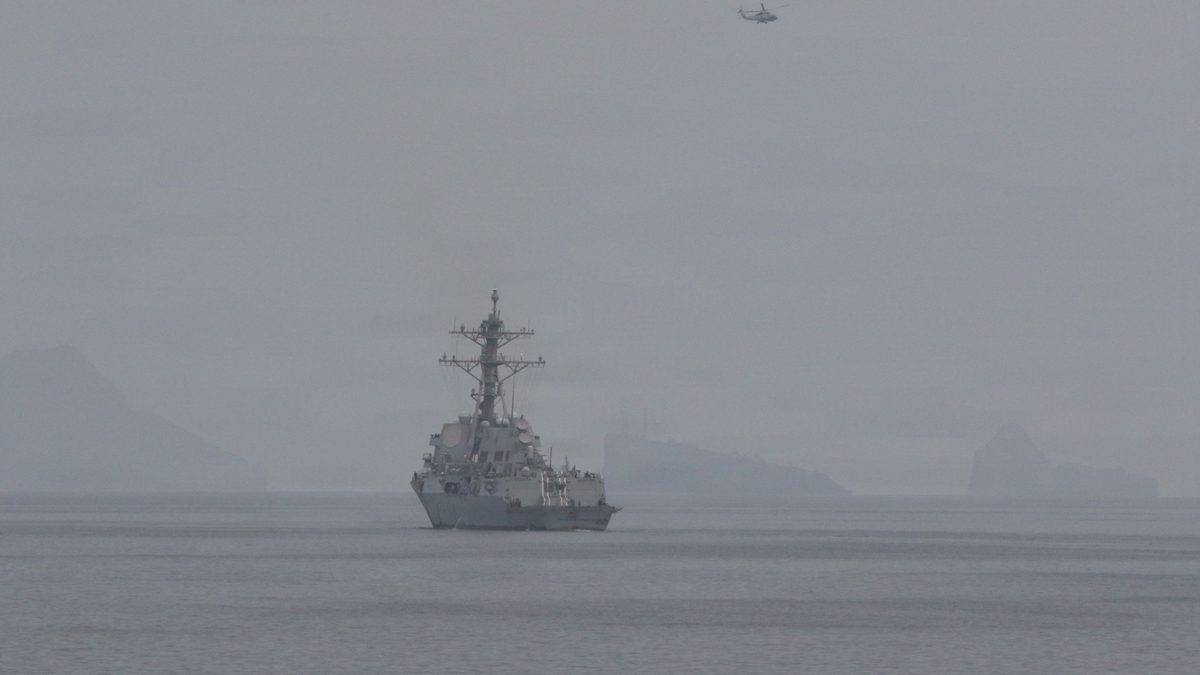
U.S. Navy photo by NAVCENT Public Affairs: U.S. forces conducting mine-clearance operations in the Strait of Hormuz, 11 April 2026. Public domain, via DVIDS. Illustrative; not an image of the July 2026 strikes.
CENTCOM's Hormuz Strike Campaign: What the Target Set Tells Ammunition Specialists
Across three nights from 7 to 12 July 2026, US Central Command struck Iranian air defences, coastal radar, anti-ship missile sites, missile and drone storage, and more than 60 Islamic Revolutionary Guard Corps small boats with precision munitions. For ammunition specialists the storage-site strikes matter most: they create secondary-detonation and unexploded-ordnance hazards that outlast the operation.
Technical Summary
US Central Command (CENTCOM) resumed offensive strikes against Iran on 7 July 2026, framing them as a response to Iranian attacks on three commercial tankers in the Strait of Hormuz: the Marshall Islands-flagged M/T Al Rekayyat, the Saudi-flagged M/T Wedyan, and the Liberian-flagged M/T Cyprus Prosperity. CENTCOM said the first night hit more than 80 targets with precision munitions, including Iranian air defence systems, command and control networks, coastal radar sites, anti-ship missile capabilities, and over 60 Islamic Revolutionary Guard Corps (IRGC) small boats. A second wave on 8 July struck roughly 90 further targets.
The 8 July target list is the one that should hold an ammunition technician's attention. Alongside coastal surveillance assets, naval capabilities and military logistics infrastructure, CENTCOM named missile and drone storage sites. Reporting of a third round on 12 July put the running total above 250 aimpoints across the three nights, with ammunition storage facilities again among the categories struck, though the per-night breakdown for that round rests on secondary reporting rather than a CENTCOM release. The munitions themselves were described only as precision natures launched from land- and sea-based fighter aircraft, drones and naval vessels. No weapon types, quantities or net explosive quantities were disclosed.
US forces struck approximately 90 Iranian military targets on 8 July alone, including air defence systems, coastal surveillance assets, missile and drone storage sites, naval capabilities and military logistics infrastructure along Iran's coastline. U.S. Central Command public release, 8 July 2026
Analysis of Effects
Read as ordnance rather than as headlines, the target set splits into three problems. The small-boat kills point to low-yield, discriminating natures. Sixty-plus IRGC craft engaged in and near a crowded waterway is a job for laser-guided rockets, small air-launched precision weapons or gunfire, not heavy standoff missiles, because collateral tolerance in the strait is close to zero. That is an assessment from the target type, not a CENTCOM statement. The fixed coastal layer, radar, air defence and anti-ship missile sites, is the natural home of air-launched standoff precision-guided munitions (PGMs) used in a suppression role. The storage sites are the third and most consequential problem.
Striking a missile or drone storage site does not simply delete its contents. A warhead that functions inside a magazine can drive sympathetic detonation across neighbouring stacks, throw intact and part-functioned stores well beyond the fence line, and scatter unconsumed energetic material across the site. What survives is explosive remnants of war (ERW): fuzed but unfired rounds, damaged propellant, and sensitised sub-components that are more hazardous to handle than they were in storage. None of this shows up in a strike tally. It shows up weeks later, when someone has to walk the ground. The sustained tempo also feeds a familiar question: three nights of precision employment draw on US inventories that open-source analysts, and ISC, have repeatedly flagged as thin after the earlier 2026 Iran campaign.
Personnel and Safety Considerations
The explosive-safety burden falls hardest around the struck storage and logistics sites. Any battle-damage assessment, recovery or eventual clearance team faces a classic post-strike magazine hazard: unexploded ordnance (UXO), unstable propellant, and the live possibility of a delayed secondary detonation among heat- and shock-affected stores. Small-boat engagements add floating and submerged debris, including unfired munitions from the craft themselves, in one of the world's busiest shipping lanes. Civilian mariners remain exposed to both the original Iranian attacks and the debris field the exchange leaves behind. Net explosive quantities were not published, so no meaningful hazard-division or safety-distance estimate can be offered from open sources. Clearance of a site like this follows a set order. Teams survey first, then render safe what they can, then dispose of what they cannot move by controlled detonation. On land that burden sits with Iranian teams; in the strait it becomes a maritime task shared among the navies and the merchant traffic that depend on the waterway.
Data Gaps
Several parameters cannot be resolved from open sources. CENTCOM did not disclose munition types or quantities, so any specific weapon named against these targets would be inference, not fact. The net explosive quantity of the struck storage sites is unknown, which prevents any hazard-division or quantity-distance assessment. Battle-damage assessment is unconfirmed and Iranian damage and casualty figures are unverified. The 12 July round's approximately 140-target figure and its target-category breakdown come from press reporting rather than a CENTCOM release, and are treated here as indicative only.
Key Questions
What did the US strikes on Iran in July 2026 target?
US Central Command said the 7 and 8 July strikes hit more than 170 targets combined, including air defences, coastal radar, command networks, anti-ship missile sites, missile and drone storage, naval capabilities and over 60 Islamic Revolutionary Guard Corps small boats. Reporting put a third round on 12 July above a running total of 250 aimpoints.
Why do strikes on ammunition storage sites create lasting hazards?
A warhead functioning inside a magazine can trigger sympathetic detonation, throw intact stores beyond the site, and scatter unconsumed energetic material. The result is explosive remnants of war: fuzed but unfired rounds, damaged propellant and sensitised components that are more dangerous to handle than they were in storage.
What munitions did the United States use against Iran?
CENTCOM described only precision munitions launched from land- and sea-based fighter aircraft, drones and naval vessels. It disclosed no weapon types, quantities or net explosive quantities. Any specific munition named against these targets is open-source inference rather than confirmed fact.
References
Source-evaluated under NATO STANAG 2022 (Reliability A–F / Accuracy 1–6). Tier 1 = government primary source; Tier 2 = quality news / specialist defence media; Tier 3 = authoritative aggregator / encyclopaedia.
- T1U.S. Central Command – U.S. Forces Complete New Round of Retaliatory Strikes Against Iran, 7 July 2026. (Reliability A / Accuracy 1)
- T1U.S. Central Command – U.S. Forces Complete Another Round of Strikes Against Iran, 8 July 2026. (Reliability A / Accuracy 1)
- T2Al Jazeera – US CENTCOM completes third round of strikes on Iran, 12 July 2026. (Reliability B / Accuracy 2)
- T2The Tribune – US hits almost 140 Iranian targets in tit-for-tat strikes: CENTCOM, 12 July 2026. (Reliability B / Accuracy 2)
- T2CNN – Iran war heats up while US weapon stocks remain depleted, 12 July 2026. (Reliability B / Accuracy 2)
Corrections & updates welcome. If you hold open-source data that refines or corrects any parameter in this article, please contact [email protected] citing the specific claim and your source. Verified corrections will be incorporated and credited in the revision history. AI-assisted technical assessment based on open-source material. Not a formal intelligence product.