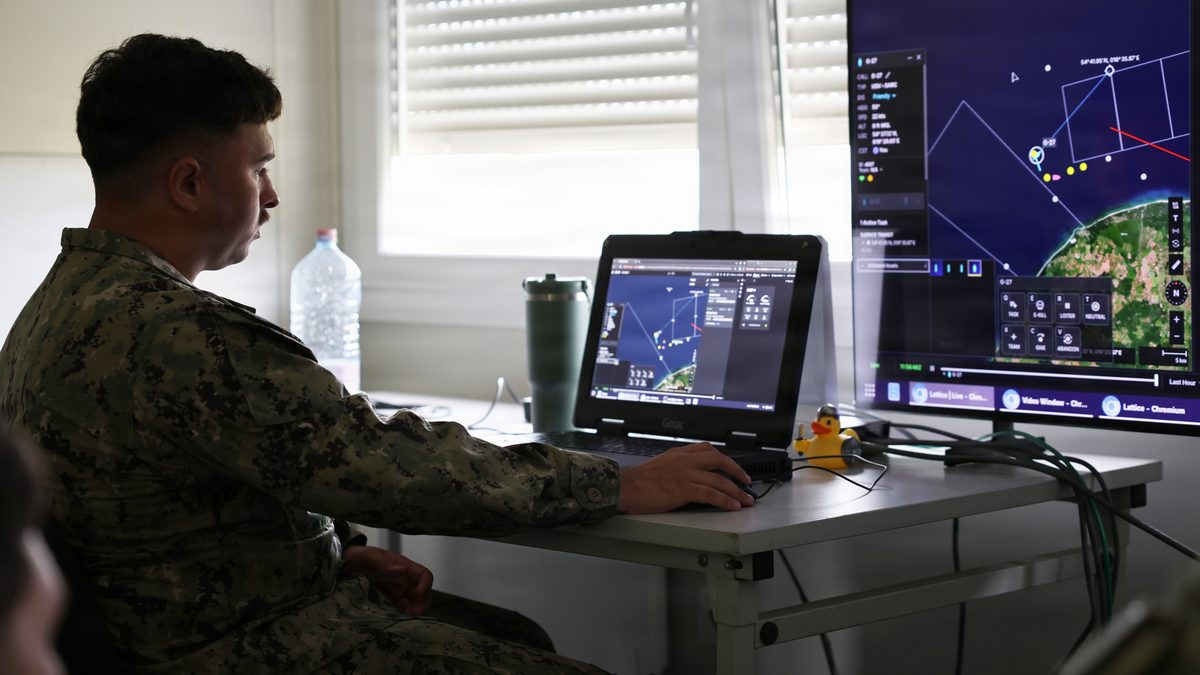
US Navy photo by Chief Petty Officer Sandi Grimnes Moreno, taken during BALTOPS 2026 (public domain via DVIDS). Illustrative: US Navy Unmanned Surface Vessel Division 32 conducts a live-fire serial with NATO forces.
Building Operational Advantage: NATO ACT's Ankara Message, Read Through a Munitions Lens
Technical Summary
NATO Allied Command Transformation (ACT) arrives at the 2026 NATO Summit in Ankara, held on 7 and 8 July, with a single message: the Alliance must convert higher defence spending into interoperable military capability at speed and scale. In a statement of 1 July 2026 and an accompanying Transformation Brief podcast recorded by Supreme Allied Commander Transformation (SACT) Admiral Pierre Vandier, ACT frames operational advantage as the ability to design, integrate and deliver operational effects faster than an adversary. For Weapons, Ordnance, Munitions and Explosives (WOME) practitioners the operative word is effect. Capability that cannot place a munition or a countermeasure on target at the required rate is not capability.
ACT sets out three connected lines of effort for the Summit. Force Lethality Enhancement (FLE), and its extended follow-on Force Lethality Enhancement eXtended (FLEX), help nations find immediately available ways to raise lethality before committing to long lead-time programmes. Task Force X (TFX) scales commercially available uncrewed systems from experiment to fielded force, now across all five operational domains. SINBAD and MAINSAIL fuse commercial space and maritime data for faster decisions. Around these sit the Layered Counter-UAS Initiative (LCI-X), which counters hostile uncrewed aircraft systems (UAS), the NATO-Ukraine Joint Analysis, Training and Education Centre (JATEC), and the NATO-Industry Forum. Each carries an ordnance and effector dimension that the headline narrative leaves implicit, and that is where this assessment concentrates.
During the Baltic activity, NATO reports that more than 70 uncrewed maritime and aerial systems operated together for one month, the largest uncrewed fleet the Alliance has run, with 24-hour activity at peak. NATO Allied Command Transformation, Task Force X-Baltic
Analysis of Effects
Force Lethality Enhancement is a munitions and effects problem. ACT describes FLE as examining how a required military effect could be delivered through different combinations of people, platforms and emerging technologies, with FLEX broadening that work across a wider set of capability challenges. In WOME terms this means matching an existing warhead, guidance kit, gun or loitering munition to a validated operational effect, then judging whether magazine depth and production rate can sustain it. The specific munition candidates ACT is assessing are not published, which is expected for pre-decisional work, so this assessment treats the individual weapon pairings as a data gap rather than asserting them. Ukraine has shown repeatedly that wartime consumption of artillery natures and attack drones outruns peacetime stockpiles, so the sustainment question is not academic. The structural point still holds: lethality enhancement without assured ammunition supply is a briefing slide, not a capability.
Task Force X shows the model working at the sharp end. What began in the Baltic as an effort to accelerate uncrewed maritime systems has, according to ACT, expanded into Task Force X-Arctic, launched on 6 June 2026 when the NATO Research Vessel Alliance departed La Spezia in Italy, and into Task Force X-Central Mediterranean, the first Ally-led iteration to span land, maritime, air, cyber and space at once. The armaments question these platforms raise is the effector. An uncrewed surface vessel or interceptor drone is decisive only when it carries or cues a lethal payload, and a US Navy Unmanned Surface Vessel Division 32 live-fire serial with NATO forces during BALTOPS 2026 shows that armed pathway being tested. The parallel Layered Counter-UAS Initiative, LCI-X, a 2026 ACT Beacon Project, integrates sensors, electronic warfare and kinetic effectors into a layered counter-drone architecture. The unresolved variables there are interceptor cost per engagement and the interoperability of national effectors and ammunition natures. Directed-energy effectors, lasers and high-power microwave, promise deeper magazines at low cost per shot but face power supply and atmospheric limits, which is why a layered initiative tests a mix of effectors rather than betting on one.
Personnel and Safety Considerations
None of these initiatives changes established explosive safety obligations. Live-fire integration of uncrewed and crewed systems, counter-UAS gun and missile engagements, and any multinational ammunition pooling all sit within existing NATO standardisation and national explosive safety regimes, including United Nations hazard classification and quantity-distance separation. An ammunition nature moved between allies must still satisfy interchangeability and qualification requirements before a round fired from one nation's system is certified in another's, which is precisely the interoperability gap ACT is trying to close. For explosive ordnance disposal and ammunition technical staff, the Ukraine-driven proliferation of first-person-view (FPV) attack drones and glide bombs, analysed through JATEC, reinforces the need for current threat data on novel initiation systems and energetic fills, rather than any change to disposal doctrine.
Data Gaps
Several load-bearing specifics are not in the open record and are flagged here rather than inferred: the individual munition, warhead or gun candidates under Force Lethality Enhancement and FLEX; the counter-UAS effector types, interceptor unit costs and magazine depths inside LCI-X; the payload and net explosive quantity of any armed uncrewed system trialled under Task Force X; and the classified detail of the ammunition interchangeability standards nations are working to alongside the NATO-Industry Forum. Each is treated as a data gap. The figures cited in this article, including dates, platform counts and the one-month Baltic duration, are drawn directly from NATO and ACT statements and carry the source ratings listed below.
Key Questions
What is NATO ACT's message at the 2026 Ankara Summit?
NATO Allied Command Transformation argues that operational advantage now depends on converting higher defence spending into interoperable capability at speed and scale. Its focus areas are Force Lethality Enhancement, the expansion of Task Force X uncrewed systems, and the SINBAD and MAINSAIL data initiatives, all aimed at delivering usable military effect faster than an adversary can.
Why does operational advantage matter for munitions and ordnance?
Because the decisive step is delivering an effect on target at a sustainable rate. Force Lethality Enhancement is a munitions and effectors problem: pairing warheads, guns and loitering munitions to validated effects, then judging whether magazine depth and production can sustain them. Interoperable ammunition and effectors are the hard part of turning commitment into capability.
What is Task Force X, and how large was the Baltic activity?
Task Force X is an ACT initiative that scales commercially available uncrewed systems from experiment to fielded force. In the Baltic, NATO reports more than 70 uncrewed maritime and aerial systems operated continuously for one month, its largest uncrewed fleet, with 24-hour activity at peak. It has since expanded to the Arctic and the Central Mediterranean.
References
Source-evaluated under NATO STANAG 2022 (Reliability A–F / Accuracy 1–6). Tier 1 = government primary source; Tier 2 = quality news / specialist defence media; Tier 3 = authoritative aggregator / encyclopaedia.
- T1NATO Allied Command Transformation – Building Operational Advantage: Allied Command Transformation at the 2026 NATO Summit, 1 July 2026. (Reliability A / Accuracy 1)
- T1NATO – Overview: 2026 NATO Summit in Ankara, July 2026. (Reliability A / Accuracy 1)
- T1NATO Allied Command Transformation – From Demonstration to Adoption: Task Force X Baltic Drives a New Model for Maritime Innovation, 2026. (Reliability A / Accuracy 2)
- T1NATO – NATO launches Task Force X-Arctic to strengthen awareness in the Arctic and the High North, 6 June 2026. (Reliability A / Accuracy 1)
- T1NATO Allied Command Transformation – Layered Counter-UAS Initiative (LCI-X) is Building NATO's Approach to a Fast-Moving Threat, 2026. (Reliability A / Accuracy 2)
- T2NATO Communications and Information Agency – NATO-Ukraine Joint Analysis Training and Education Centre (JATEC) achieves Initial Operating Capability, 2026. (Reliability B / Accuracy 2)
Corrections & updates welcome. If you hold open-source data that refines or corrects any parameter in this article, please contact [email protected] citing the specific claim and your source. Verified corrections will be incorporated and credited in the revision history. AI-assisted technical assessment based on open-source material. Not a formal intelligence product.