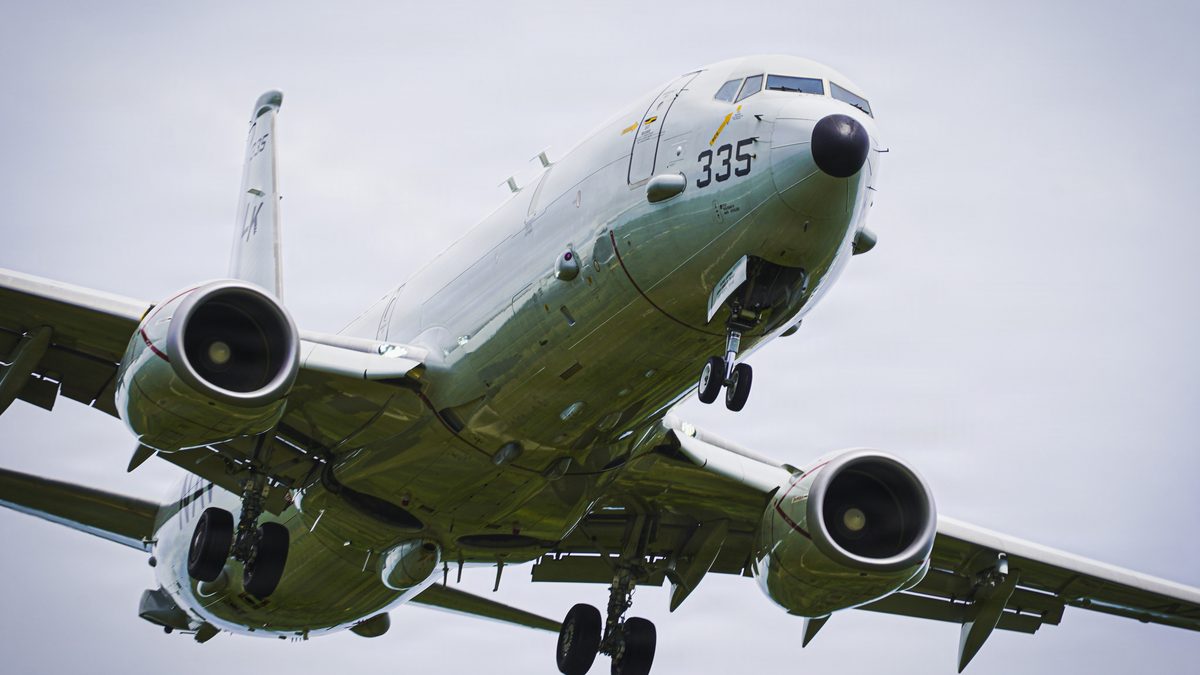
A US Navy P-8A Poseidon assigned to Patrol and Reconnaissance Squadron (VP) 26 supports Valiant Shield 2026 at Andersen Air Force Base, Guam, 24 June 2026. Representative of the P-8A airframe flown by RNZAF No. 5 Squadron. US Navy photo by Petty Officer 2nd Class William Bennett IV / DVIDS, public domain.
RNZAF P-8A Poseidon Fires First AGM-84 Harpoon Missiles at Valiant Shield 2026
A Royal New Zealand Air Force P-8A Poseidon from No. 5 Squadron detected, identified and fired two Boeing AGM-84 Harpoon missiles at a decommissioned target ship during Exercise Valiant Shield 2026. Both rounds struck the target. The New Zealand Defence Force recorded it as the first air-to-surface missile launch by an RNZAF P-8A, using missiles supplied by the Australian Defence Force.
Technical Summary
A Royal New Zealand Air Force (RNZAF) P-8A Poseidon maritime patrol aircraft and crew from No. 5 Squadron detected, identified and fired two Boeing AGM-84 Harpoon guided missiles at a decommissioned target ship during Exercise Valiant Shield 2026, with both rounds striking the target. The New Zealand Defence Force (NZDF) recorded it as the first successful launch of air-to-surface missiles by an RNZAF P-8A. The firing formed one element of a coordinated engagement in which the New Zealand aircraft operated alongside a Royal Australian Air Force (RAAF) Poseidon and two United States Navy Poseidons, with four Harpoons launched in total across the participating aircraft.
The AGM-84 Harpoon is an all-weather, over-the-horizon anti-ship cruise missile. The air-launched variant uses inertial mid-course guidance with an active radar seeker for terminal homing, and flies a low, sea-skimming profile to complicate defensive engagement. The New Zealand release cited an effective reach of at least 100 kilometres (approximately 54 nautical miles), consistent with the published performance band for the type. Unlike the surface-launched and submarine-launched Harpoon families, the air-launched round carries no tandem solid-propellant boost motor: it is released already at altitude and speed, and is sustained to the target by its turbojet. The missiles used by the New Zealand crew were supplied by the Australian Defence Force (ADF).
These activities are critical to the New Zealand Defence Force's readiness to be able to meet the challenges of a deteriorating strategic environment, and we are incredibly grateful for the support of partners to assist us in regenerating the ability to rapidly strike targets at distance. Air Commodore Andy Scott, Air Component Commander, RNZAF
AGM-84 Harpoon: air-launched baseline (open sources)
| Class | All-weather, over-the-horizon anti-ship cruise missile |
| Launch platform (this event) | P-8A Poseidon, wing hardpoint |
| Guidance | Inertial mid-course, active radar terminal seeker, sea-skimming |
| Warhead | WDU-18/B penetration and blast type, approximately 221 kg (488 lb) class |
| Cited reach (NZDF) | At least 100 km (about 54 nm) |
| Propulsion (air-launched) | Turbojet sustainer, no boost motor |
Analysis of Effects
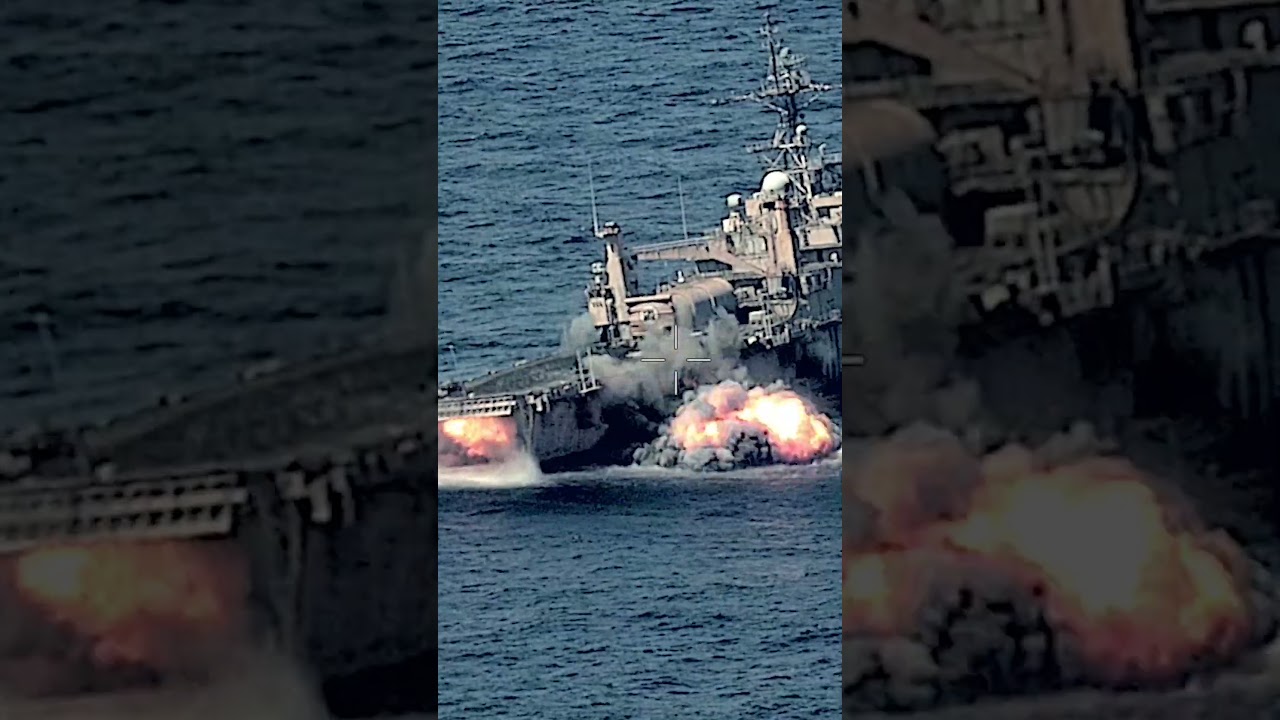
The engagement was part of a multi-domain sinking exercise (SINKEX) that combined weapons fired from the air, from surface vessels and from submarines against the same decommissioned hull. The target was the former United States amphibious transport dock USS Juneau (LPD-10), sunk on 27 June 2026 in the Philippine Sea more than 200 nautical miles offshore within the Mariana Islands Range Complex. Open-source imagery released after the event indicated that the final blow was delivered by a Japan Maritime Self-Defense Force submarine torpedo, with a Japanese SH-60 helicopter-launched AGM-114 Hellfire and a Type 90 surface-launched anti-ship missile also employed against the hull. Against a large steel target the AGM-84 warhead is designed to penetrate ship structure before functioning, so terminal effect is a combination of penetration and internal blast rather than surface fragmentation alone.
For the RNZAF the significance is less the destruction of one obsolete hull than the demonstration of a live end-to-end kill chain: sensor detection, target identification, fire-control solution, weapon release and impact, executed within a coalition sortie and deconflicted across three P-8A crews firing into a shared engagement area. That the rounds were ADF-supplied and the firing was enabled by Australian and US partners underlines that this is a regenerated rather than a wholly organic capability at present.
NZ Air Force test fired a harpoon missile from one of its P-8A Poseidon surveillance aircraft during an exercise near Guam, according to NZDF statement and photos just issued.
— Thomas Manch (@thomas_manch) July 1, 2026
Personnel and Safety Considerations
The SINKEX was conducted well offshore inside a designated live-fire range complex, the standard control measure for disposing of a decommissioned vessel by weapon effect. Air-launched anti-ship rounds present their principal handling considerations to armament, maintenance and logistics personnel during loading, arming and release rather than to disposal teams, since the weapon arms only after safe separation from the aircraft and functions at the target. No explosive ordnance disposal (EOD) render-safe activity is implied by a live-fire SINKEX of this kind. NZDF specifically credited its armament, maintenance and logistics personnel for the firing, reflecting the through-life weapon-handling competence that a strike capability depends on and which, as the Air Component Commander noted, cannot be generated at short notice.
Data Gaps
Several parameters were not released and should be treated as gaps rather than assumed. The specific AGM-84 block standard (for example Block IC or Block II) was not stated. The warhead net explosive quantity (NEQ) and explosive fill were not officially disclosed; the warhead figures quoted here are open-source estimates for the type, not confirmed values for the rounds fired. It was not stated whether the rounds carried live warheads or telemetry and inert fills, which is a common distinction in SINKEX firings. The precise sequence and timing of which of the multi-domain fires struck first was not detailed. NZDF confirmed the New Zealand aircraft fired two Harpoons and that both hit; the split of the remaining rounds across the US Navy aircraft in the four-round total was not itemised.
Key Questions
What did the RNZAF P-8A Poseidon fire during Valiant Shield 2026?
A Royal New Zealand Air Force P-8A Poseidon from No. 5 Squadron fired two AGM-84 Harpoon anti-ship missiles at a decommissioned target ship during Exercise Valiant Shield 2026 near Guam. Both missiles struck the target. It was the type's first air-to-surface missile launch for the RNZAF.
Where did the Harpoon missiles come from?
The Australian Defence Force supplied the AGM-84 Harpoon missiles used by the New Zealand crew. New Zealand holds no significant air-launched anti-ship stockpile, so partner-supplied rounds let the RNZAF prove the strike capability while its own inventory is being regenerated.
What was the target and how was it sunk?
The target was the decommissioned US amphibious transport dock USS Juneau (LPD-10), sunk on 27 June 2026 in the Philippine Sea. The multi-domain sinking exercise combined air, surface and subsurface fires, with a Japanese submarine torpedo delivering the final blow.
References
Source-evaluated under NATO STANAG 2022 (Reliability A–F / Accuracy 1–6). Tier 1 = government primary source; Tier 2 = quality news / specialist defence media; Tier 3 = authoritative aggregator / encyclopaedia.
- T1New Zealand Defence Force – RNZAF P-8A Poseidon successfully launches Harpoon missiles, 1 July 2026. (Reliability A / Accuracy 1)
- T1US Navy / DVIDS – Multilateral, Joint Forces execute sinking exercise during Valiant Shield 2026, 27 June 2026. (Reliability A / Accuracy 1)
- T2USNI News – Former U.S. Amphib Sunk in Pacific Maritime Strike Drills, 29 June 2026. (Reliability B / Accuracy 2)
- T2Stuff (New Zealand) – Watch: NZ Air Force fires Harpoon missiles for first time in major military exercise, 1 July 2026. (Reliability B / Accuracy 2)
- T2Naval News – U.S. Navy P-8 Poseidon Employs Harpoon during Formidable Shield 2021 Exercise, June 2021. (Reliability B / Accuracy 2)
- T3Wikipedia – Boeing P-8 Poseidon, accessed 1 July 2026. (Reliability C / Accuracy 3)
Corrections & updates welcome. If you hold open-source data that refines or corrects any parameter in this article, please contact [email protected] citing the specific claim and your source. Verified corrections will be incorporated and credited in the revision history. AI-assisted technical assessment based on open-source material. Not a formal intelligence product.