Reprieve, Not Retirement: The A-10 Survives 2026, but Its Replacement Still Needs Building
Congress blocked the Warthog's retirement in the 2026 defence bill, and the Air Force then extended the fleet to 2030 after it flew combat against Iran. The lesson is not that old airframes are sacred. It is that the close air support mission outlived the plan to delete it, and no funded programme replaces what the A-10 still does.
What the defence bill actually did
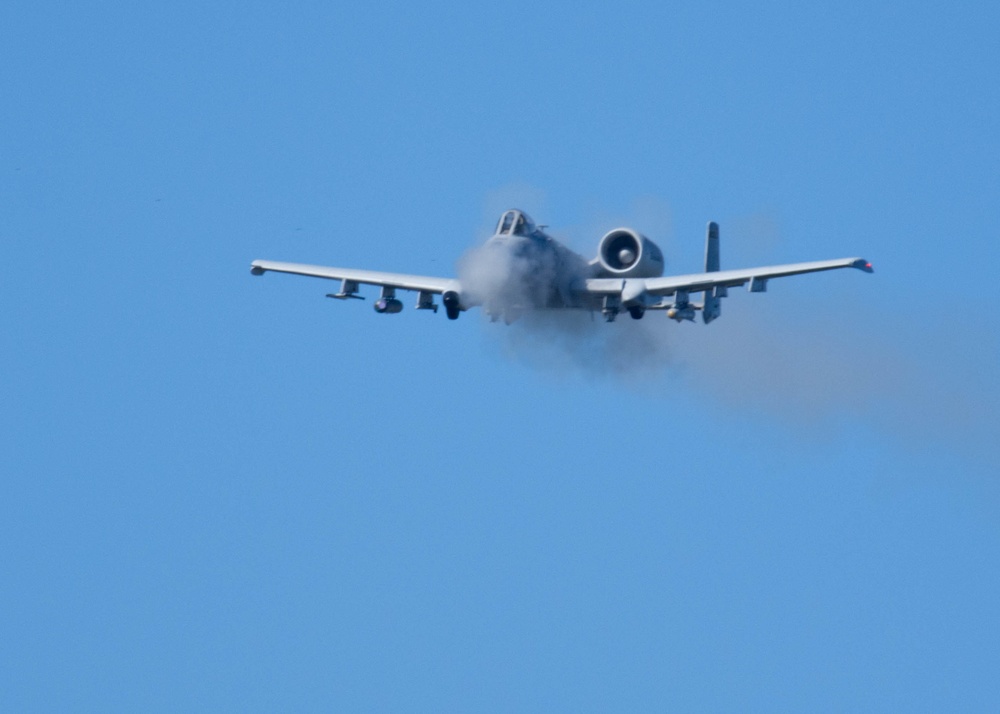
The conference version of the Fiscal Year 2026 National Defense Authorization Act (NDAA), unveiled on 7 December 2025, did something the United States Air Force (USAF) did not want. It blocked the retirement of the A-10 Thunderbolt II. The service had asked to divest all 162 A-10s still flying in 2026, three years ahead of its own previous schedule. Lawmakers refused.
The bill caps Fiscal Year 2026 divestment at 59 aircraft. It requires the Air Force to hold a floor of 103 A-10s in total, with 93 kept as primary mission aircraft inventory (PMAI), through 30 September 2026. It also orders the service to brief Congress by 31 March 2026 on its transition plan for the airframe across 2027 to 2029, unit by unit.
The money tells the story. The Pentagon estimated that retiring the whole A-10 fleet would save roughly $423 million in operations and maintenance (O&M). Keeping around two-thirds of the jets costs something in the region of $270 million, and the Air Force did not request that sum in its 2026 budget. Congress kept the aircraft; it did not fund them. Appropriators will have to add the money, or the service will have to reprogramme it from elsewhere.
The F-15E Strike Eagle was treated the same way. The Air Force wanted to retire 21 in 2026 for a saving near $140 million. The conference bill allows none. It also cuts the number of Strike Eagles the service may divest through Fiscal Year 2029 from 68 to 51. That continues a 2023 plan to halve the type, dropping 130 older-engine jets and upgrading the 99 that already carry newer engines and better electronic warfare suites. Congress has slowed every step of it.
None of this is new behaviour. Legislators have curtailed A-10 retirement again and again since the mid-2010s, protecting the squadrons and the bases that host them, and arguing that the Air Force is too quick to drop a still-useful aircraft.
| Platform | USAF 2026 request | FY2026 NDAA outcome |
|---|---|---|
| A-10 Thunderbolt II | Retire all 162 in 2026 | Cap divestment at 59; hold at least 103 (93 PMAI) to 30 Sep 2026; transition brief due 31 Mar 2026 |
| F-15E Strike Eagle | Retire 21 in 2026 (~$140m saving) | No FY26 retirements; lifetime cap cut from 68 to 51 through FY2029 |
| KC-135 tanker | Reduce fleet | Inventory floor rises from 466 to 478 (FY27), 490 (FY28), 502 (FY29) |
| F-35 funding | R&D as requested | $208.7m cut from research and development; $250m added for F-35A spare parts |
Table 1. Selected force-structure provisions in the FY2026 NDAA conference bill. Source: refs [1], [2], [3].
Why “early” is the wrong word
Four months after the NDAA, the Air Force changed its own mind. In April 2026, Secretary of the Air Force Troy Meink confirmed that the A-10 would keep flying to 2030, with two squadrons held to that date and a third to 2029. His reasoning was plain. The extension, he said, preserves combat power as the defence industrial base works to increase combat aircraft production.
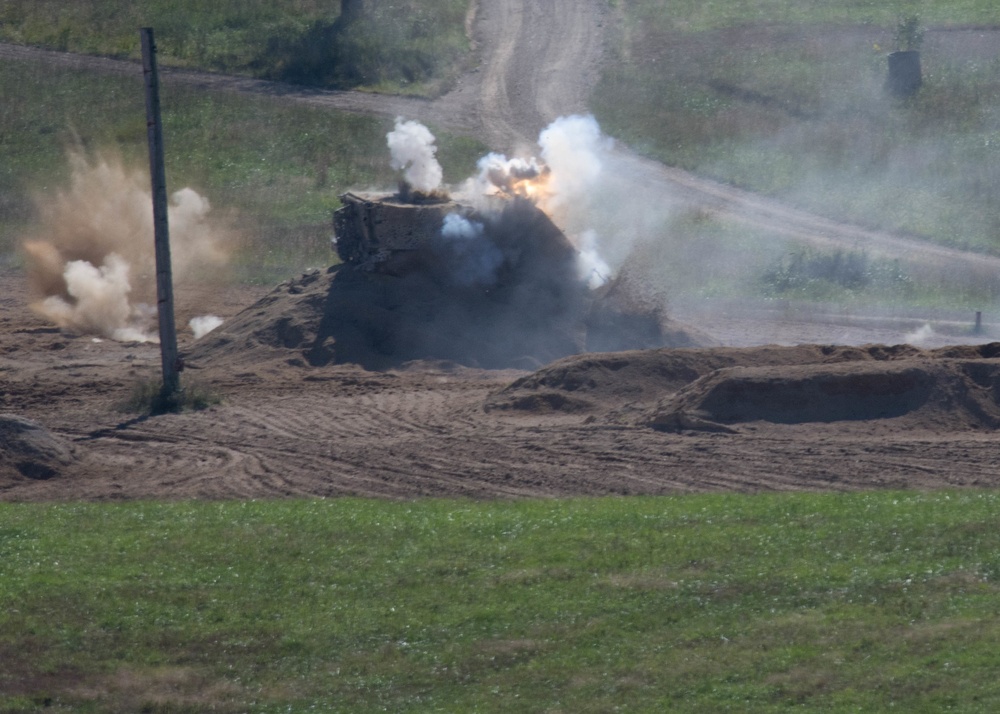
The timing was no accident. Weeks earlier, A-10s had gone back into combat. During the spring 2026 campaign against Iran, US Central Command used Warthogs to strike Iranian naval vessels near the Strait of Hormuz, and flew them on close air support (CAS) missions in Iraq and Syria against Iran-backed fighters. That freed more survivable, higher-end aircraft to work against targets inside Iran. The jet the Air Force had called unfit for modern war earned a four-year stay of execution in an actual one.
So “phased out early” misreads the situation. The A-10 is not being cut ahead of schedule. It is being held past schedule: by a Congress that will not authorise the divestment, and by a service that found it still needed the aircraft the moment the shooting started. The pressure runs the other way.
That distinction matters for how the whole debate is framed. The live question is not whether the Air Force is retiring the A-10 too soon. It is whether anything in the programme of record can do the job once the A-10 finally goes.
The capability that no single platform replaces
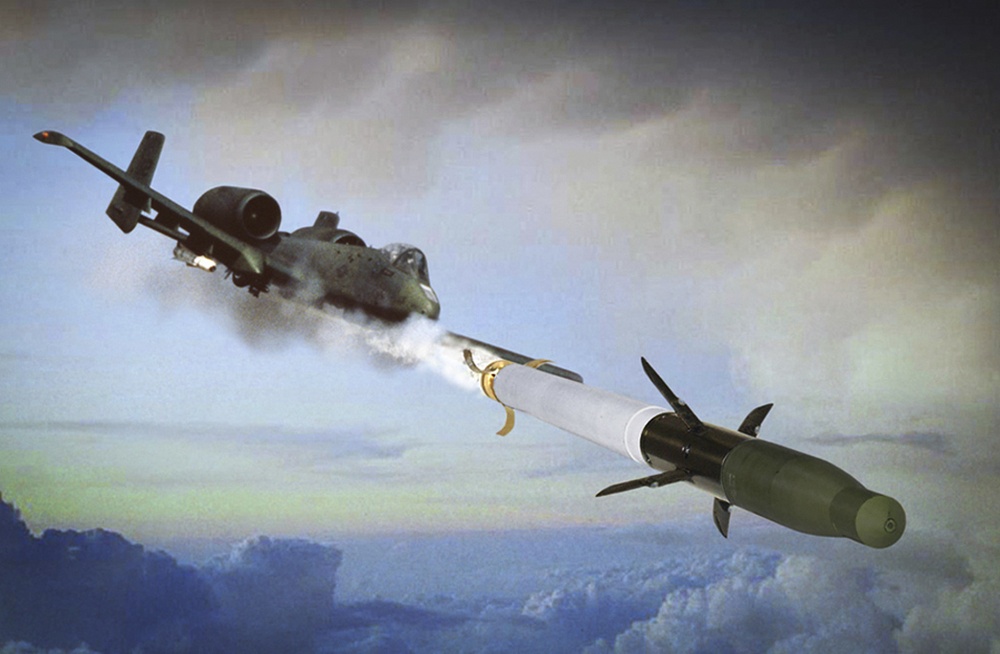
Strip away the politics and the affection, and the A-10 is a set of design choices that no current aircraft repeats in one airframe. In service since 1977, it was built around its gun: the GAU-8/A Avenger, a seven-barrel 30mm cannon fed from a 1,350-round magazine, firing armour-piercing incendiary (API) and high-explosive incendiary (HEI) rounds. Around that gun sit the features that define the type. A titanium “bathtub” that armours the pilot. Redundant flight controls. Long loiter time over the target. Low-speed handling that lets it work close to troops in contact. The ability to operate from rough, austere strips near the fight.
Its official successor in the CAS role is the F-35A Lightning II. The comparison is revealing. The F-35A is a superb penetrating strike aircraft, survivable in contested airspace in a way the A-10 is not. As a close air support platform it is a compromise. Its internal 25mm GAU-22/A gun holds about 181 rounds, against the A-10's 1,350. It costs far more per flight hour, it is tuned for high-altitude precision strike rather than low and slow work, and it is short on loiter without tanker support. It can drop a precision-guided munition (PGM) on a target from stand-off range. It cannot hang overhead for hours, trade fire with dispersed ground forces, and absorb battle damage the way the A-10 was designed to.
The Air Force's answer is that the mission, not the airframe, is what counts, and that a blend of platforms covers it. Chief of Staff General Kenneth Wilsbach has said there will be “no gap” in close air support when the A-10s retire. He may be right for permissive wars. The harder case is the contested one. That is exactly where the blend thins out.
The candidates, and why none is a successor
Look at what is actually in the inventory or coming, and the hole becomes easy to see.
The OA-1K Skyraider II is the newest attack aircraft to join the fleet, and it is not an A-10 replacement. Built by L3Harris on the AT-802 agricultural airframe for Air Force Special Operations Command (AFSOC), it is a light attack and armed-overwatch aircraft for permissive skies and special operations. The programme has shrunk rather than grown: from an original goal of 75 aircraft to around 53 now funded, with 18 delivered so far and a handful more expected by October. It is adding laser-guided Advanced Precision Kill Weapon System (APKWS) rockets, and may carry the Red Wolf stand-off weapon. Against a modern integrated air defence system it would not survive. It was never built to.
The uncrewed options are real, and immature. The MQ-9 Reaper is excellent over permissive ground and exposed almost everywhere else. Collaborative Combat Aircraft (CCA), the Air Force's uncrewed loyal-wingman effort, are still years from the line, and the first increment is shaped for the air-to-air fight rather than for putting a gun and a deep magazine over troops in contact. The F-47, Boeing's Next-Generation Air Dominance (NGAD) fighter, is a penetrating air-superiority platform aimed at the early 2030s. None of these was designed for close air support in contested airspace. The “mix” meant to replace the A-10 is a set of aircraft, each optimised for a different problem.
| Platform | Intended role | What it does not replicate |
|---|---|---|
| F-35A Lightning II | Multirole stealth strike | Loiter, magazine depth, low-cost presence, battle-damage tolerance |
| OA-1K Skyraider II | Special-operations light attack | Survivability in contested airspace |
| MQ-9 Reaper | Permissive ISR and strike | Survivability against modern air defences |
| CCA (Increment 1) | Uncrewed air-to-air teaming | A CAS gun and PGM loadout; near-term availability |
| F-47 (NGAD) | Penetrating air dominance | The close air support mission itself |
Table 2. The aircraft offered as A-10 substitutes, and the attribute each one leaves uncovered. ISR: intelligence, surveillance and reconnaissance. Source: refs [8]–[14].
Hold the line, then build the successor
Two conclusions follow, and they point the same way.
The first: keeping 1970s airframes flying is a bridge, not a destination. The A-10 fleet is drawing down its stock of trained maintainers and wing structures, and the Air Force has already shed much of the training and depot capacity that sustains the type. Meink's own wording concedes the point. The extension buys time for the industrial base, which is another way of saying the industrial base does not yet have the answer.
The second: the close air support mission is not optional, and pretending it is amounts to a budget decision dressed as a strategic one. Iran in 2026 made that case in live fire. Ground forces in contact will go on needing responsive, high-volume, survivable air support, and the side that has assumed the mission away will find the hole in the next war, not this one.
The honest course runs between nostalgia and denial. Fund a deliberate next-generation CAS capability now, before the A-10 reaches the end of its extension, rather than after. The shape of that capability is a design question with several credible answers:
- A purpose-built attack aircraft optimised for loiter, survivability and magazine depth, accepting that a CAS specialist need not be a stealth fighter.
- An optionally-crewed or fully uncrewed attack platform that delivers mass and a heavy weapons load without putting a pilot over the target.
- A high-low pairing: a survivable crewed controller directing attritable CCA shooters that carry guns and precision-guided munitions forward.
Each of these is buildable with current or near-term technology. None is funded as a close air support programme today. The industrial-base logic that justified the A-10 extension is the same logic that argues for starting now. If the United States cannot yet build enough F-35s and F-47s, it certainly cannot afford to delete a paid-for close air support fleet and put a briefing slide reading “the mix” in its place. A reprieve is not a plan. It is the time in which to make one.
ISC Commentary
The A-10 story is usually told as sentiment against progress: a beloved Cold War relic kept alive by nostalgic legislators over the better judgement of a forward-looking Air Force. The 2026 sequence does not fit that script. Congress blocked the retirement in December. The Air Force reversed itself in April. The deciding factor was not affection. It was a shooting war with Iran in which the A-10 did work that nothing else in theatre was placed to do as cheaply or as persistently.
ISC reads the episode as a capability-planning failure, not a culture-war skirmish. For a decade the Air Force has tried to retire the A-10 without funding a true successor, betting that multirole fast jets and, later, uncrewed systems would absorb the close air support mission. The bet has not paid off on the promised timeline. The F-35A is a penetrating striker first and a CAS platform a distant second. The OA-1K is a special-operations aircraft for permissive skies. CCA and the F-47 are aimed at the air-to-air and deep-strike fights. The mission the A-10 owns, survivable and high-loiter support of troops in contact against a capable enemy, has no dedicated programme behind it.
The recommendation is simple to state. Use the reprieve. The extension to 2030 is a window, and windows close. The service should turn the mandated 2027 to 2029 transition brief into the front end of a real next-generation CAS acquisition, crewed or uncrewed, rather than a managed retirement with no destination. Keeping the Warthog flying is the easy half of the decision. Building the thing that finally replaces it is the half that has been deferred for ten years, and the one the next conflict will judge.