
Israel FMS Transmittal 24-13: US$6.75bn Munitions Package — SDB-I, MK-82, Three JDAM Kit Families and 17,475 FMU-152A/B Fuzes
DSCA transmittal 24-13, originally notified to Congress on 7 February 2025 and re-notified via Federal Register Document 2026-07243 on 15 April 2026, authorises a US$6.75 billion munitions package to Israel. Headline items: 2,166 GBU-39/B Small Diameter Bomb Increment I, 2,800 MK-82 500 lb general-purpose bomb bodies, 13,000 KMU-556 JDAM tail kits for MK-84, 3,475 KMU-557 kits for BLU-109 hard-target penetrators, 1,004 KMU-572 kits for GBU-38 (MK-82), and 17,475 FMU-152A/B Joint Programmable Fuzes. ISC’s reading of the kit-to-body ratio: Israel is executing a stockpile refresh across an existing MK-80-series body inventory, not fielding complete new rounds.
Technical summary
The Defense Security Cooperation Agency (DSCA) 36(b)(1) notification is transmittal 24-13, originally notified to Congress on 7 February 2025 [1]. The report was re-delivered to Congress on 6 March 2026 and published in the Federal Register as Document 2026-07243 on 15 April 2026 [2][3]. Total estimated value: US$6.75 billion. The package covers three distinct air-delivered ordnance families and the associated precision-guidance and fuzing kits needed to field them.
Line-item composition of the notified package [1][2]:
- 2,166 GBU-39/B Small Diameter Bomb Increment I (SDB-I) — 250 lb class precision glide munition with ~16 kg AFX-757 IHE filling. Prime contractor: Boeing Defense, Space & Security (St. Louis, MO).
- 2,800 MK-82 500 lb general-purpose bomb bodies. Body manufacture: General Dynamics Ordnance and Tactical Systems (GD-OTS), Garland, TX. Filling: McAlester Army Ammunition Plant (MCAAP), McAlester, OK.
- 13,000 KMU-556 series JDAM tail-kit assemblies (variants KMU-556E/B, KMU-556F/B, KMU-556H/B with SABR-Y, and KMU-556J/B) — mate to the MK-84 2,000 lb bomb body to produce the GBU-31/B guided weapon. Prime contractor: Boeing (St. Louis, MO).
- 3,475 KMU-557 series JDAM tail-kit assemblies — mate to the BLU-109/B 2,000 lb hardened-penetrator body to produce the GBU-31(V)3/B. Boeing.
- 1,004 KMU-572 series JDAM tail-kit assemblies — mate to the MK-82 body to produce the GBU-38/B (500 lb guided). Boeing.
- 17,475 FMU-152A/B Joint Programmable Fuzes (JPF) plus additional FMU-139 impact/delay fuzes (quantity redacted in open summary). L3Harris Fuzing and Ordnance Systems (Cincinnati, OH).
- Support equipment, spares, test sets, and integration contractor support.
The package sits alongside a separate March 2026 Direct Commercial Sale (DCS) of approximately 5,000 additional GBU-39/Bs to Israel valued at approximately US$289 million [4]. Additional principal contractors named in the notification include ATK Tactical Systems (Rocket Center, WV) and McAlester AAP [1].
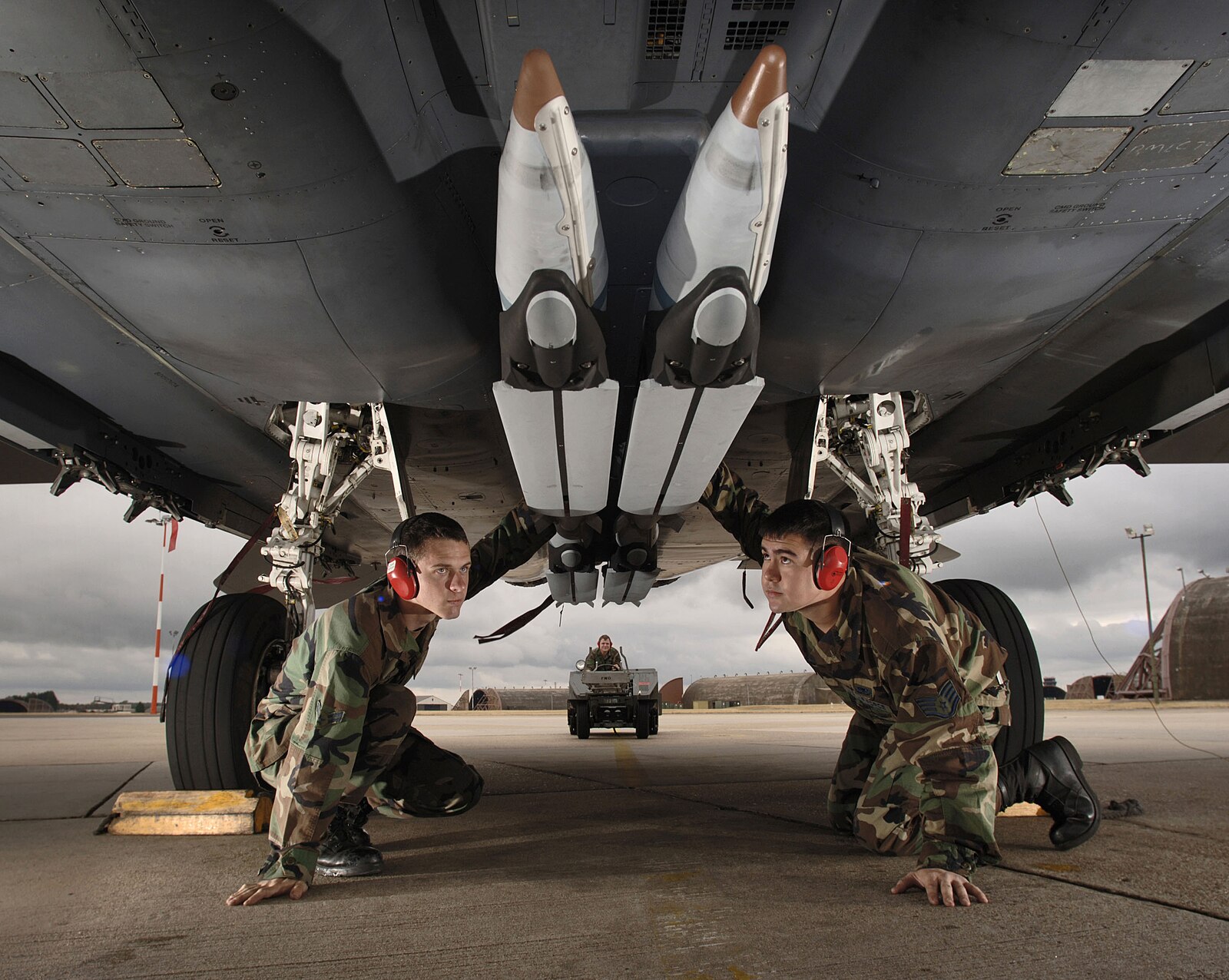
The 13,000 KMU-556 kits quoted against only 2,800 MK-82 bodies — when KMU-556 mates exclusively to the MK-84 and not the MK-82 — is the analytically significant number. Israel therefore holds (or is being replenished into) a sizeable MK-84 inventory independent of this package. The 3,475 KMU-557 kits for BLU-109 indicate a parallel refresh of hard-target penetrator capability. Tail kits are tracked as end items in their own right because they are the precision-delivery element; the warhead body is stored separately and mated at the munitions assembly point in accordance with MIL-STD-1316 system safety requirements.
Analysis of effects
The NEQ figures below are ISC-derived estimates based on standard published fill weights; the notification itself does not publish NEQ. Figures assume filled bomb bodies and notional pairing of KMU-556 and KMU-557 kits against equivalent populations of MK-84 and BLU-109 bodies already in the Israeli inventory. The GBU-39/B contains approximately 16 kg of AFX-757, an aluminised RDX-based insensitive high-explosive (IHE) filling, giving 2,166 rounds a total estimated NEQ of approximately 34,656 kg. The MK-82 body when filled contains approximately 89 kg of Tritonal (80% TNT / 20% aluminium) or H-6, producing approximately 249,200 kg NEQ across 2,800 bodies. If the 13,000 KMU-556 kits are paired against MK-84 bodies (conventional fill ~429 kg Tritonal), the corresponding population carries approximately 5,577,000 kg NEQ; if the 3,475 KMU-557 kits are paired against BLU-109 bodies (~240 kg PBXN-109 fill), that population carries a further ~834,000 kg NEQ. The aggregate implied NEQ of the full package, including notional body pairings, is therefore on the order of 6.7 thousand tonnes TNT equivalent.
Hazard Division (HD) and Compatibility Group (CG) assignments for storage and transport depend on packaging configuration, initiation state (fuzed or unfuzed) and the assessed worst-credible event for the as-delivered round. In routine practice for air-delivered GP bombs of the MK-80 series and their JDAM/SDB derivatives, bomb bodies and guidance kits are stored and transported separately; fuzes (FMU-139, FMU-152A/B) are issued to the weapon-load crew and fitted to the body at the aircraft, not stored as fuzed complete rounds. Any specific HD and CG assignment for the munitions in this package is the responsibility of the receiving nation’s explosive safety regulator (for reference, in the UK the Defence Ordnance Safety Group (DOSG); in the US the Department of Defense Explosives Safety Board (DDESB)) on the basis of the delivered configuration. The procurement notification does not publish HD or CG values and ISC does not propose them.
Quantity-Distance (QD) obligations under NATO AASTP-1 scale with the stored Net Explosive Quantity at each specific Potential Explosion Site (PES). Worked QD examples for mass-explosion-hazard stores at the kilogram-to-tonne scale typically produce Inhabited Building Distances in the hundreds of metres for per-magazine stockpiles, and distribute into multiple licensed PES rather than a single aggregated store; the ~1,100 m figure sometimes cited for this package is an ISC illustrative calculation for a hypothetical aggregated 5,500-tonne stack and is not a recommended or realistic storage configuration. Actual storage sites, category assignments, K-factors and distances are the responsibility of the receiving authority’s certifying body, not this analysis.
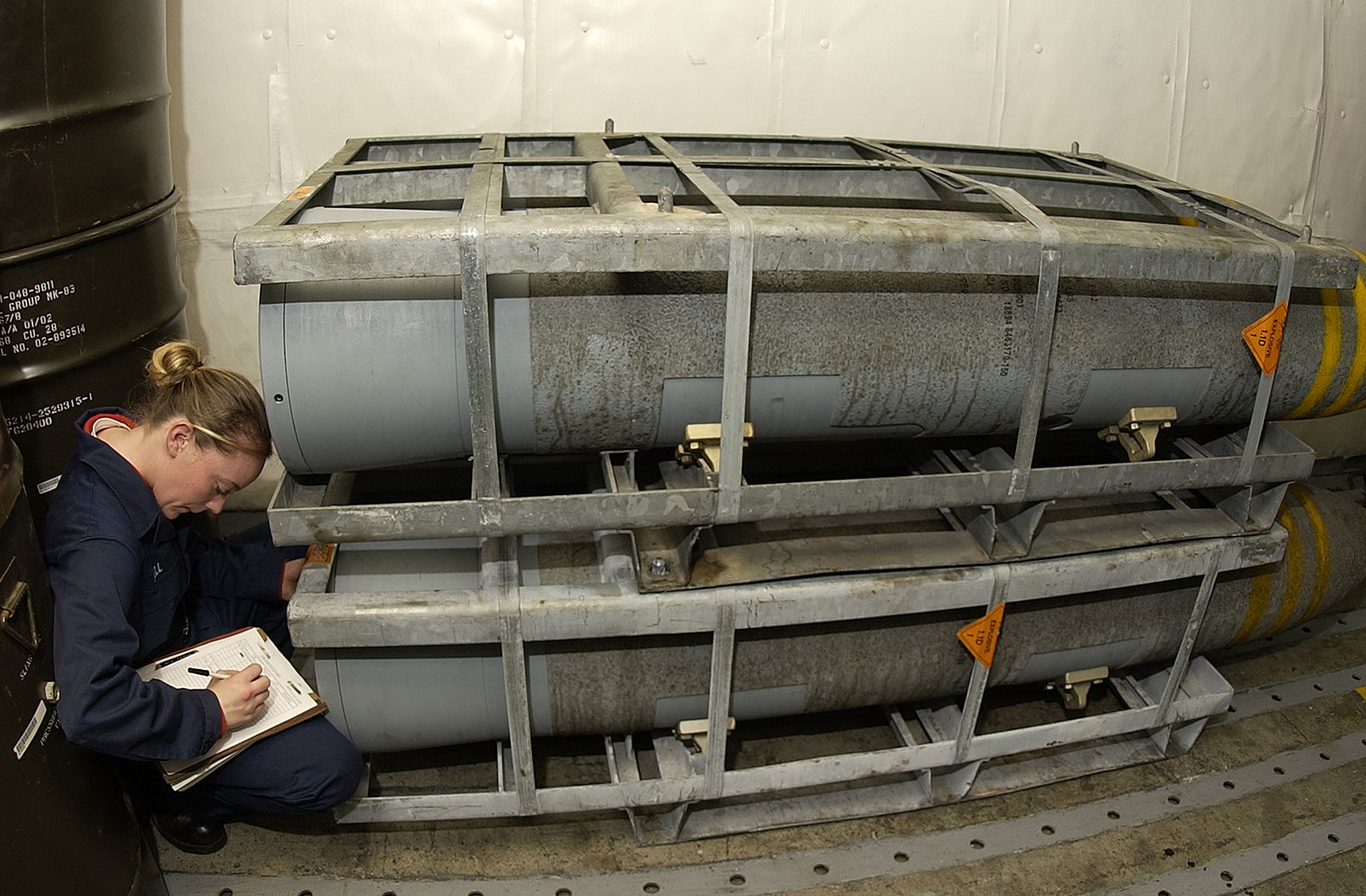
Fuzing is specified in the notification: 17,475 FMU-152A/B Joint Programmable Fuzes (JPF) plus an unredacted additional quantity of FMU-139 impact/delay fuzes. The FMU-152A/B is the in-fuze setter-compatible variant used with JDAM-kitted bodies to select detonation function (instantaneous, delay, height-of-burst) on the aircraft. This large JPF quantity is itself a stockpile indicator: 17,475 fuzes significantly exceeds the 17,479 kit-plus-body fuzing demand implied by the three JDAM line items, and points to surge inventory for free-fall and other Mk-80-series weapons in Israeli service.
Package Composition — Key WOME Parameters
Transmittal: DSCA 24-13 (Congressional notification 7 Feb 2025; re-notified FR Doc 2026-07243, 15 April 2026)
Total estimated value: US$6.75 billion
GBU-39/B SDB-I: 2,166 rounds; ~16 kg AFX-757 IHE per round; ~34,656 kg NEQ
MK-82 bomb body: 2,800 bodies; ~89 kg Tritonal per round; ~249,200 kg NEQ (filled)
KMU-556 JDAM kit (MK-84): 13,000 kits; MK-84 body fill ~429 kg; ~5,577,000 kg NEQ (paired MK-84 population)
KMU-557 JDAM kit (BLU-109): 3,475 kits; BLU-109 fill ~240 kg PBXN-109; ~834,000 kg NEQ (paired BLU-109 population)
KMU-572 JDAM kit (MK-82): 1,004 kits (GBU-38/B); shares MK-82 body and fill
FMU-152A/B JPF: 17,475 fuzes; plus additional FMU-139 impact/delay fuzes
Aggregate implied NEQ (all paired populations): approximately 6.7 thousand tonnes TNT equivalent
Hazard Division and Compatibility Group: Determined by the receiving nation’s explosive safety regulator on the basis of the as-delivered configuration. Not published in the notification; ISC does not propose a value.
Principal contractors: Boeing (SDB-I and all JDAM tail kits); GD-OTS Garland TX (MK-82 bodies); McAlester AAP (body filling); ATK Tactical Systems Rocket Center WV; L3Harris Fuzing & Ordnance Systems Cincinnati OH (fuzes)
Personnel and safety considerations
Israeli Air Force reconstitution from the 2024–2026 Gaza and Lebanon operational pulse has drawn heavily on MK-80 series and SDB stocks. A combined 17,479 JDAM kits (13,000 KMU-556 + 3,475 KMU-557 + 1,004 KMU-572) and 17,475 JPFs exceed conventional two-year operational demand for any single NATO air force and are consistent with a doctrine of maintaining 30–60 days of major-air-operation stockpile plus a defined surge inventory. From a WOME storage perspective, the package is additive to existing Israeli Air Force Central Command ordnance storage at Tel Nof and Hatzor — an ISC inference, not a disclosure in the notification — and QD constraints around those sites will compound. Under AASTP-4 process safety principles, storage in excess of 1,000 tonnes NEQ at a single Potential Explosion Site typically requires explicit risk acceptance at ministerial or equivalent level under the relevant national framework.
The following three points are ISC analysis, not content of the notification. For UK and NATO practitioners the package carries three doctrinal signals. First, the MK-84 and BLU-109 kit-only procurement model (guidance kit mated at point of use to stored inert bodies) is a stockpile-efficient approach being watched by the UK Munitions Strategy (December 2025) and Project NOBEL teams as the UK rebuilds its own air-delivered ordnance base. Second, the IHE filling (AFX-757) in the SDB-I corresponds to a STANAG 4439 IM compliance baseline that the UK has not yet fully adopted for legacy MK-80 stockpile. Third, the sustained pace of US-to-Israel munitions FMS has implications for US Munitions Industrial Base capacity: RDX, HMX, PBXN-109 and aluminium feedstock are the same inputs competing with NATO European PAC-3, SM-6 and JDAM orders.
Data gaps
- DATA GAP: FMU-139 quantity — the FMU-152A/B count (17,475) is explicit in the notification summary but the accompanying FMU-139 impact/delay fuze quantity is not disclosed.
- DATA GAP: SDB-I seeker variant — whether the 2,166 GBU-39/B are the original anti-jam GPS/INS variant or the Laser SDB (LSDB) variant is not disclosed in the open release.
- DATA GAP: MK-82 body filling state — notification does not state whether bodies are supplied empty (for filling in-country, with transport NEQ effectively zero) or pre-filled; this materially changes transport classification and QD obligations, which remain the responsibility of the receiving authority.
- DATA GAP: Delivery timeline — the 36-month lead time quoted on the March 2026 Direct Commercial Sale suggests a comparable production horizon; the transmittal 24-13 notification does not state a delivery schedule.
- DATA GAP: Israeli MK-84 / BLU-109 body population — the 13,000 KMU-556 and 3,475 KMU-557 kit totals imply Israeli access to equivalent populations of MK-84 and BLU-109 bodies already in inventory. Size and location of those body stockpiles is not in open source.
References & Authorities
- [1] DSCA press release (7 February 2025): “Israel — Munitions, Guidance Kits, Fuzes, and Munitions Support” (transmittal 24-13, US$6.75 billion). dsca.mil
- [2] Federal Register Document 2026-07243 (15 April 2026): Arms Sales Notification, Department of War, re-notification of transmittal 24-13. federalregister.gov
- [3] US Defense Security Cooperation Agency: 36(b)(1) Major Arms Sales Archive. dsca.mil
- [4] Boeing / Israel DCS (March 2026): “Boeing Secures $289 Million Direct Commercial Sale to Supply 5,000 GBU-39 Small Diameter Bombs to Israel.” thedefensenews.com
- [5] NATO AASTP-1: Manual of NATO Safety Principles for the Storage of Military Ammunition and Explosives (Quantity-Distance Tables, current edition).
- [6] STANAG 4439: Policy for Introduction and Assessment of Insensitive Munitions (IM).
- [7] US Air Force Fact Sheet: GBU-39 Small Diameter Bomb Increment I (Boeing prime contractor). airandspaceforces.com
- [8] Mark 82 bomb — manufacturing: General Dynamics Ordnance and Tactical Systems (GD-OTS) Garland TX; filling at McAlester AAP.