CSIC Mooring Sensor Recovered in Lombok Strait Exposes China’s Passive Undersea Intelligence Architecture
Most recovered Chinese underwater devices have been mobile gliders — this one was designed to sit on the seabed for a year, listening. The distinction matters: a moored sensor array with dual Acoustic Doppler Current Profilers (ADCPs), Conductivity-Temperature-Depth (CTD) instrumentation, and a dedicated acoustic surveillance package represents not transient data collection but persistent environmental preparation of a submarine transit corridor.
What Was Actually Recovered
On 6 April 2026, a fisherman operating approximately 10–16 kilometres north of Gili Trawangan in the northern approaches to the Lombok Strait hauled an unusual cylindrical object from the water. Indonesian authorities secured the device the same day and transferred it to the Indonesian Navy’s (Tentara Nasional Indonesia – Angkatan Laut, TNI-AL) base at Mataram on Lombok for forensic examination. Police and bomb disposal teams confirmed the device contained no explosives and no radioactive materials.
The object measures approximately 3.7 metres in length with a diameter of around 0.7 metres. Chinese characters and the corporate logo of the China Shipbuilding Industry Corporation (CSIC) — now operating as China State Shipbuilding Corporation (CSSC) following the 2019 merger — were visible on the hull, alongside partially obscured references to a research institute. Visible marine growth including barnacles indicated prolonged underwater deployment, consistent with a system designed for extended autonomous operation rather than a recently lost item.
Open-source naval analyst H.I. Sutton — a recognised authority on submarine and undersea warfare platforms — writing on Covert Shores, identified the device as a Deep-Sea Real-Time Transmission Mooring System developed by CSIC’s 710 Research Institute. No official U.S. or Australian government assessment of the device has been published as of 10 April 2026. This is a critical distinction. The device is not an autonomous underwater vehicle (AUV) or a buoyancy-driven glider of the Sea Wing (Haiyi) type previously recovered across the Indo-Pacific. It is a passive moored sensor — anchored to the seabed by cable, designed to float at a set depth (typically 80–300 metres below the surface), collect environmental and acoustic data continuously, and transmit findings in real time via satellite communication buoys deployed from its upper surface.
| CSIC 710 Research Institute — Deep-Sea Real-Time Transmission Mooring System | |
|---|---|
| Developer | 710 Research Institute, China Shipbuilding Industry Corporation (CSIC/CSSC) |
| Type | Passive moored undersea sensor platform |
| Dimensions | ~3.7 m length × ~0.7 m diameter |
| Deployment depth | 200–4,000 m (anchor to seabed) |
| Operating depth | 80–300 m below surface (tethered float) |
| Endurance | Up to 12 months on internal batteries |
| Mooring method | Seabed anchor, connected via lines through bull-nose rings at each end |
| Sensor suite | 2× ADCP (300 kHz + 75 kHz), 1× CTD, 1× acoustic sensor |
| Communications | Tethered (reusable) or untethered (single-use) satellite relay buoys |
| First known test | 2016 — 190 days continuous real-time data transmission, Western Pacific |
The sensor package warrants close examination. The dual ADCP configuration — one 300 kHz unit for high-resolution near-field current measurement and one 75 kHz unit for deeper water column profiling — provides layered current velocity data across a wide depth range. The CTD sensor records salinity, temperature, and pressure (depth). These three parameters together define the acoustic propagation characteristics of the water column: the speed at which sound travels, the depth at which sound channels form, and the conditions under which a submarine’s acoustic signature refracts, converges, or dissipates. The dedicated acoustic sensor adds a direct passive listening capability — recording ambient sound and potentially tracking discrete acoustic targets transiting the strait.
Why the Lombok Strait Is a Strategic Prize
The Lombok Strait separates the Indonesian islands of Bali and Lombok. It is one of the deepest and most navigable passages among the Lesser Sunda Islands, with depths exceeding 250 metres and no obstructive shallow sills. This depth profile is the critical factor. The Malacca Strait — the primary commercial shipping route between the Pacific and Indian Oceans — is too shallow for submerged nuclear submarine transits. The Sunda Strait between Java and Sumatra offers marginally better depth but remains constrained. The Lombok Strait, by contrast, permits submarine passage at operational depth with comfortable margins.
The strait sits within Indonesia’s Archipelagic Sea Lane II (ALKI II), a designated international transit corridor. It is closely monitored by the United States and Australia as a primary route for naval assets — including nuclear-powered submarines — moving between the Western Pacific and the Indian Ocean. Any nation seeking to detect, track, or predict submarine movements through this corridor would gain significant advantage from persistent environmental data collection at depth.
Deploying a passive moored sensor in this location serves a specific operational purpose. Submarine detection relies on understanding how sound behaves in a particular body of water at a particular time. Temperature gradients, salinity layers, and current patterns create acoustic ‘ducts’ and ‘shadow zones’ that can either expose or conceal a submarine. The CSIC mooring system collects precisely the data needed to build a persistent acoustic model of the Lombok Strait — a model that would allow a naval force to optimise its own submarine operations through the corridor, or to position anti-submarine warfare (ASW) assets to detect adversary submarines attempting the same transit.
Oceanographic data collected for ‘research purposes’ can directly enhance military planning in undersea warfare environments. The same measurements that characterise temperature gradients for climate science also define the acoustic propagation conditions that determine whether a submarine is detected or passes unnoticed.
— ISC assessment, drawing on Defence Security Asia reporting, April 2026A Decade of Recoveries: The Expanding Footprint
The Lombok Strait device is not an isolated incident. It sits within a documented pattern of Chinese undersea platform recoveries stretching back more than a decade and spanning the South China Sea, the Philippine archipelago, Indonesian waters, and the approaches to the Indian Ocean. This device differs from previous recoveries in a critical way: earlier finds have predominantly been Sea Wing (Haiyi) buoyancy-driven underwater gliders, which are mobile, transient, and collect data along a pre-programmed track. The CSIC mooring system represents a different operational concept — fixed, persistent, and designed for long-duration station-keeping at a specific location chosen for its strategic value.
| Date | Location | Device Type | Key Detail |
|---|---|---|---|
| Nov 2016 | Quang Ngai, Vietnam | Haiyi (Sea Wing) glider | Early Indo-Pacific deployment |
| Mar 2019 | Riau Islands, Indonesia | Sea Wing glider | Near South China Sea approaches |
| Dec 2019 | Indian Ocean | 12× Sea Wing gliders | Cooperative observation via Xiang Yang Hong 06; 12,000 km traversed; 3,400 profiling observations |
| Dec 2020 | Selayar Island, South Sulawesi | Sea Wing glider | Third identical glider in Indonesian waters within two years |
| Dec 2020 | South Sulawesi (second device) | Moored underwater sensor | CSIC-marked; identified by Covert Shores |
| 2022–2024 | Calayan Island & Masbate, Philippines | Sea Wing-type UUVs | Equipped with seabed-mapping and environmental sensors |
| Sep 2025 | Linapacan, Palawan, Philippines | UUV (type unconfirmed) | Recovered by fishermen, secured by Philippine Coast Guard |
| Dec 2024 | San Pascual, Masbate, Philippines | UUV (~2 m length) | Turned over to Philippine Navy via PNP |
| Apr 2026 | Lombok Strait, Indonesia | CSIC 710 mooring sensor | Passive moored system; 12-month endurance; dual ADCP + acoustic |
The geographic distribution is telling. Recovered devices cluster around three categories of location: contested maritime territory (South China Sea, Philippine archipelago), major commercial shipping lanes (Malacca and Lombok approaches), and submarine transit chokepoints (Lombok Strait, Sunda Strait approaches). This is consistent with a systematic programme of environmental characterisation across the Indo-Pacific’s most operationally significant waterways.
China’s stated ‘Transparent Ocean’ programme, first proposed by oceanographer Wu Lixin in 2014, aims to deploy a five-layer seabed-to-space sensor network capable of rendering strategic waters ‘transparent’ to submarine activity. The programme combines satellites, unmanned surface vessels, underwater gliders, seabed-mounted sensors, and a centralised data processing centre. China has deployed at least 42 survey ships and hundreds of oceanic sensors across the Western Pacific and Indian Ocean approaches. The CSIC mooring system recovered in the Lombok Strait is entirely consistent with the fixed seabed-sensor layer of this architecture.

The Russian Parallel: Undersea Reconnaissance Against NATO
China is not alone in deploying undersea platforms to map the maritime environment around adversary infrastructure. Russia has been conducting analogous — though operationally distinct — undersea reconnaissance against NATO nations with increasing intensity, particularly targeting submarine communications cables and energy pipelines in the North Atlantic, the Baltic Sea, and the waters around the United Kingdom.
On 9 April 2026 — three days after the Indonesian recovery — British Defence Secretary John Healey announced that the United Kingdom had tracked a covert Russian submarine operation in and around British waters lasting over a month. The deployment involved three vessels: one Akula-class nuclear-powered attack submarine and two specialist submarines operated by the Main Directorate for Deep Sea Research (GUGI, Glavnoye Upravleniye Glubokovodnykh Issledovaniy). Healey stated the Akula was ‘likely a decoy to distract’ while the GUGI vessels ‘spent time over critical infrastructure relevant to us and our allies.’
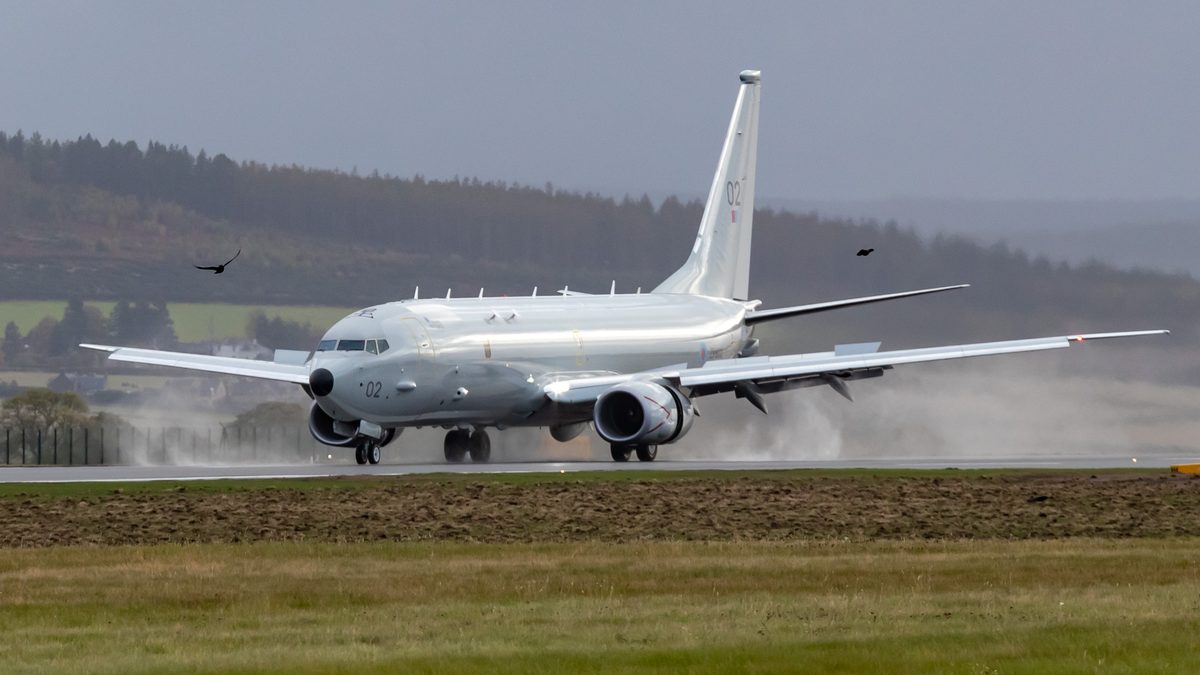
GUGI submarines are purpose-built for surveying underwater infrastructure during peacetime and sabotaging it in conflict. The UK response involved a Royal Air Force (RAF) P-8 Poseidon maritime patrol aircraft logging over 450 flight hours, the Royal Navy Type 23 frigate HMS St Albans covering several thousand nautical miles, Merlin naval helicopters, sonobuoys, and the Royal Fleet Auxiliary (RFA) tanker Tidespring. Norway contributed a P-8 and a frigate to the coordinated tracking operation. Healey warned of ‘serious consequences’ for any attempt to damage subsea infrastructure, adding: ‘I’m making this statement to call out this Russian activity, and to President Putin, I say “we see you.”’
This is not a new pattern. Russia’s intelligence-gathering vessel Yantar, operated by GUGI since 2015, has been repeatedly tracked near trans-Atlantic internet cables, in the Irish Sea over cables serving Microsoft and Google data centres, and north of Scotland surveying UK undersea cable routes. In November 2024, Yantar was escorted from the Irish Sea by the Irish offshore patrol vessel LÉ James Joyce. The vessel carries deep-diving submersibles and robotic arms capable of physically interfacing with cables on the seabed.
Beyond manned vessels, Russia’s Rubin Design Bureau is developing a coordinated family of large autonomous underwater vehicles specifically designed for subsea infrastructure operations in the Baltic Sea:
| Platform | Role | Specifications |
|---|---|---|
| Argus-D (Delivery) | Payload delivery to seabed targets | 8.9 m length; ~5,500 kg; max 6 knots; 20 hr endurance; 1,000 m depth (3,000 m planned) |
| Argus-I (Inspector) | Reconnaissance and inspection | Equipped with retractable sensor masts; pipeline inspection capability |
| Octavia | Underwater docking station | Anchors to seabed; persistent forward-deployed platform |
Officially designated for civilian pipeline inspection, the Argus family’s payload capacity and deployment characteristics are compatible with naval mine emplacement and cable interference in the shallow Baltic Sea (maximum depth ~459 metres). Russia’s nuclear-powered Poseidon unmanned underwater vehicle (UUV), developed by Rubin for delivery by specialised submarine, represents the extreme end of this capability spectrum — though it serves a strategic deterrence rather than intelligence-gathering function.
Comparative Analysis: Different Methods, Convergent Objectives
The Chinese and Russian undersea programmes differ in method but converge on a shared objective: pre-positioning knowledge of the underwater environment to gain advantage in potential conflict. China’s approach prioritises passive, deniable, and dual-use platforms — gliders and moored sensors that collect environmental data with clear scientific applications but equally clear military utility. The ‘oceanographic research’ framing provides diplomatic cover and complicates host-nation responses. When devices are recovered, Beijing typically issues no official statement, and the plausible deniability of a ‘drifted scientific instrument’ is maintained.
Russia’s approach is more directly confrontational. Manned intelligence ships, GUGI submarines, and cable-mapping operations are harder to disguise as civilian activity. The UK’s decision to publicly expose the April 2026 submarine operation reflects a deliberate shift toward attribution and deterrence — a stark contrast to the diplomatic quiet that typically follows the recovery of a Chinese glider by Southeast Asian fishermen.
Both approaches exploit the same structural vulnerability: the vast underwater domain is extremely difficult and expensive to monitor continuously. NATO and allied nations are responding. Several European NATO members are procuring high-endurance underwater drones for infrastructure protection and submarine tracking. The UK is investing in P-8 Poseidon maritime patrol aircraft and autonomous seabed monitoring systems. India has announced plans for an advanced underwater sensor network in the Indian Ocean to counter Chinese undersea data collection.
The Lombok Strait recovery exposes the gap from the other direction: Indonesia, despite hosting some of the Indo-Pacific’s most strategically critical waterways, lacks the subsea surveillance infrastructure to detect, monitor, or deter foreign sensor emplacement in its own waters. The device was not discovered by maritime domain awareness systems. It was caught in a fishing net.
ISC Commentary
The identification of this device as a CSIC 710 Research Institute mooring system — not a mobile glider but a fixed, persistent, 12-month-endurance sensor platform — represents a qualitative escalation in reported Chinese undersea intelligence collection in the Indo-Pacific. Previous Sea Wing recoveries demonstrated the breadth of China’s underwater data collection programme. This device demonstrates its depth: a system designed not to pass through a chokepoint collecting transient measurements, but to inhabit one, building a continuous acoustic and hydrographic picture over seasonal timescales.
The timing is notable. Within the same week, the UK exposed a month-long Russian GUGI submarine operation surveying undersea cable infrastructure around Britain. Two of the world’s three most capable naval powers are simultaneously conducting persistent undersea reconnaissance operations against the maritime infrastructure and transit corridors of their strategic competitors. The underwater domain — long the quietest arena of great-power competition — is becoming crowded, contested, and increasingly transparent to those investing in the sensors to see it.
For WOME practitioners and defence procurement professionals, the practical implication is clear: the demand signal for undersea surveillance systems, autonomous underwater vehicles, seabed sensor networks, and the processing infrastructure to exploit their data is intensifying across NATO, AUKUS, and Indo-Pacific partner nations. The industrial base that can deliver these capabilities at scale — and at the speed the threat environment now demands — will define the next generation of maritime security.
Analysis, Editorial & References
- H.I. Sutton, “Chinese Underwater Sensor Found in Indonesia,” Covert Shores, April 2026. hisutton.com Tier 2
- “Indonesian Fisherman Nets Surprise Catch — a Chinese Underwater Drone,” South China Morning Post, April 2026. scmp.com Tier 2
- “Chinese UUV Discovered in Indonesia’s Strategic Lombok Strait Raises Fears of Secret Undersea Surveillance Network,” Defence Security Asia, April 2026. defencesecurityasia.com Tier 3
- “UK Exposes Covert Russian Submarine Operation in and Around UK Waters,” GOV.UK, 9 April 2026. gov.uk Tier 1
- “UK Accuses Russia of Covert Submarine Operation Threatening Undersea Cables,” Breaking Defense, 9 April 2026. breakingdefense.com Tier 2
- “Underwater Drone Incidents Point to China’s Expanding Intelligence Gathering,” Royal United Services Institute (RUSI). rusi.org Tier 3
- “China’s Burgeoning Undersea Sensor Net Aims to Turn the Ocean Transparent,” Defense One, October 2025. defenseone.com Tier 2
- “New Threat in the Baltic Sea: Russia Develops ‘Scientific’ Underwater Drones to Target Cables and Pipelines,” Defense Express. defence-ua.com Tier 3