The Vanishing Procurement Officer: How “Acquisition” Eradicated Accountability for Buying Defence Equipment
Western defence establishments insist their acquisition reforms have professionalised equipment delivery. A single Royal Navy job listing—and twenty years of overrun data—suggest the opposite: the reforms eliminated the one role that could be held accountable when buying goes wrong.
The Job Listing That Exposes the System
On 8 April 2026, the UK Civil Service Jobs portal published vacancy reference 454482: Programme Director Mine Hunting Capability, Directorate Navy Acquisition (DNA), Navy Command Headquarters, Portsmouth. Grade 6. £72,840. Permanent.
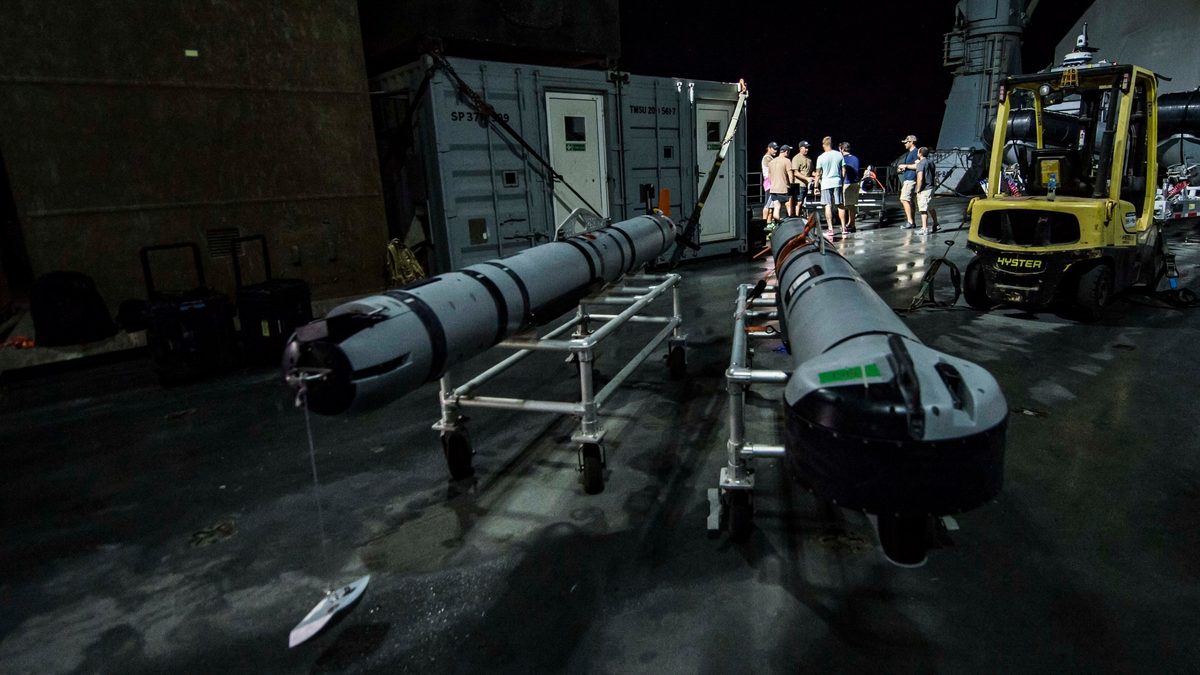
The Mine Hunting Capability (MHC) programme will deliver the Royal Navy’s next-generation mine countermeasures capability—replacing Hunt-class and Sandown-class vessels that have operated in the Arabian Gulf, the Baltic, and home waters for decades. It is, by any measure, a major equipment programme with direct operational consequences.
The Programme Director will lead this programme. They will be accountable to the Senior Responsible Owner (SRO). They will manage governance, risk, stakeholder engagement, and benefits realisation. They will oversee programme financial management and direct transition to in-service teams.
What the Programme Director will not be required to demonstrate is any ability to buy anything.
Competencies Assessed
REQUIRED- Complex programme management & delivery
- Business Case delivery
- Senior stakeholder management
- Risk, Issue & Opportunity management (P3M12)
- Stakeholder & communications management (P3M19)
- Leadership / Seeing the Big Picture / Delivering at Pace
Competencies Not Assessed
ABSENT- Procurement experience
- Contracting knowledge
- Commercial negotiation
- Supplier evaluation
- Market analysis or cost estimation
- Contract law or supply chain management
- Technical knowledge of mine-hunting systems
The role is classified as “Project Delivery”—not “Commercial.” This is not a detail. Civil Service professional families determine which competency framework applies. Project Delivery follows the Project Delivery Capability Framework (PDCF), which has 21 competencies aligned to the Association for Project Management. The Government Commercial Function (GCF) has 39 distinct technical capabilities across four pillars including market analysis, strategic sourcing, contract performance management, and supplier engagement. The Programme Director is assessed against the former. The 39 commercial capabilities do not apply.
The word “procurement” does not appear in the person specification. Neither does “commercial.” Neither does “contract.”
Twenty Years of Removing the Word “Procurement”
This job listing is not an anomaly. It is the logical endpoint of a systematic, two-decade effort to remove the word “procurement” from the UK defence establishment’s organisational identity, job titles, and competency frameworks.

The US and NATO Did the Same Thing
The UK’s experience is not unique. The United States underwent a parallel shift beginning with the Defense Acquisition Workforce Improvement Act (DAWIA) of 1990, enacted after the Packard Commission concluded that “acquisition workers were undertrained and inexperienced.”
DAWIA’s response was not to train procurement officers to procure better. It redefined the problem. Fifteen “acquisition career fields” were established—of which Contracting was only one, alongside Programme Management, Systems Engineering, Cost Estimating, Logistics, and Test Engineering. The Defence Acquisition University (DAU) was created to train this expanded workforce. A programme manager could reach senior certification with extensive governance training but minimal contracting knowledge. The person managing the buy no longer needed to understand the contract.
Thirty-six years later, the FY2026 National Defense Authorization Act (NDAA) still contains provisions to “modernise the duties and composition of the defense acquisition workforce.” The workforce remains undertrained. The terminology expanded to make the gaps harder to isolate.
At NATO, the pattern took institutional form. In 2012, three agencies merged into the NATO Support Agency. In 2015, it was renamed the NATO Support and Procurement Agency (NSPA)—ostensibly adding “procurement” to reflect expanded capabilities. But the expansion was framed as covering “all aspects of systems procurement from initial acquisition throughout sustainment”—the same through-life language as the UK and US. NSPA kept “Procurement” in the shopfront; internally, programme-level roles adopted the broader acquisition competency model.
Seven Mechanisms of Invisibility
The procurement-to-acquisition shift operates through at least seven distinct mechanisms, each compounding the others:
1. Scope Inflation
Procurement means buying. It is specific, measurable, attributable. Acquisition means the entire CADMID lifecycle—Concept through Disposal. When everything from writing the requirement to scrapping the platform is “acquisition,” the specific act of buying becomes one phase among six. Diluted by design.
2. Competency Substitution
Procurement officers were assessed on commercial skills: contract law, negotiation, supplier financial health. Acquisition professionals are assessed on programme management behaviours. The DNA listing requires P3M12 (Risk management) and P3M19 (Stakeholder management)—both from the PDCF, not the GCF. The person managing a multi-billion-pound buy is tested on whether they can manage a risk register, not whether they can evaluate a supplier.
3. Accountability Diffusion
Previously, a Procurement Officer bought and was accountable for the purchase. Now, the SRO owns the outcome, the Programme Director manages the programme, DE&S negotiates the contract, the commercial function handles terms. No single individual is “the buyer.” When the programme fails, it is a systemic failure—attributed to governance, not to an individual who made a poor purchasing decision.
4. Organisational Separation
The Levene reforms separated what to buy (frontline commands) from how to buy it (DE&S). The Programme Director in Portsmouth sets requirements. The commercial team in Bristol negotiates the contract. Neither is fully accountable for the outcome. The gap between them is where procurement competence used to reside.
5. Classification Escape
By classifying acquisition roles as “Project Delivery,” the MOD ensures they are assessed against programme management standards, not commercial standards. A candidate can reach Grade 6 in Project Delivery without ever managing a procurement.
6. Failure Mode Elimination
If no role requires procurement competence, procurement incompetence cannot be measured. You cannot fail a test that does not exist. NAO reports on programme overruns address governance and cost estimation—not whether someone failed to negotiate a competent contract.
7. Reform Immunity
Every reform since 2006 has addressed “acquisition.” Because the problem is framed as acquisition failure, the solution is acquisition reform. The specific question—can the people buying defence equipment actually buy?—is never asked, because the role of “buyer” no longer formally exists.
The Competence Gap Nobody Can Measure
The scale of the commercial skills deficit is quantifiable—when the system chooses to measure it. In 2017, the National Audit Office found that DE&S had 386 unfilled commercial posts—24% of its ideal complement. The NAO warned that “the effectiveness of the Regulations could be undermined by gaps among key commercial and cost assurance staff,” threatening £1.7 billion in projected savings under the Single Source Contract Regulations.
The Public Accounts Committee described the situation more directly. Chair Margaret Hodge stated: “Failure to improve the skills of Defence Equipment and Support, which buys and maintains military equipment, will undermine the department’s efforts to improve control over its finances.”
Yet these findings measure the gap within DE&S—the organisation that still, nominally, retains a commercial function. They do not measure the gap in the command-level acquisition directorates, because those roles are classified under Project Delivery and have no commercial competence requirement to measure against.
This connects to a broader structural blind spot in NATO Quality Assurance. AQAP-2110 (Allied Quality Assurance Publication, Edition D) and ISO 9001:2015 Clause 7.2 both require procurement organisations to demonstrate competence. But neither NATO’s AC/327 (Life Cycle Management Group, which governs the AQAP suite) nor AC/326 (which governs ammunition safety) defines what procurement competence means for specific domains such as WOME. The UK’s classification of acquisition roles under Project Delivery removes the domestic anchor for the NATO requirement. The competence gap is structurally undetectable.
The Failure It Eradicates
Central Finding
The shift from “Procurement Officer” to “Acquisition Professional” does not fix the problem of procurement incompetence. It removes the category in which that incompetence would be recorded.
A Procurement Officer who cannot procure is a measurable failure. An Acquisition Professional who cannot procure is not assessed on that competency—because their role is classified as Programme Management, their skills are assessed against PDCF standards, and the commercial function is somebody else’s responsibility.
The failure the terminology change eradicates is not the failure itself. It is the visibility of the failure.
The Defence Committee saw this clearly. In July 2023, it described “a UK procurement system which is highly bureaucratic, overly stratified, far too ponderous, with an inconsistent approach to safety, very poor accountability and a culture which appears institutionally averse to individual responsibility.” It recommended a “professional procurement stream within the military.”
In April 2026, Navy Command published a senior acquisition role with zero procurement competence requirements. The Committee’s recommendation has not been implemented where it matters most: in the job specifications for the people who lead equipment programmes.
The explanation is structural: the Civil Service competency framework treats Project Delivery and Commercial as separate professional families. The recruitment machinery produces programme managers because that is what the PDCF demands for a role classified as Project Delivery. Even when Parliament calls for procurement skills, the system cannot deliver them through a framework that does not require them.
Each reform reinforces the linguistic frame. Each frame determines the competency framework. Each framework determines recruitment criteria. Each set of criteria ensures that acquisition leaders are assessed on everything except their ability to buy.
Analysis & Evidence References
- Civil Service Jobs, Vacancy Ref 454482: Programme Director Mine Hunting Capability, Directorate Navy Acquisition, Navy Command (April 2026) — civilservicejobs.service.gov.uk
- House of Commons Defence Committee, “It is broke — and it’s time to fix it: The UK’s defence procurement system,” HC 1099, 16 July 2023 — parliament.uk
- Bernard Gray, “Review of Acquisition for the Secretary of State for Defence,” October 2009 — bipsolutions.com
- Lord Levene, “Defence Reform: An independent report into the structure and management of the Ministry of Defence,” June 2011 — GOV.UK
- NAO, “Improving value for money in non-competitive procurement of defence equipment,” October 2017 — nao.org.uk
- Defense Acquisition Workforce Improvement Act (DAWIA), Public Law 101-510, November 1990 — congress.gov
- NATO, “NATO Support and Procurement Agency — new name and expanded capabilities,” 1 April 2015 — nato.int
- GOV.UK, Government Commercial Career Framework v2.0 — GOV.UK
Source evaluation: NATO STANAG 2022 ratings applied throughout. Primary sources (A1): Civil Service Jobs listing, DAWIA statute, NATO official record, GOV.UK frameworks. Parliamentary sources (A2): Defence Committee HC 1099, Levene Report, NAO reports. Independent analysis (B2): Gray Report, RAND.
Disclosure: This article is AI-assisted and based exclusively on open-source materials. All sources are publicly available. All acronyms expanded on first use. The analysis represents ISC Defence Intelligence editorial interpretation of the evidence.