$157M to Upgrade the Osprey: Investment in Capability or Life Support for a Troubled Platform?
Bell Boeing’s latest V-22 upgrade contract is presented as a step toward restoring tiltrotor readiness — but with 65 fatalities, 28 unresolved catastrophic safety risks, and full gearbox fixes not due until 2034, the harder question is whether $157 million buys genuine capability improvement or merely extends the operational life of an aircraft the US Marine Corps is already exploring replacements for.
The Contract: What We Know
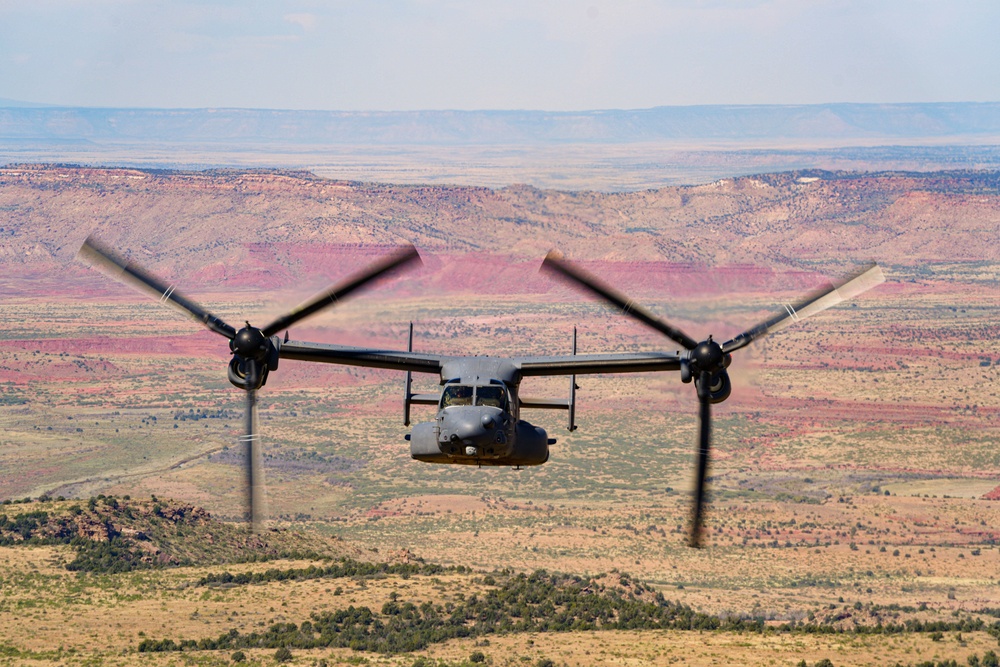
Bell Boeing has been awarded an indefinite-delivery/indefinite-quantity (IDIQ) contract valued at up to $157 million for upgrades to the V-22 Osprey tiltrotor aircraft fleet. The contract covers engineering, modification, and integration work across the three V-22 variants operated by the United States military: the MV-22B (US Marine Corps), the CV-22B (US Air Force Special Operations Command), and the CMV-22B (US Navy carrier onboard delivery). Work is expected to be performed primarily at the Bell Boeing Joint Project Office in Amarillo, Texas, with additional work at Bell’s facility in Fort Worth, Texas and Boeing’s rotorcraft division in Ridley Park, Pennsylvania.
The contract is administered by the Naval Air Systems Command (NAVAIR), Patuxent River, Maryland, the programme executive office responsible for all three V-22 variants through the V-22 Joint Program Office (JPO). As an IDIQ vehicle, the $157 million figure represents a ceiling — individual task orders will be issued against this ceiling as specific upgrade requirements are defined and funded. The contract structure gives the government flexibility to prioritise work packages based on operational need and available appropriations.
| Contract Element | Detail |
|---|---|
| Contractor | Bell Boeing Joint Project Office (Bell Textron / Boeing) |
| Contract Type | Indefinite-Delivery/Indefinite-Quantity (IDIQ) |
| Maximum Value | $157,000,000 |
| Contracting Agency | Naval Air Systems Command (NAVAIR), Patuxent River, MD |
| Variants Covered | MV-22B (USMC), CV-22B (AFSOC), CMV-22B (USN) |
| Primary Work Location | Amarillo, TX (Bell Boeing JPO) |
| Additional Locations | Fort Worth, TX (Bell); Ridley Park, PA (Boeing) |
| Scope | Engineering, modification kits, integration, and testing for platform upgrades |
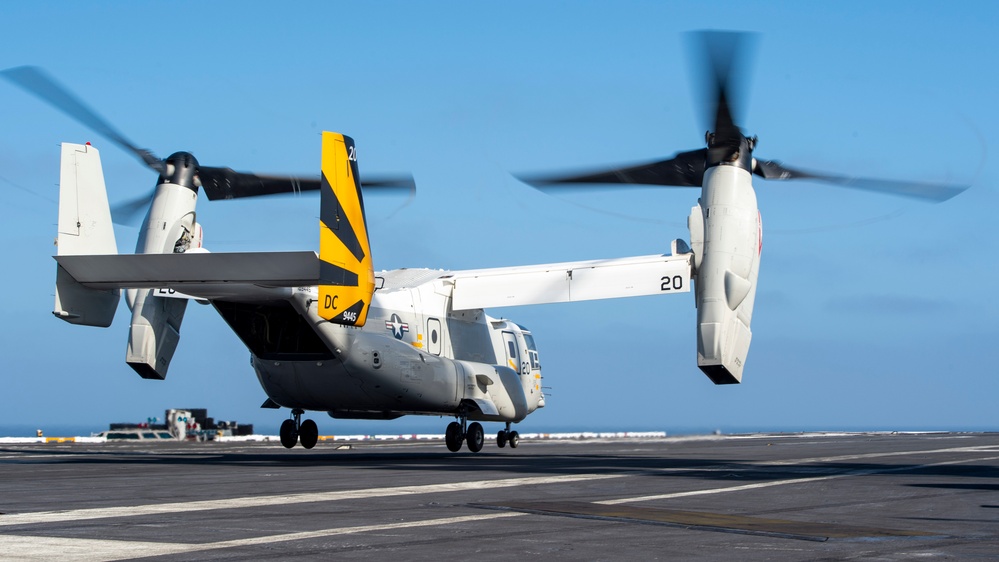
This contract sits within a broader pattern of V-22 sustainment and upgrade spending. In the past 24 months alone, the V-22 programme has generated multiple significant contract actions: a $590 million modification for five new CMV-22B aircraft (completion January 2028), a $149 million DLA-exercised option for engineering and logistics services, and a $19.3 million contract for software upgrades across all three service variants. The cumulative investment signals a commitment to sustaining the V-22 through at least the early 2030s. Whether that commitment is warranted depends on whom you ask.
The Safety Record: 65 Dead and Counting
Any assessment of V-22 upgrade investment must contend with the platform’s catastrophic safety record. As of July 2025, 65 service members have been killed in V-22 mishaps across the programme’s operational history. Since 2022 alone, four fatal crashes have killed 20 and injured another 20. The tempo of catastrophic incidents is not declining.
The mechanical root causes are well-documented. The most deadly single incident — the crash of a CV-22B Osprey off Yakushima, Japan, on 29 November 2023 that killed all eight crew — was caused by catastrophic failure of the left-hand proprotor gearbox (PRGB). The investigation, published in August 2024, attributed the failure to cracking in a high-speed pinion gear caused by an inclusion — a manufacturing flaw in the X-53 steel alloy that created a stress concentration point in the gear material. This is a metallurgical defect, not a maintenance failure.
In November 2024, a second CV-22B experienced failure of a critical gear due to an identical inclusion defect. That aircraft landed safely, but the incident prompted a partial fleet grounding and the introduction of new operational restrictions: all V-22s were limited to flying within 30 minutes of a landing zone. Those restrictions remained in force through 2025, and the Navy and Air Force fleets may not return to unrestricted operations until mid-2026 at the earliest.
The second major mechanical failure mode is hard clutch engagement (HCE) — a phenomenon in which the clutch assembly connecting the engine to the proprotor gearbox engages abruptly rather than smoothly, causing a sudden and potentially unrecoverable transfer of torque. HCE was the proximate cause of the June 2022 fatal crash of a US Marine Corps MV-22B in California that killed five Marines. The HCE problem had been identified years earlier but was not resolved before the fatal incident occurred.
28 Unresolved Catastrophic Risks: The GAO and NAVAIR Findings
In December 2025, both the Government Accountability Office (GAO) and NAVAIR published reviews that laid bare the scale of unresolved safety risk in the V-22 programme. The findings were damning.
The V-22 carries 28 unresolved catastrophic system safety risk assessments — the highest total among all Navy rotary-wing aircraft and second only to the F-35 across the entire Navy aircraft inventory. Seventeen of those 28 risks have remained unresolved for 6 to 14 years. The median age of unresolved serious and medium risks is approximately nine years. Five of the twelve Class A mishaps in the preceding four years resulted in catastrophic outcomes from previously identified mechanical risks — meaning the programme knew about the failure modes and had not resolved them before they killed people.
The GAO specifically warned that “without refining the joint program’s process for identifying, analysing, and responding to Osprey safety risks… programme stakeholders cannot adequately mitigate risks.” The review noted that prior safety investigations in 2001, 2009, and 2017 “lacked mechanisms for tracking implementation or accountability” — a systemic pattern of identifying problems, recommending fixes, and then failing to verify those fixes were actually implemented.
The timeline for resolving the most critical failure mode — the PRGB inclusion defect — stretches into the next decade. The V-22 JPO originally planned to begin fielding triple-melt gears (manufactured from steel processed through three melting stages to eliminate inclusions) in summer 2025. That date slipped to January 2026. Full implementation of the upgraded gearbox across the entire fleet is not expected until 2034. Until then, every V-22 flying with original-specification gears carries a known risk of catastrophic gearbox failure.
Readiness: Half the Fleet Unavailable, Half the Time
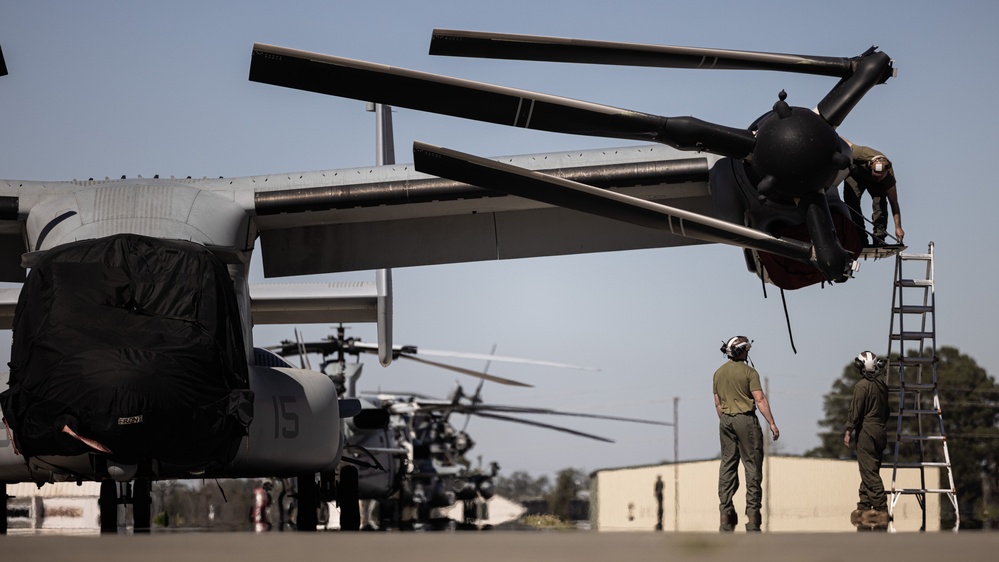
The safety issues compound a readiness problem that predates the recent crash investigations. Between 2020 and 2024, the V-22’s average mission-capable rate was approximately 50% for the Navy and Air Force variants and 60% for the Marine Corps MV-22B. These figures mean that on any given day, roughly half the fleet is unavailable for tasking.
For context, a 50% mission-capable rate requires the services to maintain and fund nearly twice as many airframes as they actually need for operations — a planning factor that drives up total ownership cost substantially. The V-22’s operating and maintenance costs per flight hour have increased by 30% over the past four years. For the Navy’s CMV-22B carrier onboard delivery variant, low readiness has particular operational consequences: each aircraft occupies scarce deck space on nuclear-powered aircraft carriers, and an aircraft that cannot fly still consumes maintenance hours, spare parts, and hangar capacity.
The serious mishap rate for V-22s has exceeded both Navy and Air Force fixed-wing and rotary-wing averages between 2015 and 2024. Put bluntly, the Osprey crashes more often, is available less often, and costs more to sustain per flight hour than comparable platforms. The $157 million upgrade contract must be evaluated against this operational reality.
The Replacement Conversation Nobody Wants to Have
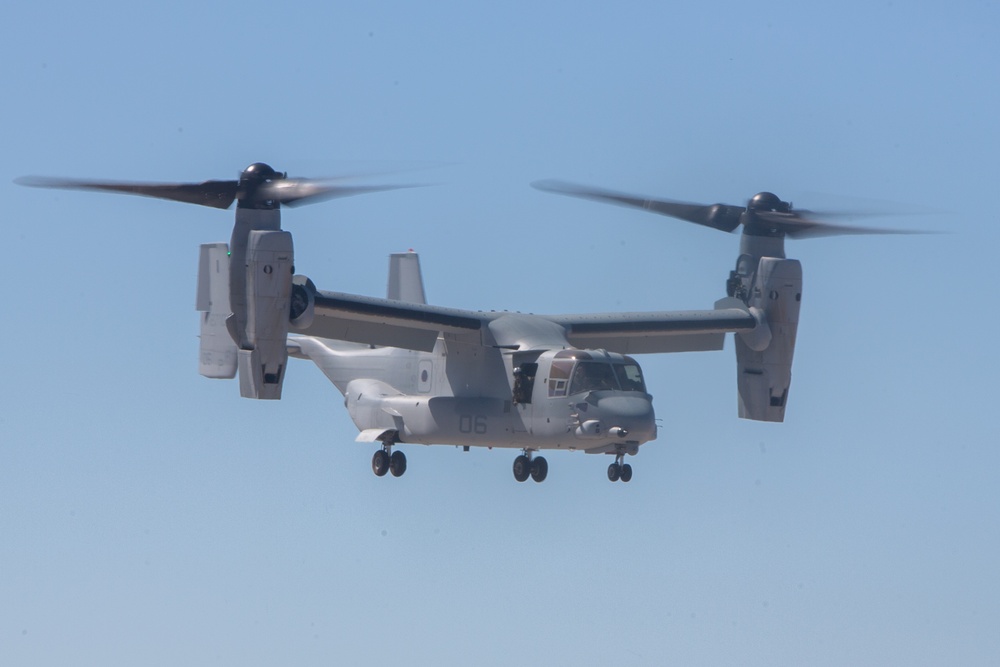
While the Department of Defense continues to invest in V-22 upgrades, the US Marine Corps has quietly begun exploring what comes after the Osprey. The Next Generation Assault Support (NGAS) programme is the USMC’s initiative to identify a future vertical lift platform that could eventually replace the MV-22B. No formal requirement has been published, and the programme remains in the early conceptual phase, but its existence acknowledges that the V-22 is not a permanent solution.
Simultaneously, Bell is transitioning its tiltrotor production line from the legacy Osprey toward the Future Long-Range Assault Aircraft (FLRAA) — the US Army’s next-generation tiltrotor selected in December 2022. Bell’s V-280 Valor won the FLRAA competition, and the company has secured production contracts extending Osprey manufacturing through 2027 specifically to bridge the gap until FLRAA production begins. The industrial subtext is clear: the Osprey production line has a defined end date, and the manufacturer is already building the next platform.
Critics of continued V-22 sustainment investment argue that pouring hundreds of millions into upgrades for an aircraft with known, decade-old unresolved catastrophic risks represents a sunk-cost fallacy. The counter-argument — made by the V-22 JPO and Bell Boeing — is that the tiltrotor provides a unique capability (vertical takeoff with fixed-wing speed and range) that no other in-service platform can replicate, and that the alternative to sustainment is a capability gap that the services cannot afford.
Both arguments have merit. The question is one of resource allocation: does $157 million in upgrade funding generate more operational value than the same investment in accelerating FLRAA development, expanding CH-53K procurement, or addressing the underlying metallurgical and design issues that have killed 65 people?
Inter-Service Coordination: Three Services, Three Standards
The December 2025 NAVAIR review surfaced a problem that compounds both the safety and readiness challenges: the three services operating V-22s maintain different maintenance and operation standards for what is nominally the same aircraft. The report stated that “significant discrepancies and differences in critical aircrew and maintenance publications and procedures exist across the USN, USMC and USAF.”
This is not a minor administrative issue. Different maintenance intervals, different inspection criteria, and different operational procedures across three service branches mean that safety lessons learned by one service may not be implemented by the others. The Yakushima crash killed Air Force special operations personnel; the HCE crash killed Marines. The investigation findings applied to all variants, but the implementation of corrective actions has proceeded at different paces across the three services. Gold Star widow Amber Sax, whose husband was killed in a V-22 crash, stated that the GAO findings confirmed “more needed to be done” and that “failure cost my husband his life.”
References and Sources
- Defence Blog — Bell Boeing Wins Up to $157M Contract to Upgrade Ospreys, April 2026. https://defence-blog.com/bell-boeing-wins-up-to-157m-contract-to-upgrade-ospreys/ DEFENCE MEDIA
- Congressional Research Service — V-22 Osprey Aircraft: Background and Issues for Congress (R48703), September 2025. https://www.congress.gov/crs-product/R48703 US CONGRESS
- Defense One — New GAO, Navy Reports Warn of Serious V-22 Osprey Safety Risks, With Some Fixes Stretching Into 2030s, December 2025. https://www.defenseone.com/threats/2025/12/new-gao-navy-reports-warn-serious-v-22-osprey-safety-risks-some-fixes-stretching-2030s/410150/ DEFENCE MEDIA
- USNI News — New V-22 Mishap Reviews Find Material Issues with Osprey, Poor Communication Between Services, December 2025. https://news.usni.org/2025/12/12/new-v-22-mishap-reviews-find-material-issues-with-osprey-poor-communication-between-services NAVAL INSTITUTE
- Breaking Defense — V-22 Will Fly With Restrictions Until 2026, April 2025. https://breakingdefense.com/2025/04/v-22-will-fly-with-restrictions-until-2026/ DEFENCE MEDIA
- GovCon Wire — Bell-Boeing JV Secures $590M Navy Contract Modification for CMV-22B Osprey Aircraft. https://www.govconwire.com/articles/bell-boeing-590-million-navy-contract-modification-osprey-aircraft PROCUREMENT
- GovCon Wire — DLA Exercises $149M Option in Bell Boeing V-22 Osprey Support Contract. https://www.govconwire.com/articles/dla-exercises-149m-option-in-bell-boeing-v-22-osprey-support-contract PROCUREMENT
- The Air Current — V-22 Ospreys Have Serious Unresolved Safety Risks, NAVAIR Review Confirms. https://theaircurrent.com/aviation-safety/v-22-ospreys-safety-risks-navair-review-confirms/ AVIATION MEDIA
ISC Commentary
The $157 million Bell Boeing upgrade contract is neither scandalous nor straightforward. It represents a rational decision within a constrained system: the V-22 provides a capability no other platform currently replicates, the fleet must remain operational until a successor is fielded, and upgrades are cheaper than premature retirement. But the contract also funds modifications to an aircraft with 28 unresolved catastrophic safety risks — 17 of which have festered for over six years — while full gearbox fixes will not reach the entire fleet until 2034.
The uncomfortable truth is that the V-22’s continued operation represents an accepted risk calculus: the Department of Defense has decided that the capability the tiltrotor provides outweighs the known probability of further mechanical failures, and that sustainment investment is preferable to a capability gap. Whether that calculus is correct is a question for Congress and the families of the 65 service members who have died in V-22 mishaps. ISC Defence Intelligence assesses that the key metric to watch is not the contract value, but whether the upgraded gearbox fielding timeline holds or slips further beyond 2034.