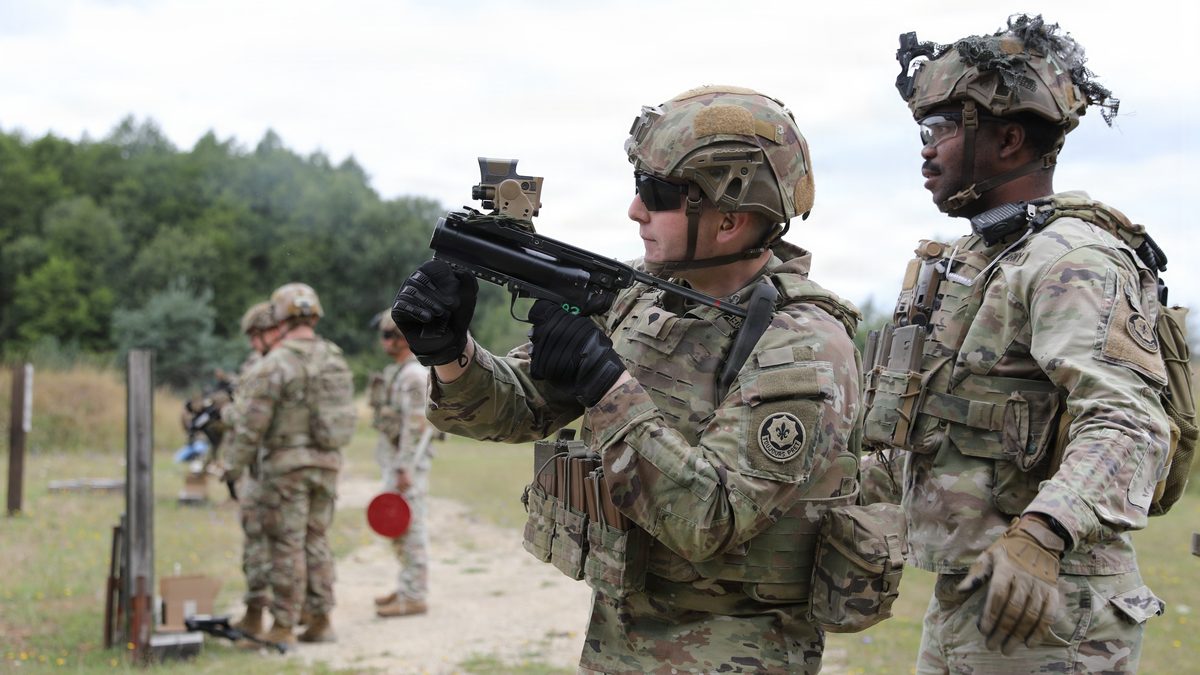
M320 Grenade Launcher Modules in use with 2nd Squadron, 2d Cavalry Regiment, Grafenwoehr Training Area, Germany, 23 July 2026. Photo: Staff Sgt. Vontrae Hampton / US Army Reserve, via DVIDS (public domain).
Precision Grenadier System: Counter-Drone 40mm Munitions Replace M203/M320
After two decades of failed programmes including the cancelled XM25, the US Army issues a new solicitation for the Precision Grenadier System. A next-generation grenade launcher with 500-metre effective range and dedicated counter-drone ammunition types.
Technical Summary
The US Army has issued a solicitation for the Precision Grenadier System (PGS), a next-generation grenade launcher intended to replace the M203 and M320 40mm Grenade Launcher Modules (GLMs) currently in service. The solicitation, with a response deadline of 11 May 2026, seeks prototype submissions comprising 16 weapons, integrated fire control systems, and approximately 25,000 rounds of ammunition across four natures: counter-defilade, counter-drone (C-UAS), close quarter battle (CQB), and training.
The PGS requirement specifies a maximum effective range (MER) of 500 metres, a 43% increase over the M320's 350-metre MER. This range extension requires either increased chamber pressure (with corresponding implications for barrel metallurgy and fatigue life) or a fundamentally different propulsion approach such as high-low pressure system optimisation or rocket-assisted projectile (RAP) technology. The existing 40×46mm low-velocity cartridge operates at comparatively modest chamber pressures (~3,000 psi), and extending range within this envelope without altering the cartridge geometry represents a significant engineering constraint.
FN America is developing the MTL-30 Precision Grenadier System prototype. The system is designed to provide two grenade launchers per rifle squad, doubling the indirect fire capability at the squad level and addressing a persistent gap in organic anti-armour and suppressive fire identified in the Small Arms Capabilities-Based Assessment.
The programme's most technically significant element is the requirement for dedicated counter-drone ammunition; a capability that did not exist as a defined requirement when the M320 entered service in 2009.
Analysis of Effects
The counter-drone ammunition requirement represents a fundamental shift in 40mm munition design philosophy. Traditional 40mm HE rounds such as the M433 High-Explosive Dual-Purpose (HEDP) employ a point-detonating (PD) fuze with a piezoelectric impact sensor. For counter-UAS employment, a proximity fuze with a Doppler radar or optical sensor would be required to initiate detonation at optimal distance from the target, maximising the fragmentation envelope intersection with the drone's presented area.
The counter-defilade requirement suggests programmable airburst capability similar to the cancelled XM25 Counter Defilade Target Engagement System (25×40mm). The XM25 programme, cancelled in 2018 after expenditure of approximately $500 million, suffered from excessive unit cost ($35,000 per weapon), unreliable airburst fuze programming, and concerns about the 25mm warhead's lethality. The PGS programme implicitly acknowledges that the capability gap identified in 2008 by the Small Arms Capabilities-Based Assessment remains unresolved — eighteen years on.
The M433 HEDP round contains approximately 32 g of Composition A5 (RDX/stearic acid) as the explosive fill, with a net explosive quantity (NEQ) of approximately 0.045 kg TNT equivalent. A counter-drone round would likely require a different fragmentation pattern (possibly pre-formed tungsten fragments in a controlled dispersal pattern) to achieve lethal effect against commercial and military sUAS at ranges beyond direct-fire engagement. The probability of hit (Pk) against a small, manoeuvring aerial target at 500 metres with a ballistic projectile is inherently low without either a proximity-sensing fuze or a significantly expanded fragmentation cone.

Lessons from XM25 and XM29 OICW
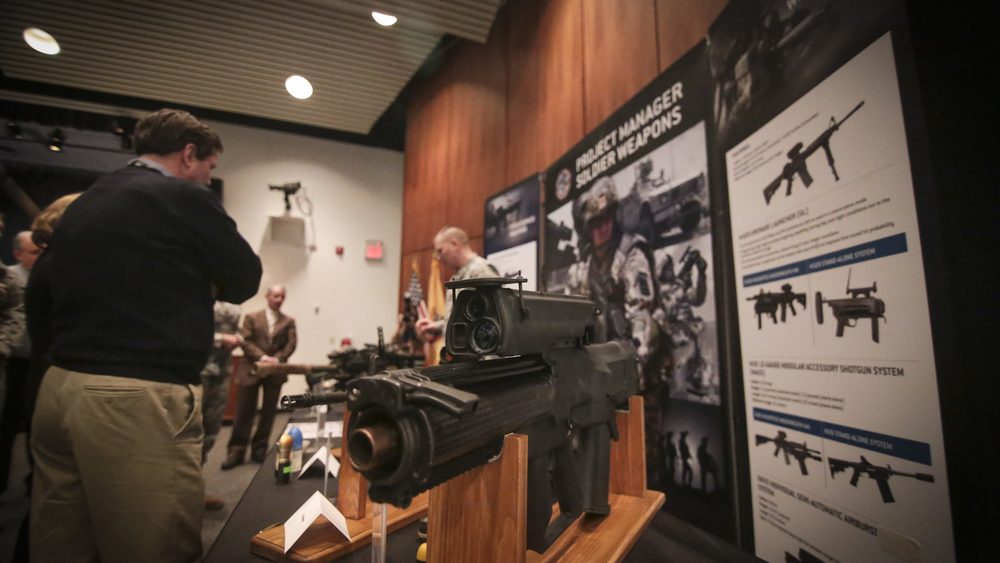
The PGS is effectively the US Army's third attempt in two decades to field a next-generation grenade launcher. The XM29 Objective Individual Combat Weapon (OICW), which combined a 5.56mm rifle with a 20mm airburst grenade launcher, was cancelled due to excessive weight (8.2 kg) and cost. The subsequent XM25 reduced the concept to a standalone airburst weapon but ultimately failed on cost, reliability, and warhead lethality grounds. PGS appears to have absorbed these lessons by retaining the 40mm calibre (leveraging the existing logistics chain and warhead volume) while adding the fire control sophistication that earlier programmes attempted with bespoke ammunition.
| Parameter | M203 | M320 / M320A1 | XM25 CDTE | PGS (requirement) |
|---|---|---|---|---|
| Calibre | 40×46mm LV | 40×46mm LV | 25×40mm | 40mm — LV / MV split not specified |
| Configuration | Under-barrel only | Under-barrel or stand-alone | Stand-alone | Not specified |
| Max effective range | 350 m (area) | 350 m (area) | 600 m point / 700 m area | 500 m |
| Sighting / fire control | Quadrant and leaf sight | Leaf sight 50–350 m; GSS / GLS day-night optic | XM104 — thermal, laser rangefinder, ballistic computer, fuze setter | Integrated fire control, specification not published |
| Ammunition natures | HE, HEDP, smoke, illum, practice | HE, HEDP, smoke, illum, practice, less-lethal | Airburst HE, armour-piercing, non-lethal, training | Counter-defilade, counter-drone, CQB, training |
| Counter-UAS nature | None | None | None as fielded | Mandated |
| Weight | 1.36 kg (module) | 1.62 kg module / 2.2 kg with stock | 6.4 kg with fire control | Not specified |
| Status | In service from 1969, being replaced | In service from July 2009 | Terminated 24 July 2018 | Solicitation closes 11 May 2026 |
Figures for legacy systems are drawn from open-source manufacturer and programme data [6][7]; PGS figures are limited to what the solicitation states. Where the solicitation is silent, the cell reads “not specified” rather than an inferred value; the calibre row in particular should not be read as confirmation that PGS retains the 40×46mm low-velocity cartridge.
Personnel and Safety Considerations
Introduction of proximity-fuzed and programmable airburst 40mm ammunition creates new safety considerations for ammunition storage and handling. Proximity-fuzed rounds require electromagnetic environment controls during storage to prevent inadvertent initiation of fuze electronics. Hazard Division / Compatibility Group (HD/CG) classification for new ammunition natures will depend on the fuze safety design's compliance with STANAG 4187 (Fuzing Systems Safety Design Requirements, mandating two independent safety systems) and packaging configuration per STANAG 4123 / AASTP-3.
Training ammunition must replicate the ballistic trajectory of operational natures to ensure consistent aiming solutions through the fire control system. This requires matching the mass, drag coefficient, and muzzle velocity of each operational round; a non-trivial engineering challenge across four distinct ammunition natures. Divergence between training and operational trajectories would degrade operator confidence and introduce systematic aiming errors at extended ranges.
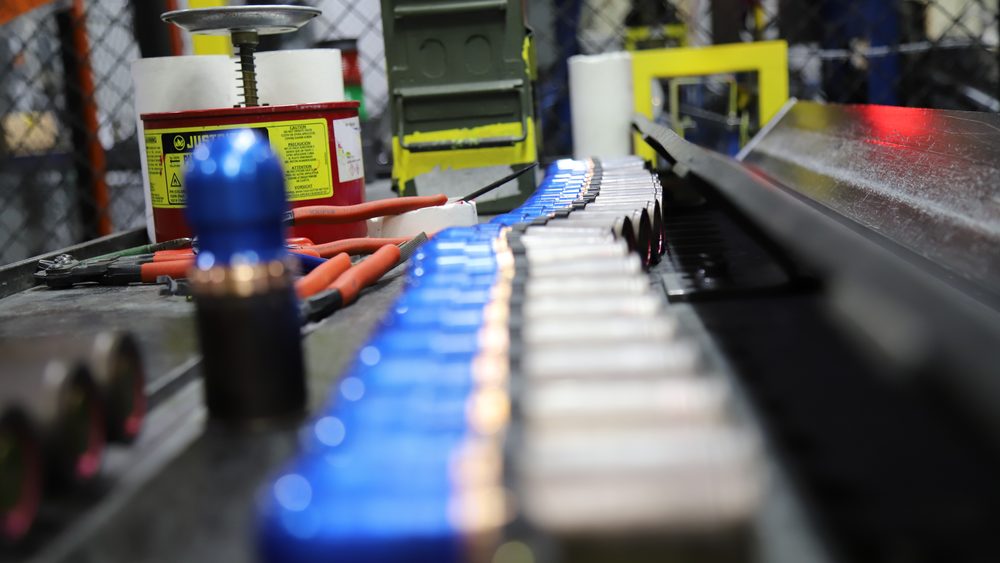
Cordon and evacuation distances for 40mm munitions are relatively modest due to low NEQ per round. However, storage of 25,000 rounds in prototype quantities requires appropriate magazine classification under AASTP-1. Bulk storage of proximity-fuzed rounds may require additional electromagnetic compatibility (EMC) assessments beyond standard explosive storage requirements, particularly where radio frequency (RF) emitters are present within the storage facility's electromagnetic hazard radius.
- PGS calibre — whether the system retains 40×46mm low-velocity or adopts a medium-velocity chamber (e.g., 40×51mm or a novel cartridge geometry) is not specified in the solicitation.
- Counter-drone fuze type — proximity (Doppler, optical, or RF) or programmable airburst mechanism not disclosed.
- Counter-drone warhead lethality data — fragmentation pattern and Pk against representative sUAS targets at various ranges remain unknown.
- Fire control system specifications — whether the system employs laser rangefinding, ballistic computation, or target tracking for moving aerial targets is not publicly available.
B-2, Multiple credible defence media sources reporting consistent details. Key programme parameters confirmed against official solicitation documentation. Counter-drone ammunition requirement is novel and details remain limited at this stage of the procurement process.