
ISC Defence Intelligence
CENTCOM Condemns Cluster Munitions It Simultaneously Procures: The ERW Clearance Burden No Policy Resolves
CENTCOM calls cluster munitions “inherently indiscriminate” while the Pentagon signs a $210 million procurement deal with an Israeli manufacturer for the same weapon class — but for EOD operators, the policy contradiction matters less than the submunition dud rates that will define clearance operations for decades.
Technical Summary
On 31 March 2026, Human Rights Watch published an analysis highlighting a direct contradiction in US cluster munition policy. Admiral Brad Cooper, Commander of US Central Command (CENTCOM), condemned Iran’s use of cluster munitions against populated areas in Israel during March 2026, describing them as “an inherently indiscriminate type of munition.” Concurrently, the Pentagon confirmed a deal worth at least $210 million to procure cluster munitions from an Israeli government-owned manufacturer.
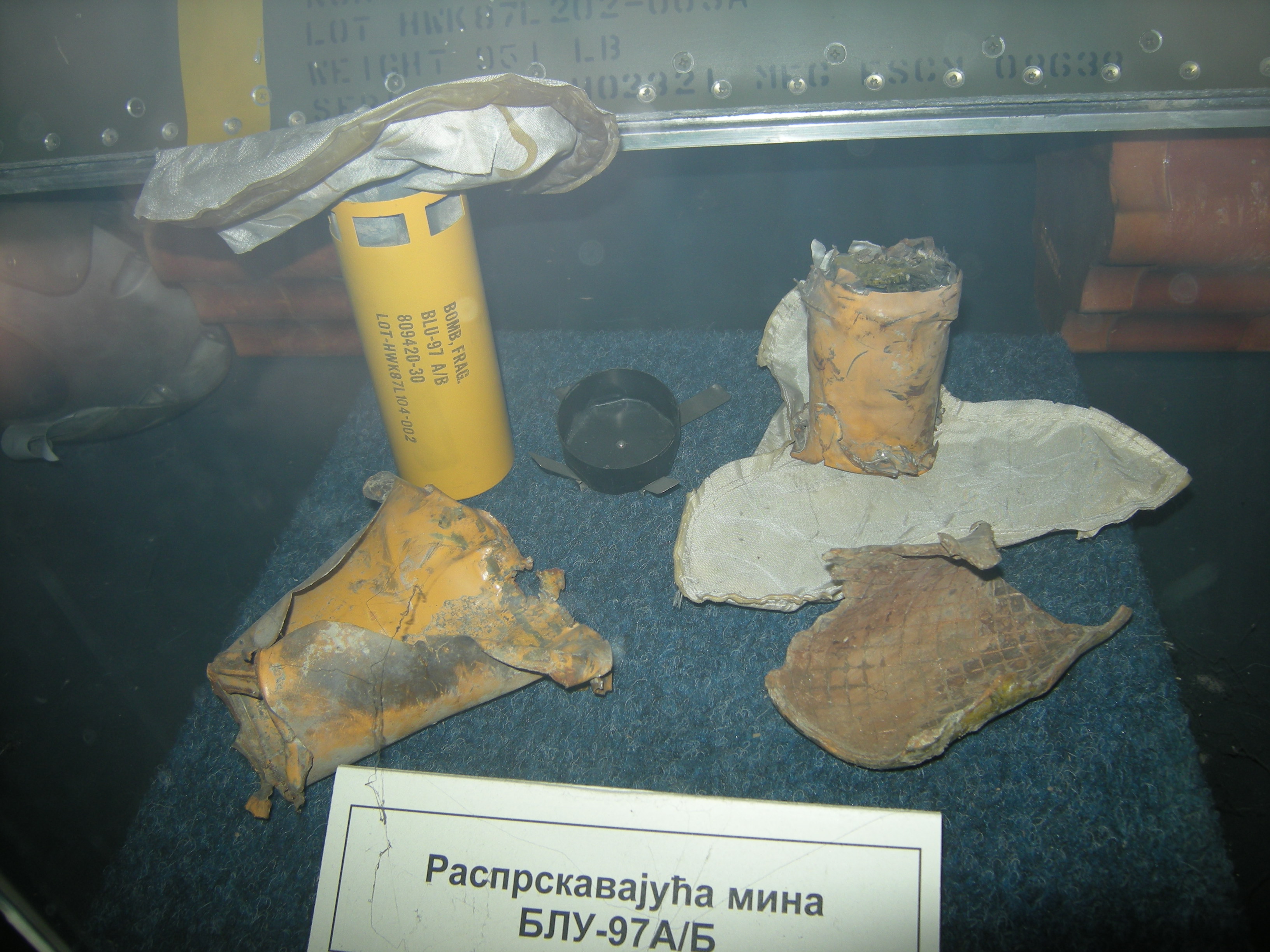
Cluster munitions are area-effect weapons designed to disperse submunitions — referred to as bomblets or Combined Effects Munitions (CEM) — over a wide footprint from a single delivery platform. A typical cluster bomb unit (CBU) disperses between 200 and 600 submunitions across an area of approximately 30,000 square metres. Each submunition, such as the US BLU-97/B CEM, incorporates a shaped-charge liner for armour penetration, a pre-formed fragmentation body producing approximately 300 steel fragments at velocities exceeding 1,500 m/s, and an incendiary zirconium ring for material ignition.
The technical concern for WOME professionals is not the policy debate but the submunition failure rate. US policy defines “unreliable” cluster munitions as those with dud rates exceeding 1%. Field data from Kosovo, Afghanistan, Iraq, and Lebanon consistently demonstrates actual dud rates of 5–23%, depending on terrain, delivery altitude, and submunition type. Each unexploded submunition functions as a de facto anti-personnel device — sensitive to handling, impact, and environmental disturbance.
BLU-97/B Combined Effects Munition — Technical Parameters
Designation: BLU-97/B Combined Effects Munition (CEM)
Parent weapon: CBU-87 CEM (202 submunitions) or CBU-103 WCMD (wind-corrected)
Explosive fill: ~287 g Cyclotol (RDX/TNT 60/40)
Effects: Shaped charge (anti-armour), pre-formed fragmentation (~300 fragments), zirconium incendiary ring
All-up mass: ~1.5 kg per submunition
Arming: Spin-armed during descent; minimum drop altitude ~60 m
Hazard Division: HD 1.1 D (individual submunition; mass detonation in aggregate)
Published dud rate: <5% (manufacturer); 5–23% observed in field (ICRC/HRW data)
Analysis of Effects
Submunition Fragmentation and Blast Assessment
Each BLU-97/B submunition contains approximately 287 g of Cyclotol (60/40 RDX/TNT), producing a Net Explosive Quantity (NEQ) of approximately 0.29 kg TNT equivalent per submunition. The pre-formed fragmentation body generates approximately 300 steel fragments with an estimated Fragment Dangerous Distance (FDD) of 150 metres and a casualty radius (CR) of approximately 20 metres per submunition. The shaped-charge liner can penetrate approximately 178 mm (7 in) of Rolled Homogeneous Armour (RHA).
A single CBU-87 dispersing 202 BLU-97/B submunitions delivers an aggregate NEQ of approximately 58 kg across a footprint of 200 × 400 metres. The combined fragmentation density within the footprint exceeds 1 fragment per square metre — sufficient for area saturation against exposed personnel and light vehicles.
Dud Rate and Persistent ERW Burden
At the manufacturer-claimed dud rate of 5%, a single CBU-87 generates approximately 10 unexploded submunitions per deployment. At the field-observed rate of 10–23% documented by the International Committee of the Red Cross (ICRC) in Lebanon (2006) and Kosovo (1999), a single CBU-87 may leave 20–46 unexploded submunitions. These persist as Explosive Remnants of War (ERW), each containing a live fuze, a shaped-charge warhead, and a fragmenting body — sensitive to handling, vibration, and thermal cycling.
The 2023 US transfer of cluster munitions to Ukraine via Germany and Poland, combined with the 2026 Israeli procurement deal, indicates that US cluster munition stockpiles are being both consumed and replenished. Each deployment adds to the global inventory of unexploded submunitions requiring eventual EOD clearance. Laos alone contains an estimated 80 million unexploded US submunitions from the 1964–1973 bombing campaign — 50 years later, clearance is approximately 1% complete.
Personnel and Safety Considerations
EOD operators encountering unexploded cluster submunitions face a particularly hazardous clearance challenge. The BLU-97/B spin-arming mechanism may be in a partially armed state if the submunition failed to achieve sufficient rotational velocity during descent. This intermediate arming condition means the fuze is neither fully safe nor fully armed — rendering the item unpredictably sensitive to movement.
Render-safe procedures for unexploded BLU-97/B submunitions typically involve blow-in-place (BIP) destruction using a donor charge, as manual disassembly of the spin-armed fuze is not considered consistent with As Low As Reasonably Practicable (ALARP) principles. Recommended Cordon and Evacuation Distance (CED) for individual BLU-97/B items is 300 metres, accounting for the combined shaped-charge, fragmentation, and incendiary effects.
The 124 states that have adopted the Convention on Cluster Munitions (CCM) recognise the inherently indiscriminate nature of these weapons. The United States, Russia, China, Israel, and Iran are not signatories. For clearance operators working in post-conflict environments, the signatory status of the deploying nation is irrelevant — the submunition hazard is identical regardless of which state delivered it.
Data Gaps
DATA GAP: Specific Iranian cluster munition type — The cluster munitions reportedly employed by Iran against Israeli populated areas have not been identified by type designation. Without this, the specific submunition explosive fill, fuze mechanism, and expected dud rate cannot be assessed.
DATA GAP: $210M procurement specification — The specific cluster munition type being procured from the Israeli manufacturer under the $210 million contract has not been publicly identified. Israel produces several variants including the M85 DPICM submunition with a reported self-destruct mechanism.
DATA GAP: Civilian casualty data from Iranian cluster employment — While HRW reports cluster strikes against populated areas in Israel, specific casualty figures from the submunition strikes have not been independently verified in open sources.
Corrections & updates welcome. If you hold open-source data that refines or corrects any parameter in this article, please contact [email protected] citing the specific claim and your source. Verified corrections will be incorporated and credited in the revision history.
Sources & References
- [1] Human Rights Watch, “US Central Command Contradicts Cluster Munition Policy,” 31 March 2026. [B/2]
- [2] International Committee of the Red Cross (ICRC), Cluster Munition Remnants: Technical Assessment of Submunition Failure Rates. [A/1]
- [3] Convention on Cluster Munitions (CCM), adopted Dublin, 30 May 2008. [A/1]
- [4] US Air Force, CBU-87/B Combined Effects Munition fact sheet. [A/1]
- [5] NATO, AASTP-1: Manual of NATO Safety Principles for the Storage of Military Ammunition and Explosives. [A/1]
- [6] DSA 03.OME, Defence OME Safety and Environmental Management, UK Ministry of Defence. [A/1]